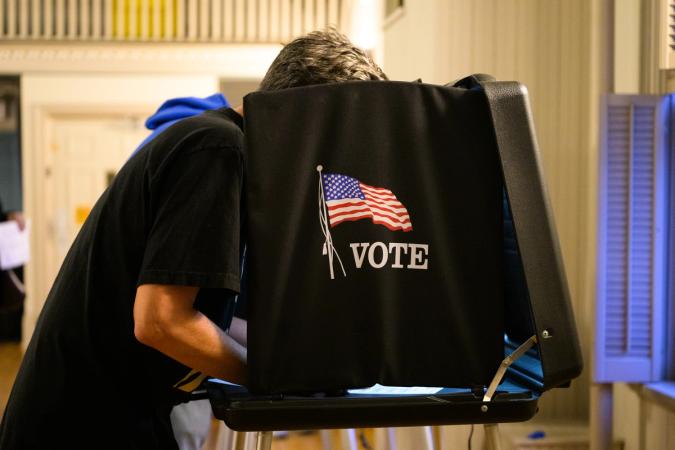
We have spent years inside the bubble, talking to each other about decentralization and permissionless rails. But outside the Discord servers and private Telegram groups, there is a massive wall of public perception that most founders are completely ignoring. New data regarding voter sentiment toward digital assets reveals a reality that is far less shiny than the hype cycles suggest.
As someone who looks at the intersection of tech and policy every day, I see a dangerous gap. The industry is building for a user base that largely doesn't trust the tools yet. If you are a founder today, you aren't just fighting for market share; you are fighting a reputation battle against years of bad headlines and complex onboarding.
The Awareness Paradox
The latest polling data tells us something interesting: people know what crypto is, but they don't necessarily like it. We have moved past the era where we had to explain what a Bitcoin was to every person on the street. Awareness is high, but that awareness is often tied to volatility and high-profile collapses rather than utility.
For builders, this is a double-edged sword. You don't have to explain the concept from scratch, but you do have to spend the first ten minutes of every pitch or user onboarding session proving you aren't a scam. This 'reputation tax' is a heavy burden on early-stage startups. When voters look at this industry, they see a casino. Until we change that into a utility, we are going to be stuck in this loop of skepticism.
Why Voters Are Wary
The skepticism isn't just coming from a lack of understanding. It is a calculated response to what the average person sees on the news. They see stories about lost life savings and hackers. They don't see the efficiency of cross-border payments or the sovereignty of private keys. Those are abstract concepts; losing money is a visceral reality.
- Volatility: The primary reason cited for staying away is the price swings. Most people want a currency that stays the same value long enough to buy groceries.
- Security: There is a pervasive fear that one wrong click can drain a bank account. In the traditional world, you can call a manager. In our world, you're on your own.
- Regulation: Voters are split, but there is a growing demand for 'guardrails.' They want the benefits of innovation without the Wild West risks.
From a founder's perspective, this means your UI/UX needs to prioritize safety over speed. If you are building a wallet, your biggest feature shouldn't be 'swap speed'—it should be 'accidental loss prevention.' That is how you win over the skeptical voter.
The Political Landscape for Builders
We are seeing crypto become a partisan issue, which is the last thing this industry needs. When technology becomes a political football, innovation gets sidelined by rhetoric. The data shows that voters are looking for clear leadership on how to handle digital assets without stifling the local economy.
The biggest mistake a founder can make right now is assuming that the current regulatory friction will just disappear after the next election cycle. These sentiments are baked into the electorate.
Builders need to stop looking for a 'crypto-friendly' savior and start building products that are so obviously useful that they become politically bulletproof. If your product solves a real-world problem for a taxpayer—like reducing the cost of a mortgage or securing their digital identity—the politics will eventually follow the utility.
The Founder Strategy: Trust as a Feature
If I were starting a company in this climate, I would treat trust as my primary product. The code is secondary. The tokenomics are tertiary. If the average person doesn't feel safe interacting with your protocol, it doesn't matter how decentralized it is.
We need to move away from the 'move fast and break things' mantra. In crypto, breaking things means breaking people's lives. The polling suggests that the public is tired of the disruption and is ready for stability. The founders who survive the next five years will be the ones who lean into compliance and consumer protection rather than trying to outrun it.
The Reality of Mass Adoption
We talk about the 'next billion users' all the time. But the next billion users are the people in these polls who said they are 'unsure' or 'skeptical.' They aren't the degens who are already here. To reach them, we have to simplify. We have to speak in their language, not our jargon.
When voters express concern about the environmental impact or the potential for illicit use, we can't just roll our eyes and say they don't get it. We have to address those concerns with data and transparent systems. Ignoring the public's fears is a fast track to being regulated out of existence.
What This Means for the Roadmap
Your roadmap for 2024 and beyond should look different based on this sentiment data. If you are building in AI and crypto, the intersection of those two is even more fraught with skepticism. People are afraid of what they can't control.
- Audit Everything: Not just your code, but your communication. Are you making promises you can't keep?
- Localize: Focus on solving problems for specific communities rather than trying to be a global solution on day one.
- Educate: Invest in content that explains the 'why' without the 'hype.'
The takeaway is clear: the public is watching, and they are not yet convinced. The burden of proof is on us. We have to stop acting like the world owes us adoption just because our tech is cool. It isn't cool if it isn't trusted.
The Long Game
This isn't a sprint to the next bull market. It is a long-term project to rebuild the financial and digital infrastructure of the world. That requires patience and a thick skin. The voters are telling us what they want: security, stability, and simplicity. If we can't give them that, we are just building toys for ourselves while the rest of the world moves on.
Stay skeptical of your own hype, focus on the user who doesn't care about the blockchain, and build something that lasts. That is how we turn the tide of public opinion.
Read the original at CoinDesk →