Energy is the new equity. If you have been paying attention to the Bitcoin mining sector over the last year, you have seen the massive pivot toward High-Performance Computing (HPC) and Artificial Intelligence. The narrative was simple: miners have the power, the permits, and the land. All they had to do was swap out the ASICs for GPUs and start printing money from the AI boom.
But Wall Street just hit the brakes. Following the recent election results in Texas, where a shift in the political landscape saw several key seats go to candidates with more skeptical views on data center expansion, analysts are slashing price targets for some of the biggest names in the space. This is a cold shower for the "AI + Crypto" hype train, and it highlights a fundamental truth that many founders forget: you can build the best software in the world, but you are still at the mercy of the person who controls the power grid.
The Texas Moat is Cracking
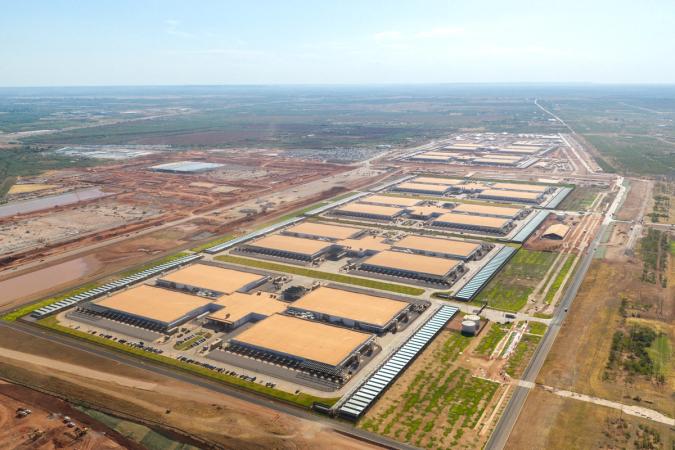
For years, Texas was the promised land. It had a deregulated grid, a pro-business legislature, and a surplus of wind and solar energy. Bitcoin miners flocked there because it was the only place they could get the gigawatts necessary to compete. When the AI wave hit, these companies realized their biggest asset wasn't their hash rate; it was their interconnection agreement.
The recent political shift changes the math. New leadership in key districts and state committees suggests a future where data centers are no longer given a free pass. There is growing concern about the strain on the ERCOT grid and whether a few massive AI facilities are worth the potential for brownouts in residential neighborhoods. For builders, the takeaway is clear: the "Texas Moat"—the idea that you could simply build infinitely in the desert—is no longer a given.
Why Wall Street is De-risking
Investors hate uncertainty more than they hate bad news. The downgrades we are seeing from major banks aren't necessarily about the companies' technology or their balance sheets. They are about the timeline. If a permit that used to take six months now takes two years because of local opposition, the Internal Rate of Return (IRR) on a billion-dollar data center project falls off a cliff.
We are seeing a divergence in the market. Companies that already have their power secured and their facilities built are suddenly more valuable. They have the supply in a market where new supply is becoming harder to create. Meanwhile, companies that were selling a "pipeline" of future projects are getting hammered. In the AI era, a signed Memorandum of Understanding for power is worth less than the paper it's printed on if the local zoning board decides to play hardball.
What This Means for AI Builders
If you are building an AI startup, you might think this doesn't affect you. You're wrong. The cost of compute is directly tied to the availability of these data centers. If the build-out slows down due to political friction in Texas, the price of training your next model is going to stay high for longer.
We are moving into an era of "geopolitical compute." Where you train your models and where you host your inference is becoming a strategic decision. You can't just assume that the cloud providers will have infinite capacity waiting for you. The physical world—concrete, copper, and transformers—is the new bottleneck.
- Power is the product: In the next five years, the most successful "AI companies" might just be energy companies in disguise.
- Local politics matters: Founders need to stop looking only at the federal level and start paying attention to who sits on the local utility boards.
- Scarcity creates winners: If you are one of the few with active, permitted power, you are no longer a miner; you are a landlord to the world's most valuable industry.
The Myth of the Seamless Pivot
The market is also realizing that turning a Bitcoin mine into an AI data center is harder than it looks on a PowerPoint slide. The cooling requirements are different. The uptime requirements are much stricter. A Bitcoin miner can shut down for two hours when the grid is stressed; an AI cluster running a massive training job cannot.
The political shift in Texas reflects a broader skepticism. People are starting to ask what these facilities actually give back to the local community. Bitcoin mining provided a way to stabilize the grid, but AI data centers are constant, heavy loads. If builders can't answer the "what's in it for us?" question for local residents, they will continue to face regulatory headwinds.
"The era of easy energy is over. Builders who want to scale in AI need to become experts in the physical and political infrastructure of the grid, not just the architecture of their neural networks."
Strategic Takeaways
First, expect a flight to quality. Investors will move away from the "hope and a prayer" miners and toward those with Tier-3 or Tier-4 data center capabilities already in the ground. Second, look for geographic diversification. The reliance on Texas was a single point of failure that is now being exposed. We will see more projects popping up in the Rust Belt or the Southeast, where grids might be older but the political environment is currently more stable.
Finally, for the founders on the ground: don't get distracted by the stock price fluctuations. The demand for compute isn't going away. If anything, this bottleneck makes your work more valuable. But it also means you need to be leaner and more efficient with the compute you do have. The days of wasteful training runs are coming to an end because the energy to power them is becoming a scarce resource.
Building in AI right now feels like building on quicksand. The tech moves fast, but the infrastructure moves at the speed of a government bureaucrat. If you want to win, you have to master both.
Read the original at CoinDesk →