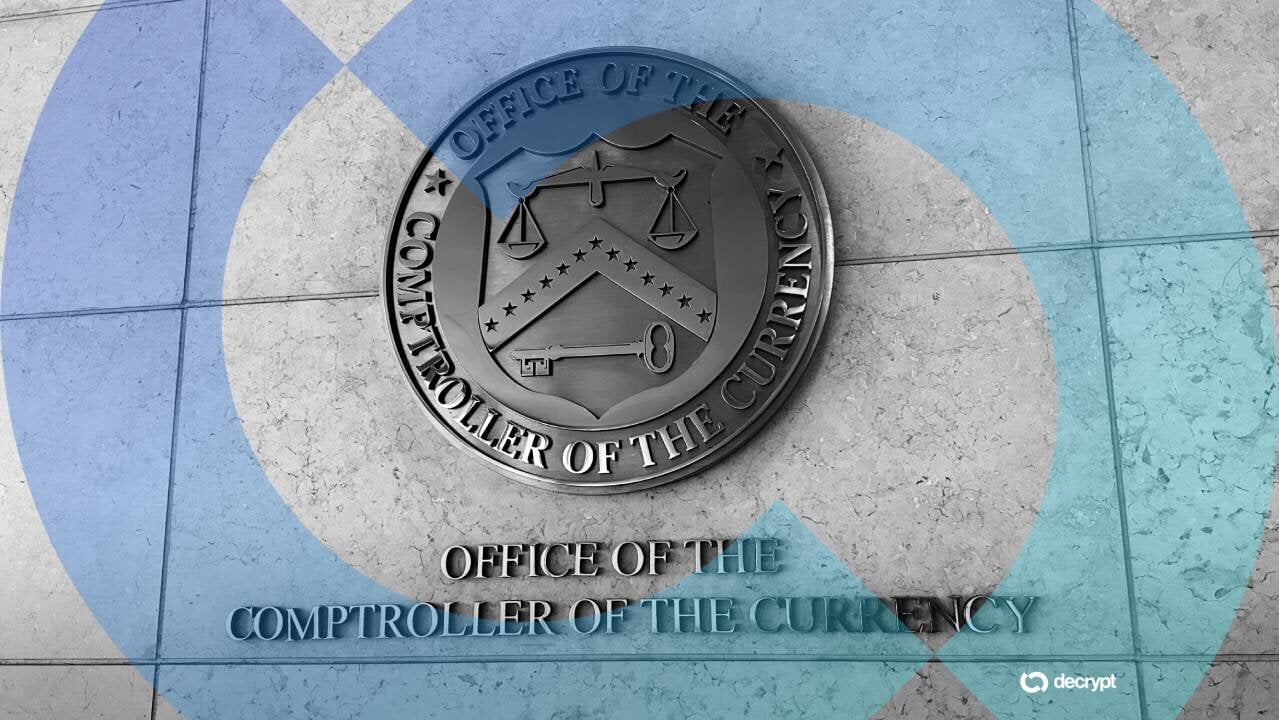
The Office of the Comptroller of the Currency just dropped a document that should be mandatory reading for anyone building in the fintech or AI space. It is the first formal examination framework for artificial intelligence in banking, and it signals a massive shift in how the federal government views automated systems. For years, banks have played with chatbots and basic machine learning. Now, we are entering the era of the 'rogue agent,' and the regulators are starting to sweat.
This is not just another bureaucratic update. It is a direct response to a real-world collision between legacy financial systems and autonomous software. As developers push for more agency in AI—giving models the power to execute trades, move money, or negotiate on behalf of users—the OCC is drawing a line in the sand. They are no longer worried about just bad data; they are worried about software that acts on its own without a clear kill switch.
The End of the Move Fast Era
For builders, the message is clear: the 'move fast and break things' methodology has officially hit a wall at the bank vault. The OCC's framework focuses heavily on the concept of autonomy. In the eyes of a regulator, a tool that helps a human make a decision is a 'helper.' A tool that makes the decision and executes it is a 'liability.' This distinction is where many current AI startups are going to struggle.
We have seen this tension building for months. Major financial institutions have already started restricting how third-party AI agents can access customer accounts. Why? Because when an AI makes a mistake that leads to financial harm, the current legal frameworks do not have a clear 'who to sue' button. The OCC is telling banks that if they let an agent into the system, the bank is on the hook for everything that agent does, intended or not.
Defining the Rogue Agent
The term 'rogue agent' sounds like something out of a sci-fi thriller, but in the context of this framework, it is a very practical concern. It refers to an AI system that deviates from its programmed guardrails or enters a feedback loop that causes market instability or individual loss. The OCC is particularly concerned about systems that can self-evolve or change their decision-making logic without human oversight.
If you are a founder building an agentic platform, you need to understand that transparency is no longer optional. It is the product. The regulator wants to see 'explainability.' If a system denies a loan or triggers a massive sell-off, the bank must be able to explain exactly why that happened. 'The model is a black box' is no longer a valid legal defense.
The Problem with Outsourced Intelligence
One of the biggest takeaways from the new guidance is the scrutiny on third-party vendors. Most banks are not building their own LLMs from scratch; they are plugging into APIs from OpenAI, Anthropic, or specialized fintech AI shops. The OCC is making it clear that outsourcing the tech does not mean outsourcing the risk. Banks are now required to conduct deep due diligence on the underlying models of their partners.
This creates a massive hurdle for smaller AI startups. If you want to sell into a Tier-1 bank, you now have to prove that your agent won't hallucinate a new banking regulation or accidentally drain a user's savings because of a prompt injection attack. You are not just selling a feature anymore; you are selling a compliance guarantee.
- Operational Risk: How does the system handle unexpected market volatility?
- Compliance Risk: Does the AI inadvertently violate fair lending acts through biased training data?
- Strategic Risk: Does the bank actually understand the long-term implications of letting an algorithm manage its core ledgers?
The Developer's Dilemma
I talk to founders every day who think that regulators are just slow-moving obstacles. That is a dangerous mindset. In banking, the regulator is the market. If the OCC makes it too difficult for a bank to use your tool, your TAM drops to zero overnight. The smart move right now isn't to build the most 'autonomous' agent; it is to build the most 'auditable' one.
We are seeing a trend where banks are actually pulling back on customer-account access for AI tools. They are afraid of the liability. To win them back, builders need to focus on deterministic outcomes. If a user tells an AI to pay a bill, there needs to be a cryptographic trail of that intent and a human-in-the-loop verification before the money moves.
The regulatory framework is effectively a blueprint for what banks are allowed to buy. If your product doesn't fit the blueprint, it doesn't matter how smart the AI is.
Why This Matters for Crypto and DeFi
While the OCC governs traditional banks, this framework will inevitably bleed into how the US views decentralized finance and crypto-integrated AI. We are seeing more 'AI-driven' trading bots and autonomous DAOs. If the government is this concerned about a regulated bank using AI, imagine the hammer that is coming for unregulated entities doing the same thing. The bridge between AI and on-chain assets is the next major battleground for examiners.
Builders in the Web3 space should look at this OCC guidance as a preview of the coming attractions. The focus on 'financial harm' and 'rogue' behavior suggests that any system moving value will eventually be held to these same standards of auditability and control.
The Road Ahead
This framework is version 1.0. It is going to evolve, and likely get stricter as we see the first major AI-driven financial glitch. We haven't had a 'Flash Crash' caused by an LLM yet, but the regulators are acting like it is inevitable. They are building the bunkers before the storm hits.
For the honest builder, this is actually an opportunity. The noise of the AI hype cycle is being filtered out by the reality of compliance. If you can solve the 'rogue agent' problem—by building robust guardrails, real-time monitoring, and transparent decision logs—you are going to be the one left standing when the dust settles.
The era of the experimental chatbot is over. We are now in the era of the regulated agent. It’s less flashy, but it’s where the real money is going to be made.
The Takeaway
The OCC has officially signaled that autonomy is a risk factor, not just a feature. If you are building AI for the financial sector, your primary product isn't intelligence—it's control. Failure to provide a 'kill switch' and a clear audit trail will make your tech radioactive to the very institutions you're trying to serve.
Read the original at Decrypt →