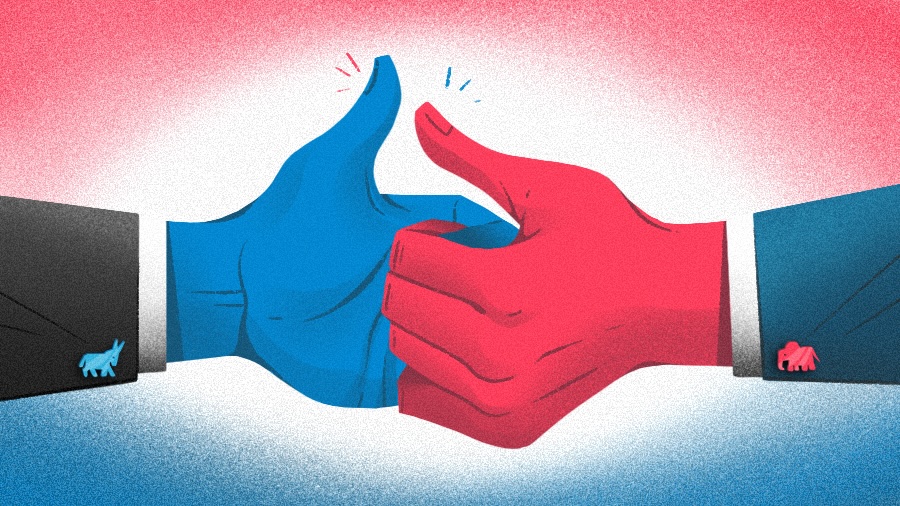
We love a good headline that sounds like a political civil war. The latest data hitting the wire suggests that less than 2% of venture capital in 2026 has flowed into red states. On the surface, it looks like a complete abandonment of middle America by the coastal elite. If you are a founder in a flyover state, you might be looking at your bank account and wondering if the faucet just got turned off for good.
But as someone who spends most of my time looking at the pipes behind the walls of the tech industry, I can tell you this isn't a story about a sudden drought. It is a story about how we draw our maps and how the definition of a tech hub is shifting under our feet. The math is technically correct, but the narrative is a bit of a mirage.
The Great Purple Shift
The primary reason for this statistical collapse is simple: the geography of success is changing. In previous years, states like Arizona, Georgia, and Pennsylvania might have been categorized differently. As these regions mature into tech powerhouses, they are swinging politically. When five major states shift from red to purple or blue in a cycle, the venture dollars associated with them move columns in the spreadsheet.
For builders, this is actually a sign of health. It means that the infrastructure required to support a high-growth startup ecosystem—talent, universities, and capital—is often linked to the kind of urban densification that changes the political lean of a region. We aren't seeing money flee red states; we are seeing the places where money lives change their character.
Concentration is a Feature, Not a Bug
Despite all the talk about remote work and decentralized teams, venture capital is still a game of proximity. The data shows that the vast majority of capital is still landing in the usual suspects: California, New York, and Massachusetts. When you remove those heavy hitters, the remaining pie is already small. When you further divide that pie by political leanings, the 2% figure starts to make more sense.
Founders in deep red states shouldn't take this as a sign to pack their bags for San Francisco. What it really means is that the bar for raising capital outside of the major hubs remains incredibly high. You have to be twice as good to get half the attention if you aren't in the rooms where the deals are being signed. That is a hard truth, but it is one that builders in the South and Midwest have lived with for decades.
The Myth of the Political Checkbook
I talk to a lot of VCs. Very few of them are checking a map of voting districts before they wire funds. They are looking for returns. If a founder in rural Wyoming builds a breakthrough AI model that solves high-frequency trading latency or a crypto protocol that actually scales, the money will find them. Capital is generally agnostic; it goes where it is treated best and where it can grow the fastest.
The danger in these headlines is that they create a self-fulfilling prophecy. If founders believe that being in a red state is a death sentence for their cap table, they leave. When they leave, they take the talent and the tax base with them, further cementing the divide. We need to stop looking at venture capital through a partisan lens and start looking at it as a distribution problem.
Building in the Gap
If you are a founder currently operating in a state that falls into that 2% category, you have a specific set of challenges. You don't have the luxury of a local network of second and third-time founders to lean on. You likely don't have a dozens of micro-VCs in your backyard competing to lead your seed round.
However, you do have an advantage: lower burn rates and a different perspective. Some of the best builders I know are working on problems that the Silicon Valley bubble doesn't even realize exist. Whether it is ag-tech, logistics, or industrial automation, there is a massive opportunity to build real-world solutions that don't rely on the hype cycles of the coast.
Why the Data Matters for AI and Crypto
In the sectors we cover most closely at STKR News, this geographic concentration is even more pronounced. AI requires massive compute and specialized talent that clusters around a few key cities. Crypto, while theoretically borderless, still relies heavily on legal frameworks and developer hubs that are concentrated in a few jurisdictions.
If we want a truly decentralized future, we have to figure out how to bridge this 2% gap. It isn't just about the money; it is about the access to the tools of innovation. When 98% of the funding stays in a few specific regions, the worldview of the products being built stays narrow. We end up with apps that solve the problems of people living in luxury condos, rather than tools that help the rest of the world.
The Founder Takeaway
Don't let the 2% statistic scare you, but don't ignore it either. If you are building in a red state, you need to be intentional about your networking. You cannot wait for the capital to come to you. You need to be visible in the hubs while maintaining the cost advantages of your home base.
The data shows a shifting map, not a closing door. The states that moved from the red column to the purple or blue ones didn't do it by accident; they did it by becoming centers of industry and education. That is the blueprint. To change the statistics, you have to build something that forces the map to change.
The math of venture capital usually follows the talent. If you want to see that 2% number go up, stop worrying about the politics of your zip code and start focusing on the unit economics of your business.
We are going to see more of these reports as the next election cycle approaches. The media loves a narrative of a divided country. But as builders, our job is to ignore the noise and look at the signal. The signal here is that the definition of a 'tech state' is expanding, even if the spreadsheet hasn't quite caught up yet.
Read the original at Crunchbase News →