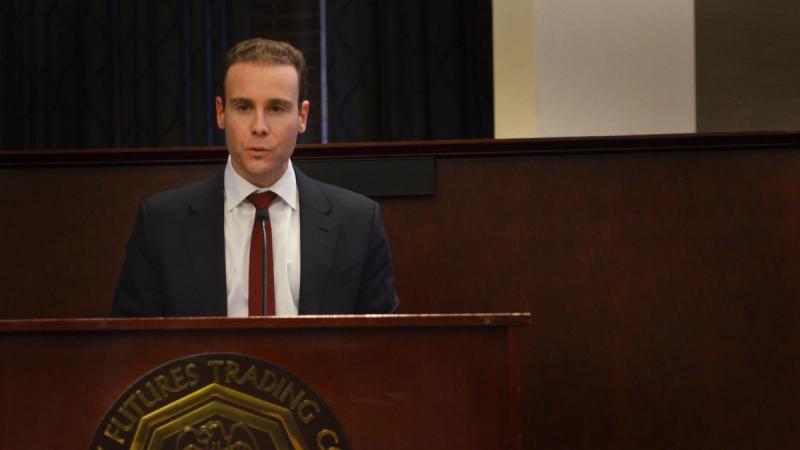
Regulators don't usually act out of curiosity. They act out of a need for control. The latest move from the Commodity Futures Trading Commission (CFTC) to reclassify event contracts as swaps is a textbook example of a regulatory body trying to close a door that the courts have started to nudge open. For founders in the prediction market space, this isn't just a legal footnote; it is a direct challenge to the architecture of decentralized betting.
The Swap Maneuver
The core of the issue is how the government defines a trade. For years, platforms like Kalshi and various crypto-based prediction protocols have operated in a grey area, arguing that betting on an election or a policy outcome is essentially a contract based on an event. The CFTC is now proposing a formal rule that would bucket these event contracts into the same regulatory category as interest rate swaps and credit default swaps.
This isn't just a naming convention. If an event contract is legally a swap, it triggers a massive list of compliance requirements. We are talking about mandatory clearing, specific reporting standards, and capital requirements that most lean startups aren't prepared to handle. It is a deliberate attempt to bring the wild west of event wagering into the highly sanitized world of institutional derivatives.
Why the Sudden Urgency?
You have to look at the timing here. We are in a cycle where prediction markets have finally gained mainstream traction. People are looking at Polymarket and Kalshi not just as gambling dens, but as data sources that are often more accurate than traditional polling. That utility makes the regulator nervous. If a platform can predict an outcome better than a government-sanctioned index, the regulator loses the narrative.
The CFTC has been locked in a legal battle with Kalshi over whether people should be allowed to bet on which party controls Congress. The courts have recently leaned toward the side of the platforms, suggesting that the CFTC might be overstepping its current authority. By proposing this new rule to define these contracts as swaps, the agency is essentially trying to rewrite the law so the courts can't tell them "no" next time.
The Founder's Perspective
As a builder, you have to read between the lines. The agency is signaling that they view prediction markets as systemic risks rather than consumer products. If you are building a DeFi protocol that allows for event-based payouts, you are now officially in the crosshairs of swaps regulation. This moves the goalposts from "consumer protection" to "market stability," which is a much harder standard to meet.
The skepticism here is warranted. If every event contract is a swap, the friction for entering the market becomes so high that only the biggest players can survive. It effectively kills the long-tail of prediction markets—the niche bets on local weather, tech breakthroughs, or small-scale governance votes—because the cost of compliance outweighs the potential liquidity of the pool.
What This Means for Liquidity
Swaps regulation is designed for big banks and hedge funds. It requires a level of transparency that, while good for preventing another 2008 financial crisis, is a death sentence for privacy-preserving crypto protocols. If every trade needs to be reported to a swap data repository, the pseudo-anonymity that drives many on-chain markets evaporates.
We are likely to see a bifurcation in the market. You'll have the "regulated" swaps platforms that look and feel like E*TRADE, and then you'll have the offshore or truly decentralized protocols that ignore these rules entirely. The middle ground—the place where most innovative U.S. founders want to live—is disappearing. The CFTC is forcing a choice: become a bank or become a fugitive.
The Fight Ahead
This rule isn't set in stone yet, but the intent is clear. The agency is trying to build a moat. By folding event contracts into the existing swaps framework, they don't have to invent new rules; they just have to apply old, heavy ones to new, light technology. It is a classic move to stifle innovation by overwhelming it with administrative weight.
For the crypto community, this is a call to focus on real decentralization. If your protocol has a central switch that can be flipped by a regulator demanding swap reports, you aren't building a decentralized market; you're building a liability. The CFTC has shown its hand, and it’s a heavy one.
The Takeaway
The CFTC is attempting to rebrand event betting as high-finance swaps to regain control over prediction markets. For builders, this means the era of "asking for forgiveness" in event contracts is over. You either need the balance sheet of a major exchange to handle swap compliance, or you need to build systems that are truly beyond the reach of a single agency's definition. The regulatory wall is getting higher, and it’s time to decide if you’re going over it or around it.
Read the original at CoinDesk →