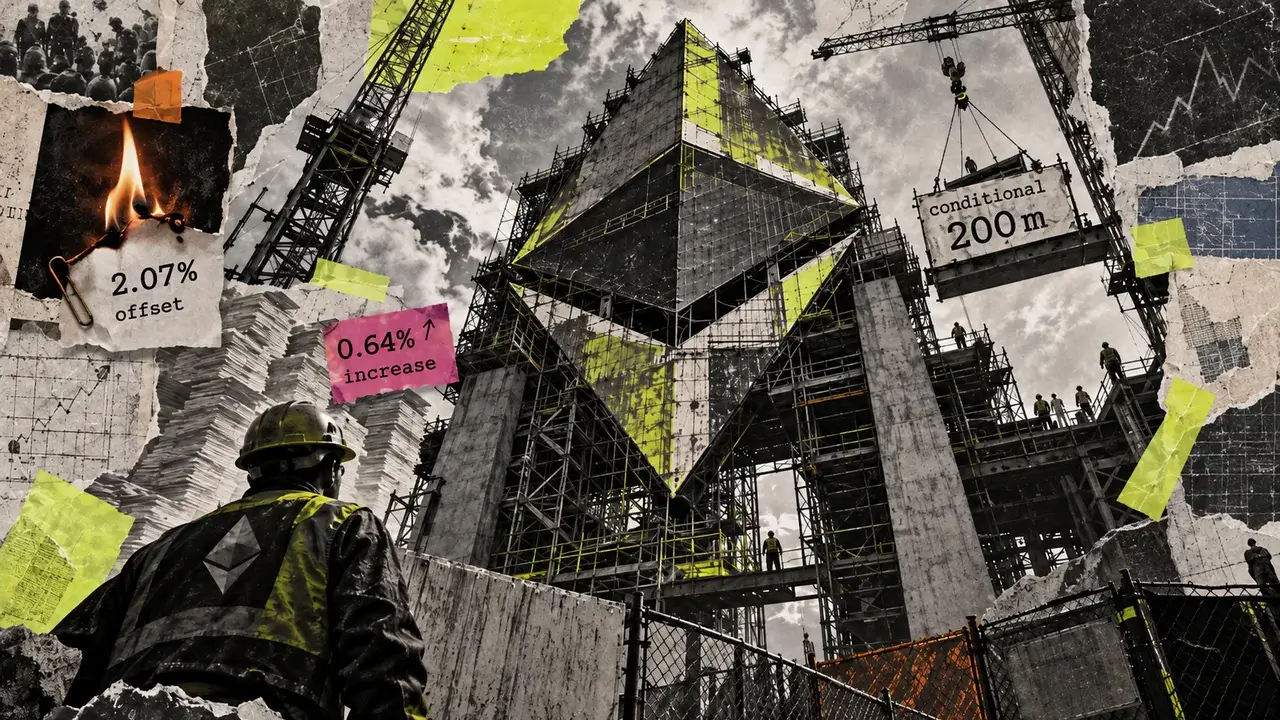
We have to stop pretending that every upgrade is a win for the base layer's value. For years, the narrative around Ethereum has been built on the idea of ultrasound money. The pitch was simple: we burn more than we print, making the asset deflationary. But recent data suggests we are nowhere near that reality anymore. As of October 2024, the fee burn is covering a mere 2.07 percent of new coins being issued. If you are building on this network or holding the token, you need to understand why the math has shifted so drastically.
The L2 Paradox
The core of the problem is actually a success story, depending on how you look at it. Ethereum successfully pushed activity to Layer 2 scaling solutions. We wanted fast, cheap transactions, and we got them. But the cost of that success is being felt by the EIP-1559 burn mechanism. By moving the heavy lifting off the main chain, we have essentially starved the burn engine.
When most of the user activity happens on Base, Arbitrum, or Optimism, the main Ethereum chain only sees the settlement data. Settlement is efficient, and efficiency is the enemy of high gas fees. Without high gas fees, the protocol cannot burn enough ETH to offset the rewards being paid out to stakers. We are back to a world where Ethereum is comfortably inflationary, and the trend line isn't looking particularly bullish for the deflation crowd.
Running the Numbers
The data from the second week of October is a wake-up call. Gross issuance is significantly outpacing the burn. While the total supply isn't skyrocketing in a way that should cause immediate panic, the fundamental promise of the post-Merge tokenomics is being tested. If the burn only covers two percent of what we are printing, the ultrasound money label is effectively marketing, not reality.
For founders, this creates a confusing environment. We were told the network would become more scarce as it grew. Instead, the network is growing in terms of total ecosystem activity, but the underlying asset is becoming more plentiful. This creates a decoupling between network utility and token scarcity that we haven't had to deal with in a few years.
Demand vs. Capacity
To get back to a deflationary state, Ethereum needs an astronomical increase in demand, or a significant change in how L2s pay for security. The current capacity models show a massive gap. We are testing the limits of how much demand is actually needed to shrink the supply, and the answer is: a lot more than we have right now.
The irony is that the Dencun upgrade, which made L2s cheaper by introducing blobs, was the final nail in the coffin for the short-term deflationary narrative. It was a great move for builders who want low fees, but it was a massive subsidy that came directly out of the fee burn. We traded token scarcity for developer experience. In the long run, that’s usually the right trade, but we should be honest about the cost.
What This Means for Builders
If you are building an application, you should be happy. Fees are predictable and low. But if you are building a business model that relies on ETH being a deflationary store of value to attract investors, you might need to rethink your pitch. The security of the network is still top-tier, but the economic flywheel has slowed to a crawl.
- Lower burn rates mean the total supply of ETH will continue to grow for the foreseeable future.
- Layer 2 dominance is great for UX but dilutes the value accrual of the Layer 1 token.
- The ultrasound money narrative is currently on life support.
We are seeing a shift in how we value these networks. If the token isn't burning, it has to provide value elsewhere. For Ethereum, that value is acting as the global settlement layer. But settlement is a low-margin business when you optimize it correctly. The more efficient we make the technology, the less 'waste' there is to burn. This is the efficiency trap.
The Skeptic's View on Issuance
I’ve always been skeptical of the idea that a blockchain needs to be deflationary to succeed. Bitcoin isn't deflationary; it just has a fixed cap and a declining inflation rate. Ethereum's problem is that it tried to promise something even more aggressive, and now that the market is shifting toward L2s, it can't deliver on that specific promise.
We have to ask ourselves: is a 2 percent offset enough? If we are printing 98 percent more than we are burning, the supply is effectively increasing at a steady clip. In a vacuum, this should put downward pressure on the price, or at least cap the upside compared to a truly deflationary asset. For founders, this means your treasury management needs to be more sophisticated. You can't just park funds in ETH and assume the burn will do the heavy lifting for your valuation.
The dream of a self-correcting, supply-shrinking machine is currently at odds with the goal of being a mass-market execution layer. You can't have both when the execution happens somewhere else.
As we look toward 2025 and 2026, the gap between issuance and burn will likely remain wide unless we see a massive resurgence of mainnet DeFi activity. But why would users go back to paying $50 for a swap when they can do it for pennies on a rollup? They won't. The migration to L2 is permanent.
The Takeaway
The math doesn't lie. Ethereum is inflationary again, and the burn is currently a rounding error in the face of total issuance. For builders, this is a signal to focus on the utility of the ecosystem rather than the meme of the token's economics. The network is more usable than ever, but the ultrasound money era is, at least for now, on pause. Don't build your roadmap on the assumption of scarcity; build it on the reality of a growing, inflationary, but highly functional settlement layer.
Read the original at CryptoSlate →