We like to talk about decentralization as if it is a binary state. You are either on the chain, or you are off it. But the recent friction between Tether and THORChain shows us that the reality is much messier. When the issuer of the world’s most liquid stablecoin decides to flip a switch, the walls of the supposedly permissionless garden start to look very thin.
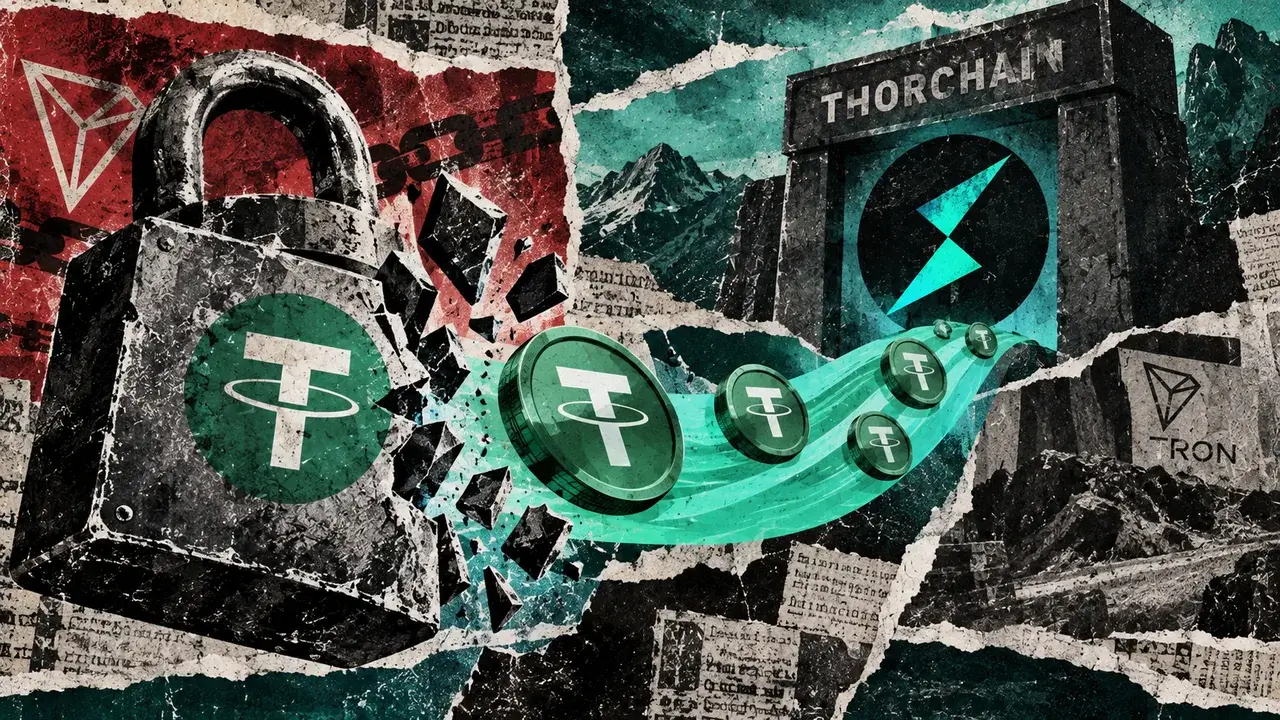
Earlier this week, THORChain hit a snag. Reports surfaced that the cross-chain liquidity protocol had to stall certain operations because Tether blacklisted four specific vaults on the TRON network. We are talking about roughly $1.4 million in USDT. In the grand scheme of crypto liquidity, that is a rounding error. For founders building on cross-chain primitives, however, it is a loud reminder of the systemic risk we carry every time we integrate a centralized asset.
The Illusion of Immunity
THORChain is built to be the backbone of a world where you do not need an intermediary to swap native assets. It is a technical marvel in many ways, allowing Bitcoin to talk to Ethereum to talk to TRON without a centralized bridge. But even the most robust decentralized infrastructure is ultimately beholden to the properties of the assets it carries. If you are a builder and your protocol relies on USDT, you are not just building on a blockchain; you are building on Tether’s terms of service.
The freeze happened at the vault level. For those not deep in the weeds, THORChain uses vaults to hold the collateral that facilitates swaps. When Tether blacklists these addresses, the USDT inside becomes dead weight. It cannot be moved, swapped, or bridged. The protocol does not just lose liquidity; it loses the ability to remain balanced. This is why we saw the temporary stall in TRON-based swaps. The system had to be adjusted to account for the fact that a chunk of its treasury was suddenly under the control of a private company in the British Virgin Islands.
The Founder’s Dilemma: Liquidity vs. Sovereignty
If you are starting a new DeFi project today, you face a hard choice. You want users, and users want USDT. It is the lifeblood of the market, regardless of how much we complain about its lack of transparency. If you do not support it, your TVL will likely suffer. But if you do support it, you are importing a kill switch into your codebase.
This incident with THORChain proves that no amount of smart contract wizardry can bypass the "blacklist" function written into the ERC-20 and TRC-20 contracts by centralized issuers. When we build "decentralized" exchanges that rely on these assets, we are essentially building fancy interfaces for centralized clearing houses. It is a harsh truth, but one we have to face if we want to build things that actually last during a regulatory crackdown.
Technical Fragility in Cross-Chain Composability
The technical fallout of this freeze is what should really worry developers. When a vault is blacklisted, it creates a discrepancy between the on-chain accounting and the actual spendable balance. In a protocol like THORChain, which relies on continuous rebalancing and incentive structures, a frozen asset is a poison pill. It forces the developers and the node operators to manually intervene to prevent the system from trying to trade against assets that don't technically exist anymore.
This manual intervention is the antithesis of the "code is law" ethos. It introduces human error and governance lag. While the THORChain team handled the resumption of swaps relatively quickly, the precedent is set. Tether now knows it can effectively put a speed bump in a major cross-chain protocol by targeting its liquidity hubs.
A Skeptical Look at the "Why"
We do not have a clear reason for the freeze yet, other than the usual vague references to law enforcement requests. This is the standard operating procedure for Tether. They act first and explain later, if at all. For builders, the "why" matters less than the "how." The fact that $1.4 million can be neutralized within a decentralized vault architecture without a trial or a public filing should give every founder pause.
Is this a case of legitimate crime prevention, or is it a sign of increasing pressure on decentralized protocols to implement front-end censorship? If the latter is true, the industry is headed for a split. We will have the "compliant DeFi" sector that asks for permission, and the "sovereign DeFi" sector that will likely have to move away from stablecoins like USDT entirely.
Strategies for Builders
So, what do you do if you are building in this space? First, stop assuming that "decentralized" equals "uncensorable" if you are using bridged or centralized assets. You need to build in redundancy. If your protocol can be brought to its knees by the freezing of a single asset class, your architecture is brittle.
Secondly, we need to start pushing harder for over-collateralized, decentralized stables. We have been saying this for years, but the THORChain incident makes it urgent. Projects like LUSD or even the newer iterations of DAI (despite its own RWA baggage) offer a level of resistance that USDT simply cannot. They are harder to scale, yes, but they don't come with a back door.
The more we rely on centralized rails to grow our decentralized networks, the more we resemble the legacy financial systems we claimed to be replacing.
The Takeaway
The resumption of TRON swaps on THORChain is a win for the team’s ability to react to a crisis, but it is a warning for the rest of us. We are currently building on top of a foundation that can be pulled out from under us at any time. Tether’s ability to freeze funds inside a decentralized vault isn't a bug; it is a feature of the current market structure.
If you are a founder, your job is to manage risk. The risk of USDT is no longer theoretical—it is a documented operational hazard. Don't wait for your own vaults to be blacklisted before you start thinking about asset diversity and censorship resistance. The mid-market builders who survive the next five years will be the ones who didn't trade their sovereignty for easy liquidity.
Read the original at CryptoSlate →