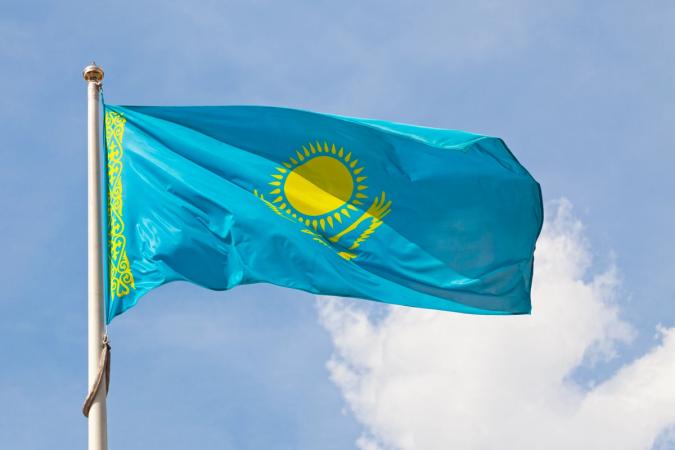
Kazakhstan used to be the place you went when you wanted cheap electricity and a place to hide your mining rigs. After China kicked out the miners in 2021, the country became a global hub for hashing power. But the relationship was always rocky. The government realized pretty quickly that having thousands of power-hungry machines humming in warehouses didn't necessarily build a sustainable digital economy. It just strained the grid.
Now, the National Bank of Kazakhstan is changing tactics. They aren't just looking at the hardware layer anymore; they are moving into the settlement layer. The recent news that they have tapped Tether to explore a local currency-linked stablecoin and the tokenization of real-world assets is a massive signal of where central banks are headed.
The Shift from Mining to Infrastructure
For founders in the space, this is a lesson in evolution. Kazakhstan is no longer satisfied being the world’s landlord for ASIC miners. They want to own the pipes. By partnering with the company behind USDT, the Kazakh central bank is looking at how to bring their local currency, the tenge, into the programmable age.
This isn't just about making payments faster. It’s about the tokenization of assets. When a central bank starts talking about tokenizing real-world assets (RWA), they are talking about moving land titles, commodities, and government debt onto a ledger. For a country rich in natural resources, this is a logical, if ambitious, step.
Why Tether?
People love to talk trash about Tether. The skepticism is baked into the brand at this point. But if you look at it from a sovereign perspective, Tether is the only entity that has proven it can maintain a massive balance sheet and survive years of regulatory scrutiny and market volatility without collapsing. They have the distribution, the liquidity, and the technical blueprint for what a stablecoin actually looks like in practice.
For the National Bank of Kazakhstan, partnering with Tether is a pragmatic move. Why build a proprietary system from scratch when you can learn from the biggest player in the game? Tether gets a seat at the table with a sovereign regulator, and the bank gets a crash course in how to manage a digital asset ecosystem without breaking their monetary policy.
What This Means for Builders
If you are building in the RWA or stablecoin space, you need to pay attention to these sovereign experiments. We are moving away from the era of "crypto for crypto's sake" and into an era where national governments are looking for utility. They want to solve the problem of liquidity in local markets. They want to make it easier for international investors to buy into Kazakh assets without dealing with the friction of legacy banking rails.
The real opportunity here isn't in the stablecoin itself, but in the middleware. If Kazakhstan launches a tenge-backed stablecoin, who is building the compliance layers? Who is building the custody solutions that satisfy both the central bank and the private sector? These are the problems that founders should be solving. Don't build another token; build the plumbing that allows these national experiments to actually function.
A Healthy Dose of Skepticism
We shouldn't get ahead of ourselves. A central bank "exploring" something is not the same as a central bank "deploying" something. Governments move slowly. They have to deal with the IMF, internal politics, and the inherent fear of losing control over their money supply. There is a high probability that this exploration takes years and results in a highly controlled, permissioned system that looks nothing like the open-source ethos we love.
However, the fact that Tether is the partner here is significant. It suggests that even central banks are realizing that the future of finance is going to be hybrid. It won't be entirely decentralized, but it won't be entirely locked in the 1970s either. It will be a weird, messy middle ground where private tech meets public policy.
The Takeaway
The Kazakhstan-Tether partnership is a clear sign that the "crypto winter" narrative is dead at the institutional level. You don't partner with the world's largest stablecoin issuer if you think the technology is a fad. You do it because you are afraid of being left behind.
For founders, the message is simple: the next wave of growth isn't coming from retail speculation. It’s coming from the integration of digital assets into national economies. Kazakhstan is testing the waters. If they succeed, every other resource-rich nation with a volatile currency will be looking for a similar playbook. Be the person who provides that playbook.
Read the original at CoinDesk →