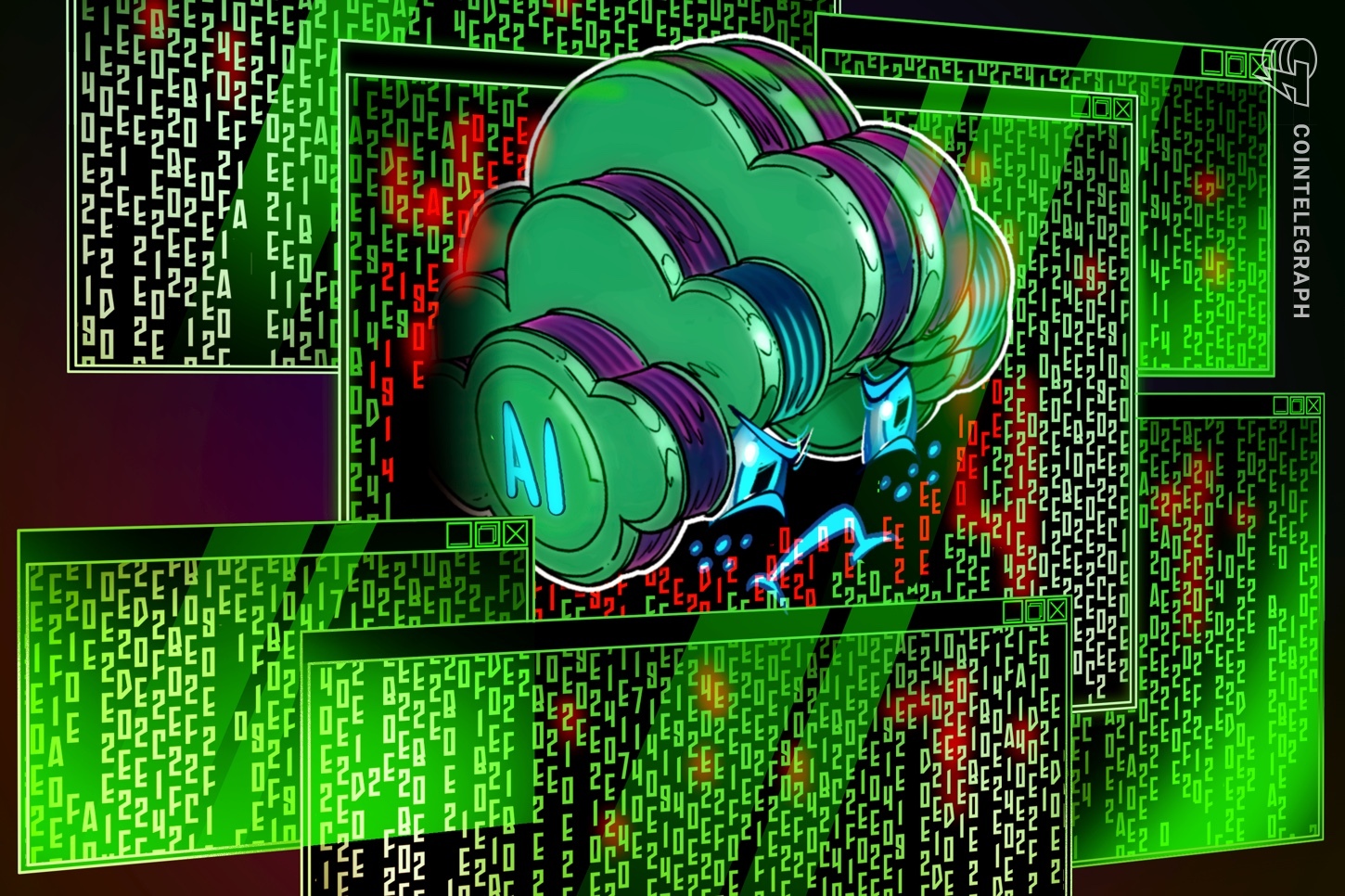
We have spent the last decade worrying about quantum computers. The narrative was always the same: one day, a massive machine will exist that can tear through ECDSA encryption like a hot knife through butter, rendering your Bitcoin and Ethereum addresses useless. We thought we had years, maybe decades, to prepare. But we were looking at the wrong threat actor.
It is not the hardware we should be scared of. It is the software. Specifically, the rapid, almost violent advancement of AI models in solving complex mathematical problems. Ethereum researchers, including Justin Drake and Vitalik Buterin, are now signaling that we might be entering a period where traditional wallet security is no longer a set-it-and-forget-it guarantee. They are calling it bunker mode.
The Math Problem
At its core, crypto security relies on the difficulty of reversing a mathematical function. You have a private key, and through some heavy lifting, you get a public address. It is easy to go one way, but nearly impossible to go the other—unless you have trillions of years and a lot of luck. Or so we thought.
Large Language Models and specialized AI agents are getting terrifyingly good at formal verification and symbolic math. While they are not brute-forcing keys yet, they are finding shortcuts. If an AI can identify patterns in how we generate entropy or find flaws in the elliptic curve implementations we rely on, the wall between your funds and a hacker gets much thinner. Drake recently suggested that we are months, not years, away from seeing AI tools that can challenge current security assumptions.
What Bunker Mode Actually Means
When the people building the protocol tell you to consider moving your funds, you listen. Bunker mode is not a specific software toggle; it is a change in behavior. It is the digital equivalent of moving your gold from a wooden chest to a lead-lined vault buried in an undisclosed location.
The recommendation is starting to lean toward fresh addresses. Not just any addresses, but those utilizing newer, more robust cryptographic primitives that were designed with these emerging threats in mind. For a founder or a builder, this is a massive UX headache, but it is a necessary one. We have spent so much time making crypto easy to use that we might have ignored how easy it is becoming to break.
The Reality for Builders
If you are building a wallet or a dApp right now, you cannot just rely on the standard libraries from 2018. You have to start thinking about post-AI security. This means looking at account abstraction and smart contract wallets that can rotate keys or upgrade their underlying encryption without requiring the user to migrate their entire balance manually.
We are moving into an era where static keys are a liability. If a key is exposed to the internet, or even if the math behind it becomes vulnerable, a static key is a sitting duck. Builders need to prioritize agility. If your users are stuck on an old EOA (Externally Owned Account) with no way to upgrade their security, you are essentially leaving them in a house with a broken lock while a professional locksmith walks the neighborhood with bad intentions.
Is This FUD?
Skepticism is healthy in this industry. We have seen plenty of false alarms. But this feels different because it is coming from the researchers who have the most to lose if the network fails. Vitalik Buterin’s support for these concerns adds weight. He isn't someone who panics easily. When he starts talking about the need for better math and isolated environments, it is because the data shows a narrowing gap between AI capabilities and cryptographic defenses.
The threat is not that AI will guess your seed phrase by magic. The threat is that AI will find a mathematical backdoor that humans missed. We have always assumed the math was perfect. AI is proving that humans are not very good at checking their own homework.
The Founder Perspective
As a founder, your job is risk management. You shouldn't be liquidating your holdings in a panic, but you should be auditing your security stack. If you have significant treasury funds sitting in old-school multisigs or single-sig hardware wallets that haven't been updated in years, you are taking an unnecessary gamble.
The move to bunker mode is about proactive defense. It is about acknowledging that the tools we used to build the first version of the decentralized web might not be strong enough to support the second. We are entering a transition period where the old guard of cryptography is being tested by the new guard of artificial intelligence.
The Immediate Takeaway
Do not wait for a headline that says a major wallet provider was cracked. By then, it will be too late. The smart move is to start looking at your long-term storage. If you haven't moved funds to a fresh, modern setup in the last year, now is the time to plan that migration. It is annoying, it costs gas, and it takes time. But compared to the alternative of losing everything to a script running on a GPU cluster, it is a bargain.
We wanted AI to help us code faster and solve diseases. It turns out, it’s also really good at breaking things. Stay skeptical, stay prepared, and maybe start looking for that digital bunker.
Read the original at Cointelegraph →