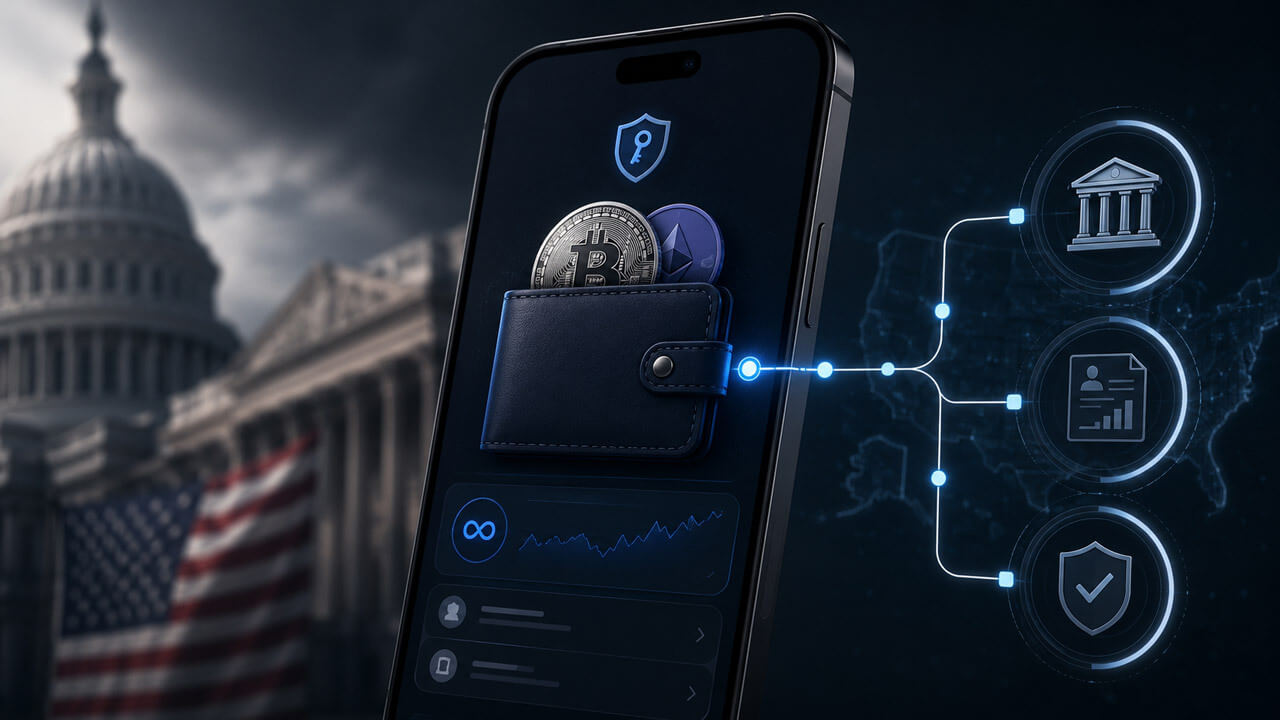
We are watching a significant pivot in the ongoing tension between decentralized finance and the federal government. On July 9, the team behind the Phantom wallet, joined by the Hyperliquid Policy Center, stepped directly into the line of fire by submitting a formal comment to the Commodity Futures Trading Commission. They are making a case that could decide whether the United States stays relevant in the next decade of financial infrastructure or if we simply outsource the entire futures market to offshore players.
The Middleman Problem
The core of the argument is simple: the current rules for derivatives markets were written for a world that used paper ledgers and central clearinghouses. In that old world, you needed a massive entity to stand in the middle, hold your money, and guarantee that the other guy wouldn't disappear when the trade went south. The CFTC was built to regulate those entities.
Phantom is arguing that they aren't those entities. They are software. When you use a wallet to trade perpetual futures on a chain like Solana or Hyperliquid, the wallet is just a window. It is a user interface that helps you talk to a smart contract. You keep your private keys. You keep your funds. The smart contract handles the escrow and settlement. There is no human or corporation in the middle taking custody of your capital.
The current CFTC rules, however, treat fintech firms as if they are traditional brokers. They require registrations and compliance hurdles that make it impossible for a lean software company to offer these tools to American users without spending millions on legal fees or fundamentally changing how their tech works. This is what Phantom calls an undue impediment.
Building Without Asking for Permission
For builders, this is the hurdle we face every day. You want to build a tool that gives people more power over their own assets, but the moment you add a feature that looks like a financial instrument, you are grouped in with the same banks and hedge funds you are trying to innovate away from. Phantom’s push is an attempt to draw a line in the sand between software and services.
If the CFTC listens, it would mean that self-custodial software providers wouldn't be classified as intermediaries. This would open the floodgates for on-chain perpetuals in the U.S. markets. Right now, most of that volume happens elsewhere because it is too risky to build here. We see the talent leaving. We see the liquidity moving to places where the rules are clearer, even if they are less consumer-friendly.
The Risk of the Status Quo
If the regulator stays the course, we end up with a walled garden. Only the biggest players with the deepest pockets will be able to offer derivatives trading, and they will do it through centralized, custodial systems. This defeats the entire purpose of the blockchain. If you have to give your money to a centralized broker to trade a decentralized asset, you haven't really solved the problem of counterparty risk; you have just moved it around.
Phantom is positioning itself as the infrastructure layer for the regular person. They want the casual user to have the same access to sophisticated financial tools that a high-frequency trader has, but without the baggage of a traditional bank. The Hyperliquid collaboration adds weight to this because they are proving that the volume is there. People want to trade on-chain. They want the speed and the 24/7 nature of crypto, but they don't want to lose their assets to another exchange collapse like we saw with FTX.
What It Means for the Ecosystem
The wallet war is heating up. It is no longer just about who has the best UI or which wallet supports more chains. It is now a battle over who can navigate the regulatory landscape to bring the most utility to the user. If Phantom wins this argument, the wallet becomes more than a place to look at your NFTs or store your SOL. It becomes a full-stack financial terminal that bypasses the legacy banking system entirely.
From a founder’s perspective, this is the kind of advocacy we need. We can't just build in a vacuum and hope the regulators don't notice. We have to engage with them and explain how the technology actually works. The CFTC needs to understand that a user holding their own keys is a better form of consumer protection than a thousand pages of disclosure documents from a broker who might go bankrupt tomorrow.
A Shift in Strategy
This isn't a protest; it's a policy push. By engaging with the July 9 deadline, these groups are trying to work within the system to fix the system. They aren't asking to ignore the law; they are asking for the law to reflect the reality of smart contracts. If a code-based escrow system can do a better job than a human-led clearinghouse, the law should allow it to try.
We have to be honest: there is a high chance the CFTC doubles down. Regulators are rarely in the business of giving up power or making their own jobs more complex by admitting that software can replace the entities they regulate. But by making this public and framing it as a matter of American competitiveness, Phantom and Hyperliquid are making it harder for the government to ignore the consequences of their inaction.
The Core Takeaway
The distinction between a service provider and a software tool is the most important legal fight in crypto right now. If we lose the right to build software that facilitates peer-to-peer trading without being treated as a bank, we lose the core value proposition of the entire industry. Phantom is taking the lead here, but every developer building on-chain tools should be watching this closely. The outcome will decide if your next project can actually launch in the United States.
The era of the simple crypto wallet is over. We are entering the era of the self-custodial financial engine. The only question left is whether the regulators will let us turn it on.
Read the original at CryptoSlate →