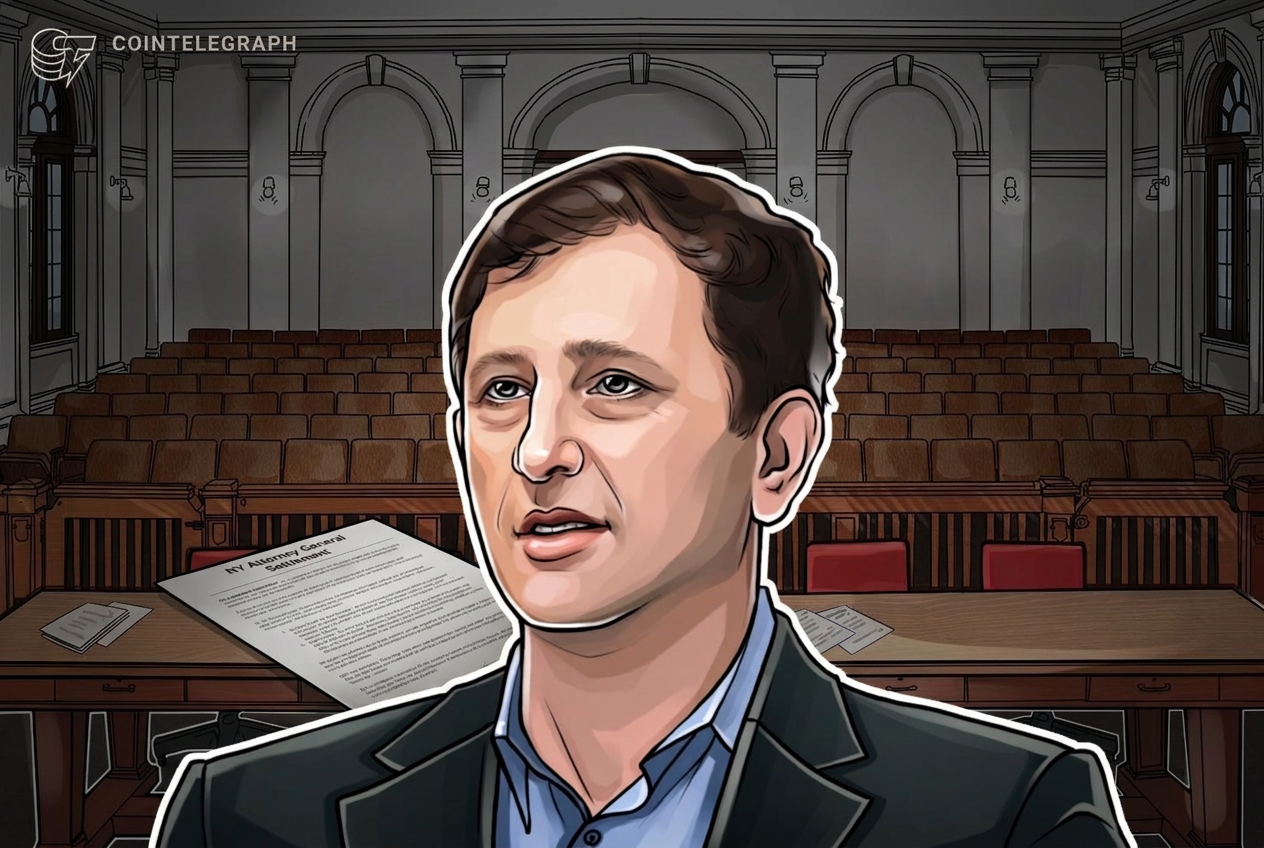
We finally have a closing chapter on the Alex Mashinsky era in New York, and it is about as grim as you would expect for a founder who once claimed to be the safer alternative to traditional banks. The former Celsius CEO has reached a settlement with the New York Attorney General that effectively erases him from the state’s financial landscape. No more crypto, no more securities, no more commodities. He is out.
The Cost of Broken Promises
The settlement includes a $35 million price tag, but for those of us watching from the builder side, the financial penalty is almost secondary to the permanent industry ban. Mashinsky is now legally prohibited from holding any office or acting as a director for any business in New York. For a guy who built his entire persona around being the face of the 'unbank yourself' movement, this is a total institutional rejection.
The lawsuit, which dates back to early 2023, alleged that Mashinsky defrauded hundreds of thousands of investors. The core of the state's argument was simple: he lied about the health of Celsius. While he was telling the public that their assets were as safe as they would be in a regulated bank, the reality behind the scenes was a chaotic scramble to cover losses using risky trading strategies that eventually imploded.
Why This Matters for Builders
If you are building in the DeFi or yield-as-a-service space today, you need to look at this settlement as a roadmap of what not to do. Mashinsky’s downfall wasn’t just about bad trades; it was about the delta between public marketing and private reality. In the crypto world, we often talk about 'fake it until you make it,' but there is a hard line between optimistic forecasting and systemic deception.
When you tell a user their capital is safe, you are taking on a moral and legal debt. Mashinsky ignored that debt. He treated user deposits like a personal piggy bank for high-leverage bets. For founders, the takeaway is clear: transparency isn't just a buzzword for your pitch deck; it is your only defense when the market turns. If your yield is coming from high-risk lending, you better be vocal about that risk before the liquidations start.
The Narrative of the 'Unbanked'
Celsius rose to prominence by attacking the traditional banking system. Mashinsky famously wore shirts that said 'Banks are not your friends.' It was a powerful narrative that resonated with people who felt burned by the 2008 financial crisis. He used the ethos of decentralization to sell a product that was, in reality, highly centralized and poorly managed.
This settlement highlights the danger of using crypto ideology to mask traditional financial fraud. By positioning himself as a revolutionary, Mashinsky gained a level of trust that a standard hedge fund manager never would have received. He weaponized the community's distrust of institutions to lead them into a platform that was arguably less stable than the banks he criticized.
Regulatory Clarity by Enforcement
While we all want clear legislation, the current reality is that clarity is coming through these high-profile enforcement actions. The New York Attorney General’s office is signaling that they will not distinguish between a 'crypto yield product' and a traditional security if the underlying behavior is fraudulent. If you are handling New York residents' money, you are subject to the Martin Act, and no amount of 'crypto-native' terminology will shield you from that.
For those of us trying to build legitimate infrastructure, these headlines are a double-edged sword. On one hand, it clears the field of bad actors who give the industry a bad name. On the other hand, it hardens the resolve of regulators who now view every yield-bearing product with extreme skepticism. It makes the uphill battle for compliance even steeper for the rest of us.
The Road Ahead for Mashinsky
It is important to remember that this civil settlement in New York is only one piece of Mashinsky's legal troubles. He still faces federal criminal charges including securities fraud, commodities fraud, and wire fraud. While the $35 million settlement resolves the state's civil case, his freedom is still very much on the line in the federal courts. His trial is currently slated for early 2025.
The New York settlement effectively serves as a 'keep out' sign. It ensures that regardless of what happens in his criminal trial, he can never again operate a financial platform in one of the world's most important economic hubs. It is a total dismantling of his professional identity.
The Founder's Takeaway
The Celsius collapse was a stress test for the entire industry. It proved that you cannot automate trust, and you cannot substitute marketing for math. As a founder, your primary job is risk management. If you don't understand where the yield is coming from, or if you can't explain it to your grandmother without lying, you shouldn't be building it.
We have to move past the era of the 'charismatic CEO' who leads with vibes rather than balance sheets. The industry is maturing, and part of that maturation is seeing the pioneers of the last bull run face the consequences of their shortcuts. Build for the long term, be honest about the risks, and for heaven's sake, keep your user's assets separate from your corporate gambling fund.
The permanent ban of Alex Mashinsky is a reminder that in the eyes of the law, 'disruption' is not a valid excuse for deception.
Read the original at Cointelegraph →