The Macro Mood Shift
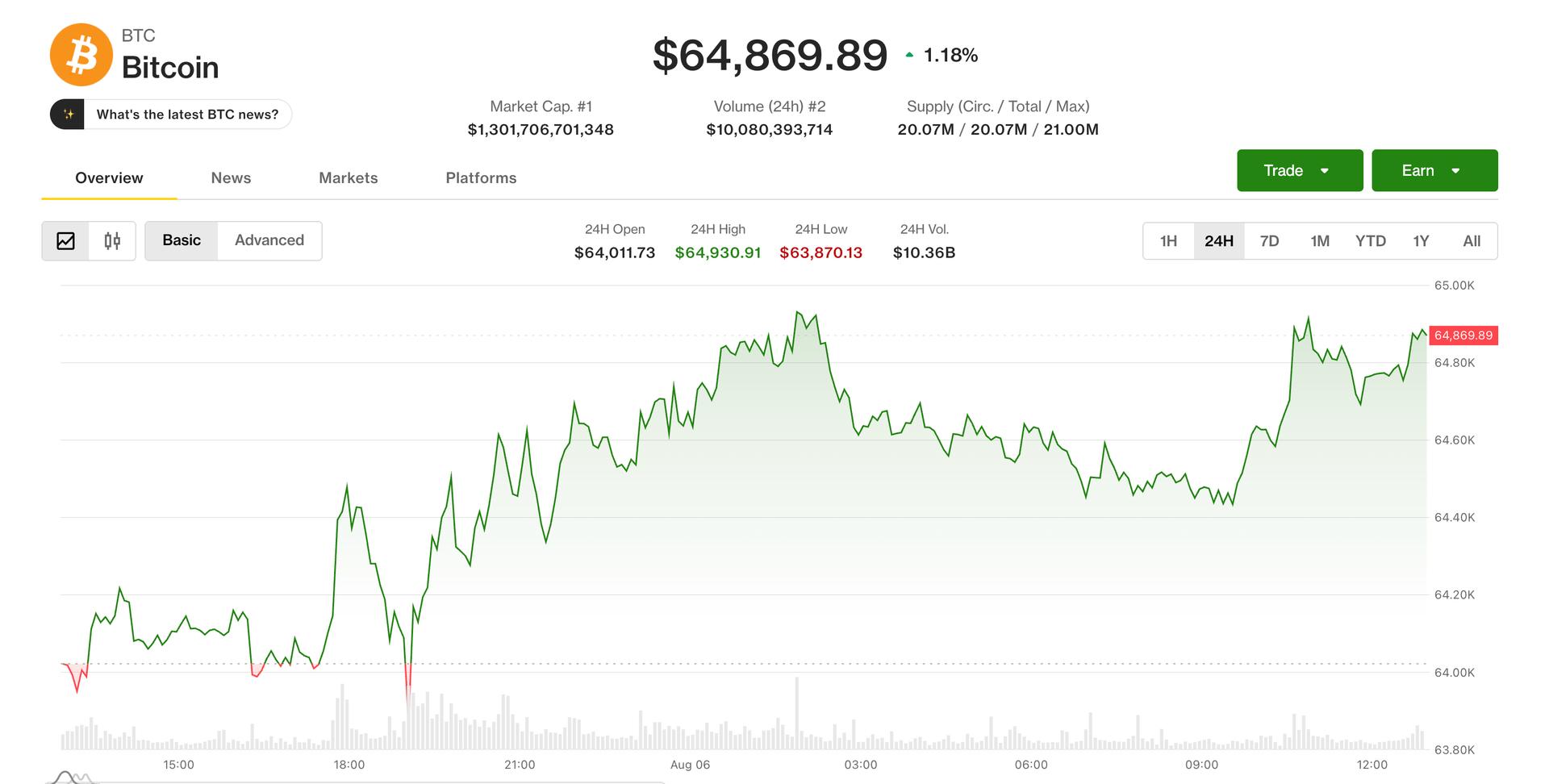
Bitcoin is currently flirting with the $65,000 level, and for once, the volatility isn't coming from a protocol hack or a whale dump. It is coming from the same place that moves the S&P 500: macro headlines and political posturing. We are seeing a rare alignment where traditional risk assets and digital assets are moving in the same direction because of a perceived cooling in global tensions.
Recent comments from Donald Trump regarding potential job growth, inflation control, and a possible de-escalation deal near the Strait of Hormuz have injected a dose of optimism into the markets. For builders, this is a reminder that even if you are building on-chain, your token’s price is often just a leveraged play on global peace and cheap energy. When the threat of an oil supply shock diminishes, the dollar usually softens, and people feel brave enough to buy Bitcoin again.
The Oil and Dollar Correlation
We need to talk about why oil matters to a developer sitting in a basement in Berlin. It comes down to the Treasury yields. If a deal in the Middle East keeps oil prices low, inflation expectations drop. When inflation expectations drop, the Federal Reserve has less reason to keep interest rates high. Lower rates generally mean a weaker dollar, and a weaker dollar is the fuel Bitcoin needs to break out of its current range.
However, I would urge caution. We have seen these macro-driven rallies fizzle out before. The correlation between Bitcoin and the U.S. dollar is at a critical juncture. If lower oil prices don't actually lead to a drop in Treasury yields, Bitcoin might struggle to hold this $65,000 ground. It’s a game of wait-and-see for the bond market, which is the real engine behind these price movements.
Coinbase and the Convergence of Assets
While the charts are busy with macro data, Coinbase is making a move that tells us exactly where the industry is headed. They are opening up U.S. equity trading to their UK user base. This isn't just a new feature; it’s a strategic pivot. Coinbase is realizing that being "the crypto company" isn't enough to survive the next decade. They want to be the primary financial interface for the digital-native generation.
By letting UK users flip between Bitcoin and Tesla or Nvidia in the same app, Coinbase is blurring the lines. For a long time, the crypto world tried to build a parallel financial system. Now, the biggest players are trying to merge the two. If you are building an app today, you have to ask yourself: are you building a silo, or are you building something that can talk to the traditional brokerage world?
What This Means for Founders
If you’re running a startup in this space, the takeaway from the current market isn't "number go up." The takeaway is that the wall between crypto and traditional finance is officially a sieve. Coinbase’s expansion into equities means they are competing directly with Robinhood and Revolut on their home turf. They are betting that the user experience of a crypto-first platform is superior to that of a legacy bank.
As a founder, this should change your roadmap. We are moving away from the era of pure-play DeFi that only geeks can use. The winners of the next cycle will be those who can abstract away the complexity of the blockchain while providing access to a broad range of assets. People don't want to manage five different apps for five different asset classes. They want one place where their money lives, regardless of whether it’s settled on a blockchain or a legacy ledger.
The Skeptic's Corner
Let’s be honest: Bitcoin at $65,000 feels good, but it’s still reactive. We haven't seen a massive influx of new retail money yet; we are seeing existing liquidity rotate based on news cycles. The Strait of Hormuz deal is far from a certainty, and political promises during an election year are usually written in sand. If the geopolitical situation takes a turn for the worse, the correlation will flip, and we’ll see a flight to safety—which usually means the dollar, not Bitcoin.
Furthermore, Coinbase’s move into equities carries significant regulatory weight. The UK’s Financial Conduct Authority is not known for being a pushover. Operating a cross-border brokerage and a crypto exchange simultaneously puts a massive target on their back. If you are a builder looking to follow in their footsteps, make sure your legal budget is as big as your engineering budget.
Looking Ahead
The next few weeks will be telling. We need to see if Bitcoin can flip $65,000 from resistance into support. More importantly, we need to see if the integration of traditional assets into crypto platforms actually drives engagement or if it just creates a more complex product that confuses the core user base.
For those of us in the trenches, the mission remains the same: build things that work when the hype dies down. If your project relies on Bitcoin being at a certain price to be viable, you’re not building a business; you’re gambling. Use this window of market optimism to harden your infrastructure and simplify your user experience.
Key Takeaways for Builders:
- Macro is the Lead Developer: Your token’s price is currently more dependent on oil and interest rates than your latest code commit.
- Platform Consolidation: The move by Coinbase to include U.S. stocks shows that the "everything app" for finance is the goal. Builders should focus on interoperability.
- Geopolitical Sensitivity: Markets are currently pricing in a "peace dividend." If that doesn't materialize, expect a sharp correction in risk assets.
- User Experience is King: Bridging the gap between legacy assets and crypto is the current frontier. Make it seamless or get left behind.
Read the original at CoinDesk →