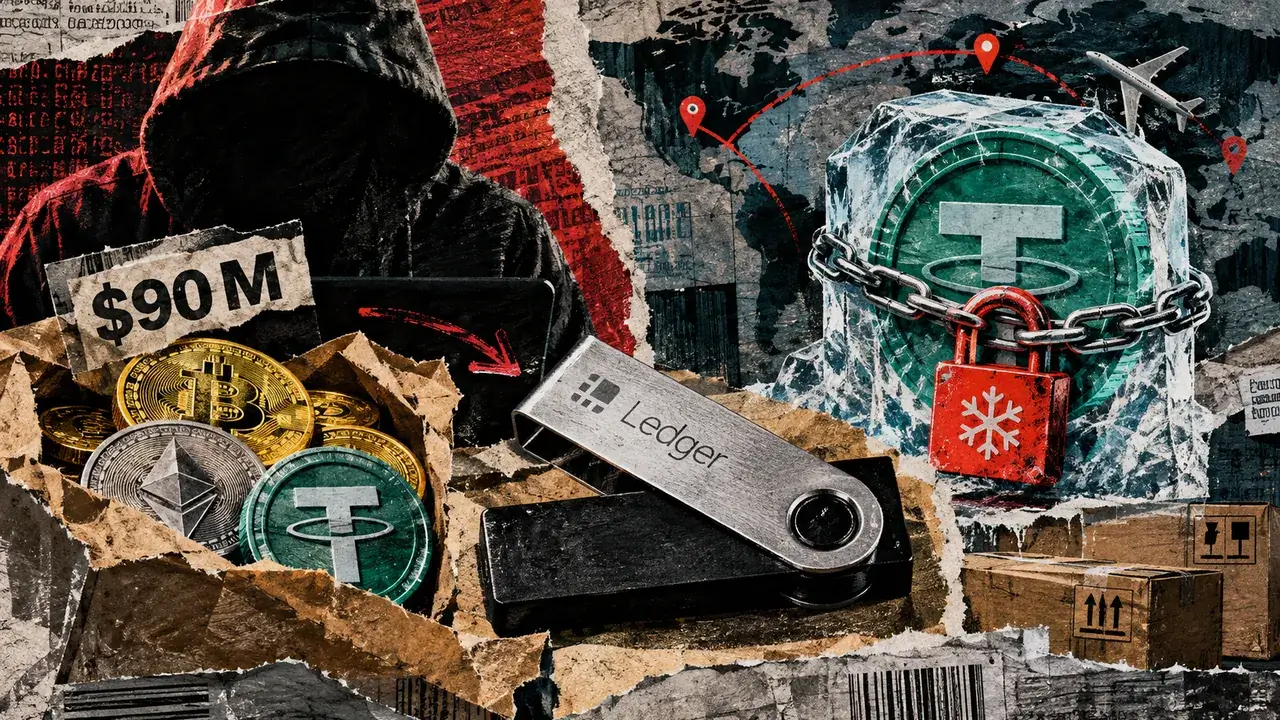
Security in the crypto space is usually discussed in terms of code audits and smart contract exploits. But the latest situation involving Ledger serves as a stark reminder that the physical world is just as vulnerable as the digital one. We are currently looking at nearly $90 million in potential losses following reports of compromised hardware devices, a figure that has prompted companies like Tether to manually intervene by freezing assets.
The Logistics of Compromise
The core of this issue centers on a reseller based in Southeast Asia, CryptoBilis. For those of us who have been in the space long enough, the advice has always been simple: buy directly from the manufacturer. However, Ledger utilizes a network of authorized resellers to reach global markets. The problem is that every additional hand a device passes through represents a potential point of failure. This isn't a hack of the Ledger firmware or a breach of their internal servers; it is a supply chain attack. It’s the hardware equivalent of a man-in-the-middle exploit.
Reports suggest that users who purchased devices through this specific channel found their funds drained shortly after setup. This usually happens when a device is pre-configured with a recovery phrase or physically modified before it ever reaches the consumer. For a builder, this is a nightmare scenario because it bypasses all the high-level encryption you’ve worked so hard to implement. It attacks the user’s trust before they even plug the device into their computer.
The Tether Intervention
As blockchain investigators tracked the movement of the stolen funds, the total value under threat climbed toward the $90 million mark. In response, Tether moved to freeze the USDT associated with these addresses. On one hand, this is a win for the victims. It prevents the attacker from cashing out through major liquidity pools. On the other hand, it highlights the centralized nature of the stablecoins we rely on every day.
For founders building on top of these protocols, this is a double-edged sword. We appreciate the safety net when things go wrong, but we have to acknowledge that these assets are not truly permissionless. If a single entity can flip a switch and invalidate millions of dollars, the definition of "ownership" changes. It becomes a matter of compliance rather than code.
Why Builders Should Care
If you are building decentralized applications or wallet interfaces, you cannot assume that hardware equals safety. We have spent years telling users that a cold wallet is the gold standard, and while that remains true, we haven't spent enough time talking about the "last mile" of security. The hardware is only as good as the box it came in.
- Supply chain transparency is no longer optional for hardware-integrated projects.
- Onboarding flows need to include more rigorous verification steps to ensure a device hasn't been tampered with.
- We need to move away from the idea that a single device is a single point of failure.
This incident will likely push more users toward multi-signature setups. If a builder can make multi-sig easy for the average person, they will win the next cycle. The current model of relying on one physical piece of plastic and metal is proving to be insufficient when attackers are willing to intercept physical mail.
The Industry Response
Ledger has stated they are investigating the reports, but the damage to the brand is already done. When you sell a product based entirely on the concept of "security," any breach—even one caused by a third-party reseller—feels like a betrayal of the core promise. It’s an honest lesson for founders: your brand is only as strong as your weakest partner.
We are seeing a shift in how investigators handle these events. The speed at which Tether acted shows that the industry is getting better at reactive security. However, reactive security is just damage control. We are still struggling with proactive prevention. The sheer scale of this loss, nearing $90 million, shows that the stakes are too high to keep relying on the same old distribution models.
The reality is that no hardware is unhackable if the attacker gets to it before the user does. Our industry needs to stop pretending that physical devices are magic wands for security.
We need to be skeptical of the tools we use and the vendors we trust. If you’re a developer, consider how your UI handles a user who might be using a compromised device. Is there a way to flag suspicious activity at the protocol level without sacrificing decentralization? It’s a hard question with no easy answer, but ignoring it is no longer an option.
What Happens Next
Ledger will likely tighten its reseller requirements, and we will probably see a push for more secure packaging and cryptographic verification during the device initialization process. But for the users who lost money, these changes come too late. The focus now is on whether other stablecoin issuers will follow Tether's lead and freeze the remaining stolen assets.
For those of us building the future of AI and crypto, let this be a reminder that the interface between the digital and physical worlds is where the most dangerous gaps exist. Don't just build for the happy path where every user has a pristine, factory-sealed device. Build for the world where the supply chain is messy and attackers are patient.
Takeaway for Builders
The Ledger supply chain issue proves that hardware security is a process, not a product. If you're developing in the space, prioritize multi-device authentication and educate your users on the risks of third-party vendors. Trust, once lost in the physical world, is nearly impossible to regain in the digital one.
Read the original at CryptoSlate →