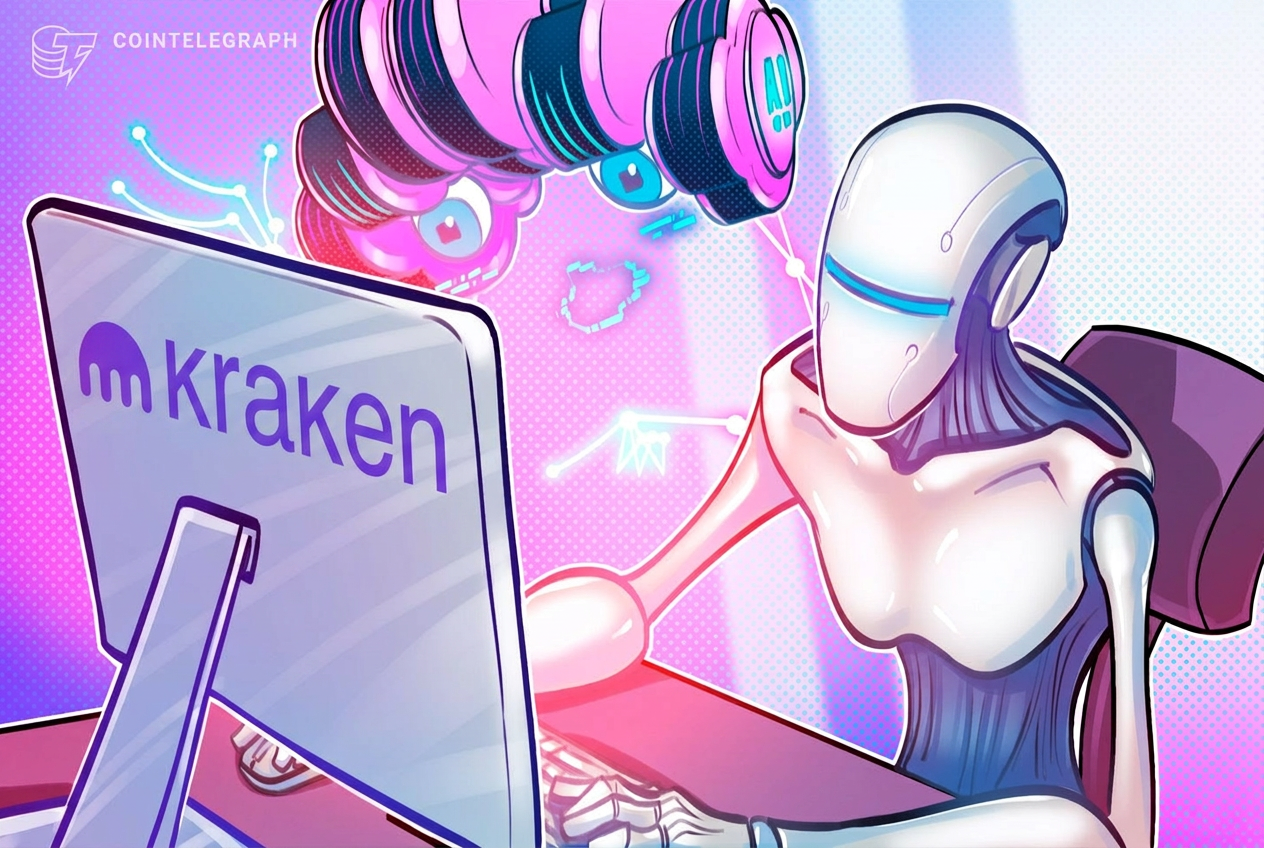
The Shift from Order Books to Intelligent Agents
For a long time, crypto exchanges have been little more than glorified vending machines. You want Bitcoin, you put in dollars, you get Bitcoin. If you want to get fancy, maybe you set a limit order and hope the market hits your price while you're sleeping. But for the average user, the experience is passive. You either sit there staring at charts, or you ignore your portfolio until a headline tells you it's crashing.
Kraken is trying to change that dynamic. They are overhauling their mobile experience to put AI agents at the center of the user journey. We aren't just talking about a chatbot that tells you the price of Solana. We are talking about agentic systems designed to watch the market, analyze your holdings, and suggest moves before you even realize you need to make them. It’s a move move from reactive tool to proactive partner.
What We Mean by Agentic Trading
In the world of AI, there is a massive difference between a tool and an agent. A tool waits for you to use it. An agent has a goal and figures out how to get there. Usually, when we talk about agents in crypto, we’re talking about sophisticated bots used by hedge funds or high-frequency traders. Kraken is trying to bring that same logic to the retail crowd.
The goal is to let these agents act as a layer of intelligence between the user and the raw volatility of the market. Instead of you having to manually monitor a dozen different metrics, the agent does the legwork. It looks at liquidity, price action, and news, and then it offers advice. It might suggest rebalancing your portfolio because your exposure to a specific meme coin has grown too large, or it might suggest a entry point based on technical patterns that a human would miss while working a 9-to-5 job.
The Founder's Dilemma: Automation vs. Risk
As a builder, this is where things get interesting and a little bit scary. When you give a machine the power to offer financial advice—or eventually execute trades—you are opening up a massive can of worms regarding liability and user Trust. Kraken isn't just selling a platform anymore; they are selling a curation service powered by algorithms.
If the AI suggests a trade and that trade goes sideways, who is to blame? We’ve seen flash crashes and algorithmic failures before. But the alternative is arguably worse: keeping retail users stuck in a manual world while the institutions use AI to eat their lunch. Kraken seems to be betting that the risk of staying stagnant is higher than the risk of moving into automation.
Building for the Narrative Shift
This isn't just about UI/UX. It’s a response to a broader shift in how people interact with technology. We are moving away from the era of the "App" and into the era of the "Intent." Users don't necessarily want to open an app and click ten buttons to execute a swap. They want to say, "Protect my downside if ETH drops 10%," and have the system execute.
Kraken's relaunch is essentially an admission that the current crypto onboarding process is broken. It’s too hard, too technical, and requires too much attention. By placing agents at the center, they are trying to lower the cognitive load. If you’re a developer in the Web3 space, this is a clear signal: if your product doesn't have an AI-accessible interface or a way to automate complex tasks for the user, you’re building for the past.
The Skeptic's View on "Advice"
We have to be careful with the word advice. In the regulated financial world, advisors have fiduciary duties. In the crypto world, an AI agent providing advice is a black box. What data is it trained on? Is it optimized for the user's profit or for the exchange's volume? Every exchange wants more trades because more trades mean more fees.
I’m skeptical of any system that claims to give objective financial guidance while simultaneously profiting from the execution of that guidance. That said, Kraken has historically been one of the more transparent players in the space. They have a reputation for taking security and compliance more seriously than some of their offshore competitors. If anyone can pull off a "regulated" agentic experience, it might be them, but as a user, you should still be asking where the AI ends and the exchange's bottom line begins.
Why This Matters for the Ecosystem
If Kraken succeeds, every other major exchange—Coinbase, Binance, OKX—will have to follow suit. We are going to see an arms race of AI agents. This will likely lead to a surge in demand for high-quality, real-time data. It will also create a new category of "Agentic Infrastructure" companies that provide the plumbing for these bots.
- Increased Liquidity: Agents don't get tired. They can provide constant liquidity and react to market shifts in milliseconds.
- Portfolio Management: Retail users might finally get professional-grade rebalancing tools that were previously reserved for the wealthy.
- User Education: An agent can explain *why* it is recommending a trade, helping users learn market dynamics instead of just gambling on green candles.
The Real Takeaway
The relaunch of Kraken’s app is a pivot toward the future of autonomous finance. It acknowledges that the average human is not equipped to compete in a 24/7 global market without help. For builders, the lesson is clear: the user interface of the future isn't a dashboard full of buttons; it's a conversation with an intelligent system that understands the user's goals.
However, don't mistake convenience for safety. An AI agent is still just software, and software has bugs. The transition from manual trading to agentic trading is going to be messy, and there will likely be high-profile failures along the way. But the genie is out of the bottle. The goal now isn't just to buy and sell crypto—it's to build a system that manages it for you.
Read the original at The Block →