The High Cost of Static Infrastructure
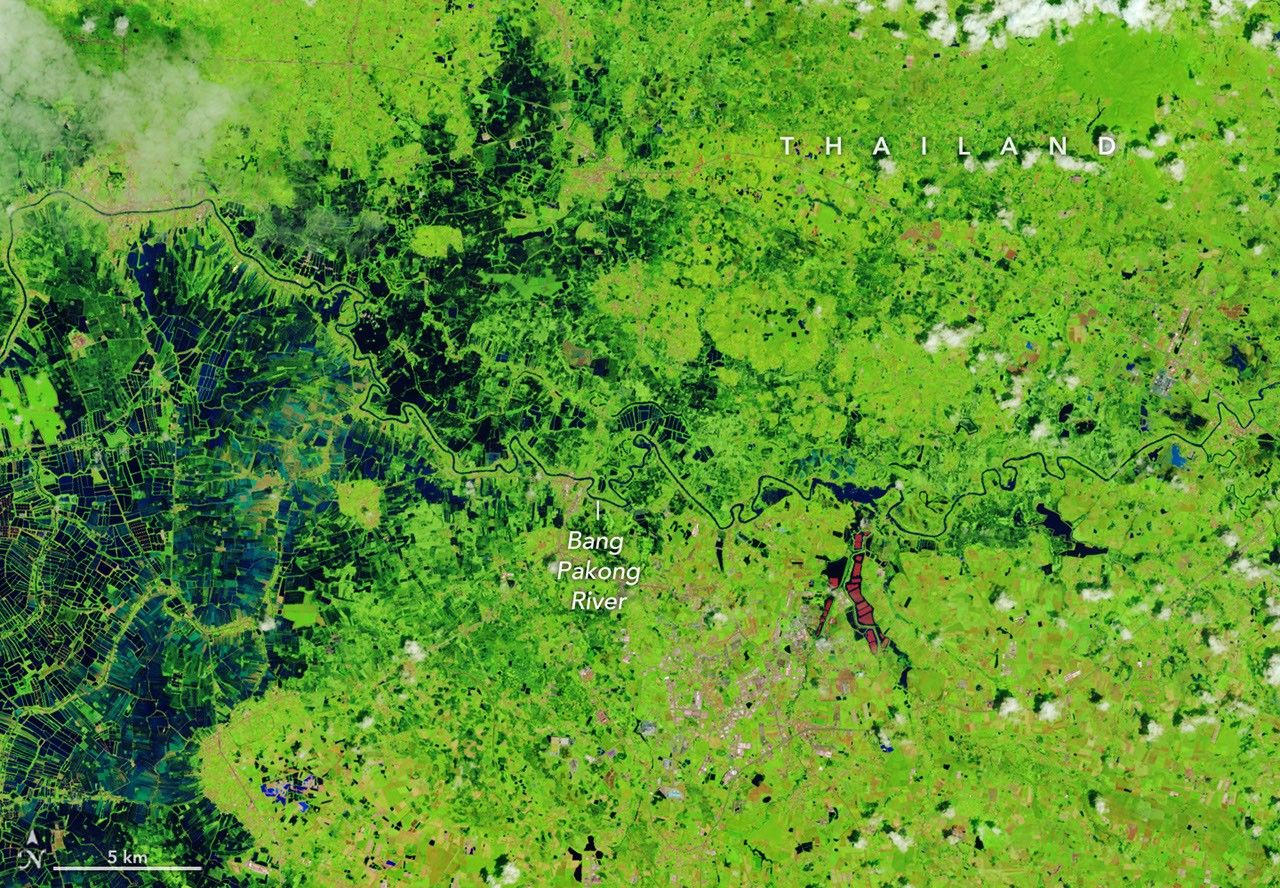
Thailand is currently dealing with a massive environmental crisis that has nothing to do with market volatility and everything to do with physical reality. Since mid-September, unrelenting rainfall has turned vast stretches of the country into a disaster zone. We are seeing millions of lives disrupted and infrastructure that was designed for the last century failing to handle the realities of this one.
As someone who looks at the world through a builder’s lens, I don’t just see a tragedy. I see a catastrophic failure of centralized data systems and resource management. When the water rises in a place like Thailand, the lag between reality and official response is often measured in days. That is time people don't have. For the crypto and AI community, this is where the rubber meets the road.
The Geospatial Gap
NASA’s Earth Observatory has been tracking the deluge, showing how floodwaters are overwhelming natural and man-made barriers. But here is the problem: by the time high-resolution satellite imagery is processed, analyzed by government agencies, and turned into actionable policy, the water has already moved. The current system is too slow, too siloed, and too dependent on legacy institutions.
If you are building in the geospatial AI space, this is your mission. We need real-time, decentralized oracle networks that can feed environmental data directly into smart contracts. Imagine a world where disaster relief funds are triggered automatically by verified satellite data on-chain, bypassing the bureaucracy that usually slows down aid by weeks or months.
Why Decentralized Physical Infrastructure Matters
We talk a lot about DePIN in the crypto space, usually in the context of Wi-Fi hotspots or GPU rendering. But the situation in Thailand shows why DePIN for environmental sensing is a wide-open market that founders should be looking at. Relying on a few government weather stations to monitor a nationwide flood is a single point of failure. We need a mesh network of low-cost, decentralized sensors that can provide granular, block-by-block data on water levels and soil saturation.
For builders, the opportunity isn't just in the hardware. It is in the validation layer. How do we ensure that the data coming from a sensor in a remote Thai village is accurate? This is where ZK-proofs and decentralized consensus come in. If we can prove the data is real without needing a centralized authority to sign off on it, we can move much faster.
The Supply Chain Ripple Effect
Thailand isn't just a tourist destination; it is a critical hub for global manufacturing, particularly in electronics. When these regions go underwater, the supply chain for the very hardware we use to build AI and run nodes gets hit. We saw this in 2011, and we are seeing the risks again now. The fragility of our physical world is the greatest threat to our digital progress.
Founders need to be thinking about geographic decentralization. If your startup relies on a specific set of hardware manufactured in a single region, you are vulnerable to the climate. Building a resilient project means accounting for the fact that the physical world is becoming increasingly unstable. We should be using AI to model these supply chain risks and crypto to hedge against them.
The biggest mistake builders make is thinking the digital world is disconnected from the physical one. When the power goes out and the roads are gone, your code doesn't matter unless it was built to survive the mess.
What Builders Should Take Away
Stop focusing on the next meme coin and start looking at how to solve the coordination problems that crises like the Thailand floods expose. We have the tools. We have the data. What we lack is the bridge between them. We need more projects focused on high-integrity environmental data and automated response systems.
- Real-time Oracles: Move beyond price feeds. We need weather and flood data oracles that trigger real-world actions.
- Distributed Hardware: Encourage the deployment of environmental sensors that are owned by the community, not the state.
- AI Analysis: Use LLMs and computer vision to process satellite feeds instantly, rather than waiting for manual government reports.
The situation in Thailand is a reminder that the world is messy and unpredictable. The founders who win in the next decade will be the ones who build tools that help us navigate that mess, rather than trying to ignore it. We need to stop building for the cloud and start building for the ground.
Read the original at NASA Breaking News →