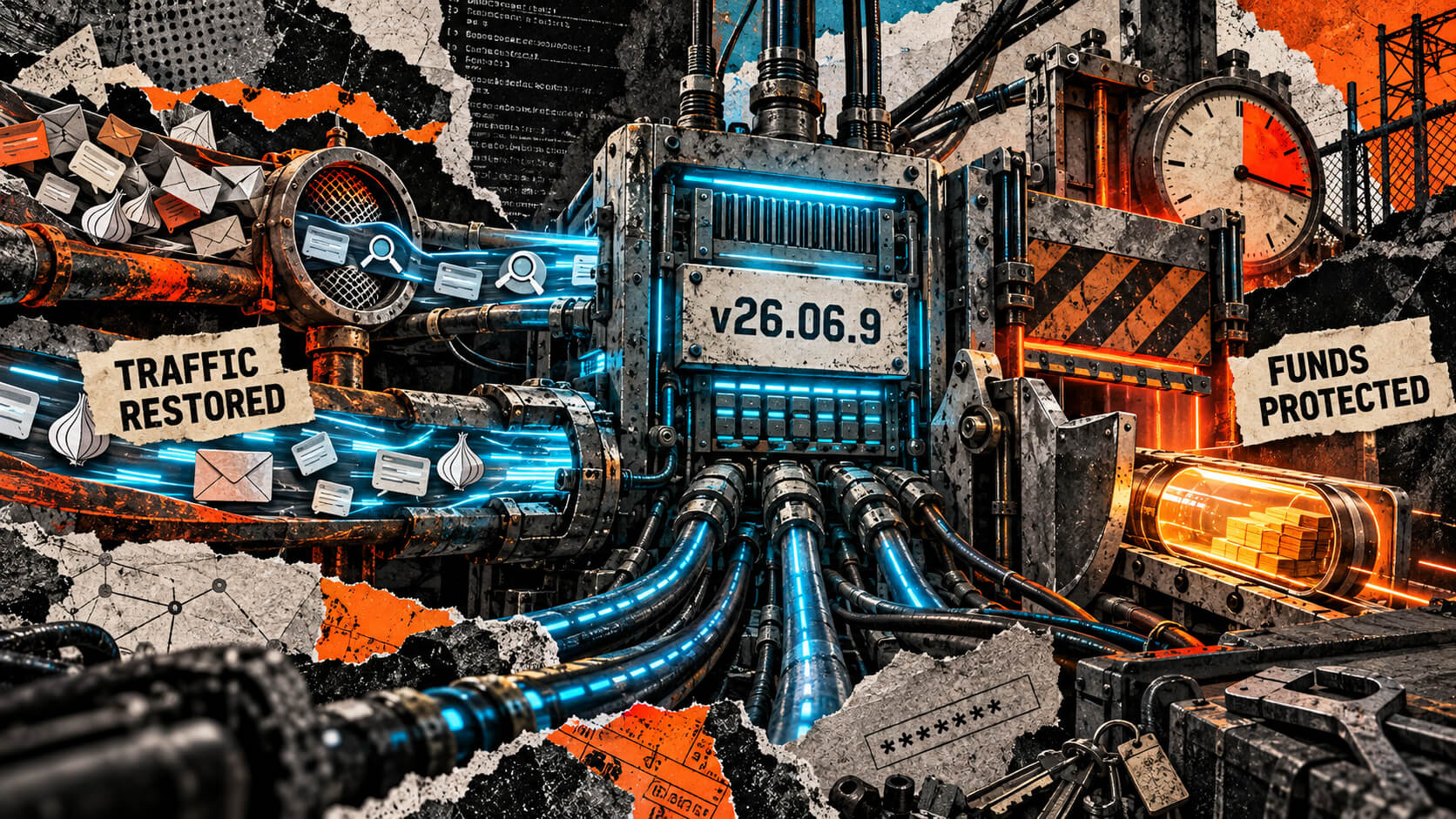
Security in the Lightning Network is rarely about one massive explosion. It is usually about the quiet, compounding risks that happen when code starts to scale under pressure. This week, the team at Blockstream released Core Lightning (CLN) version v26.06.9, and while the version number looks incremental, the fixes inside are anything but.
If you are running a node or building applications on top of the Lightning Network, you know that performance and security are two sides of the same coin. The latest update addresses two distinct but equally frustrating issues: a performance-killing regression and a security vulnerability that could have put forwarded funds at risk.
The Traffic Jam Problem
In the previous version, v26.06.8, a regression was introduced that caused serious headaches for high-traffic nodes. The bug essentially acted like a digital bottleneck, delaying channel traffic and causing unnecessary friction for users trying to move capital. In the world of Layer 2 scaling, latency is the enemy. If your node is slow to route, you are losing money and reputation in the gossip network.
This is a classic founder's lesson: scaling introduces edge cases you won't see in a test environment. When you have a busy node handling thousands of micro-transactions, a small logic error in how traffic is prioritized can turn into a full-blown service outage. The v26.06.9 patch clears this up, ensuring that busy nodes don't get bogged down by their own success.
Protecting the Middleman
The more concerning part of the update involves protections for forwarded funds. In a decentralized network, your node acts as a bridge. You are trusting the protocol to ensure that if you pass a payment along, you aren't the one left holding the bag if something goes wrong. The developers identified a critical flaw that could have jeopardized these funds during the forwarding process.
For builders, this is a reminder that the Lightning Network is still very much in its formative years. We are building the rails for a global financial system while the train is already moving at full speed. Security flaws in how payments are routed are particularly dangerous because they strike at the heart of the network's liquidity. If routing nodes can't trust the protocol to keep their capital safe, they will pull their liquidity, and the whole system slows down.
Why This Matters for Founders
If you are building a product that relies on Lightning, you shouldn't just look at this as a routine patch. You need to understand the underlying tension between speed and security. Blockstream is one of the most conservative and rigorous teams in the space, and even they hit these snags. It shows that no matter how good your dev team is, the complexity of managing state across thousands of nodes is immense.
As a founder, you have to decide which implementation you are going to bet your business on. Core Lightning has always been the choice for those who want a lean, high-performance, and highly customizable C-based implementation. But with that power comes the responsibility of staying on top of these technical updates. If you are a few versions behind, you aren't just missing features; you are likely running code with known vulnerabilities.
The Reality of Layer 2 Development
We often talk about Bitcoin as this static, unchangeable rock. But the layers built on top of it are fluid. They are software in the truest sense—messy, iterative, and constantly evolving. The fact that the CLN team caught and fixed a regression this quickly is a good sign of a healthy ecosystem, but it also highlights the fragility of the current infrastructure.
We need more eyes on the code. We need more diversity in node implementations. If everyone is running the same version of the same software and a bug like the one in v26.06.8 hits, the entire network could grind to a halt. This is why having multiple implementations like LND, CLN, and Eclair is vital for the survival of the network.
The Technical Takeaway
The core of the v26.06.9 update focuses on two things: Stability and Assurance. By fixing the traffic delays, they are keeping the network usable for high-volume commercial applications. By patching the payment bug, they are maintaining the incentive structure that keeps the network decentralized.
- Update immediately: If you are running a node, there is no reason to wait. The security implications for forwarded funds make this a mandatory patch.
- Monitor your peers: Use this as an opportunity to audit your channel partners. Nodes that don't update are a risk to your own connectivity.
- Build with buffers: If you are building an app, ensure your UI accounts for the occasional routing delay. The network is getting better, but it is not perfect.
We are still in the "early internet" phase of crypto. These patches are the digital equivalent of fixing leaky pipes in a skyscraper that is already occupied. It is stressful, it is technical, and it is absolutely necessary for the long-term vision of a hyper-bitcoinized world.
Don't let the technical jargon distract you from the reality: the network is hardening. Every bug found and squashed makes the foundation a little bit stronger for the next wave of builders. If you're serious about this space, you stop looking at the price and start looking at the GitHub commits.
Read the original at CryptoSlate →