The Great Science Push
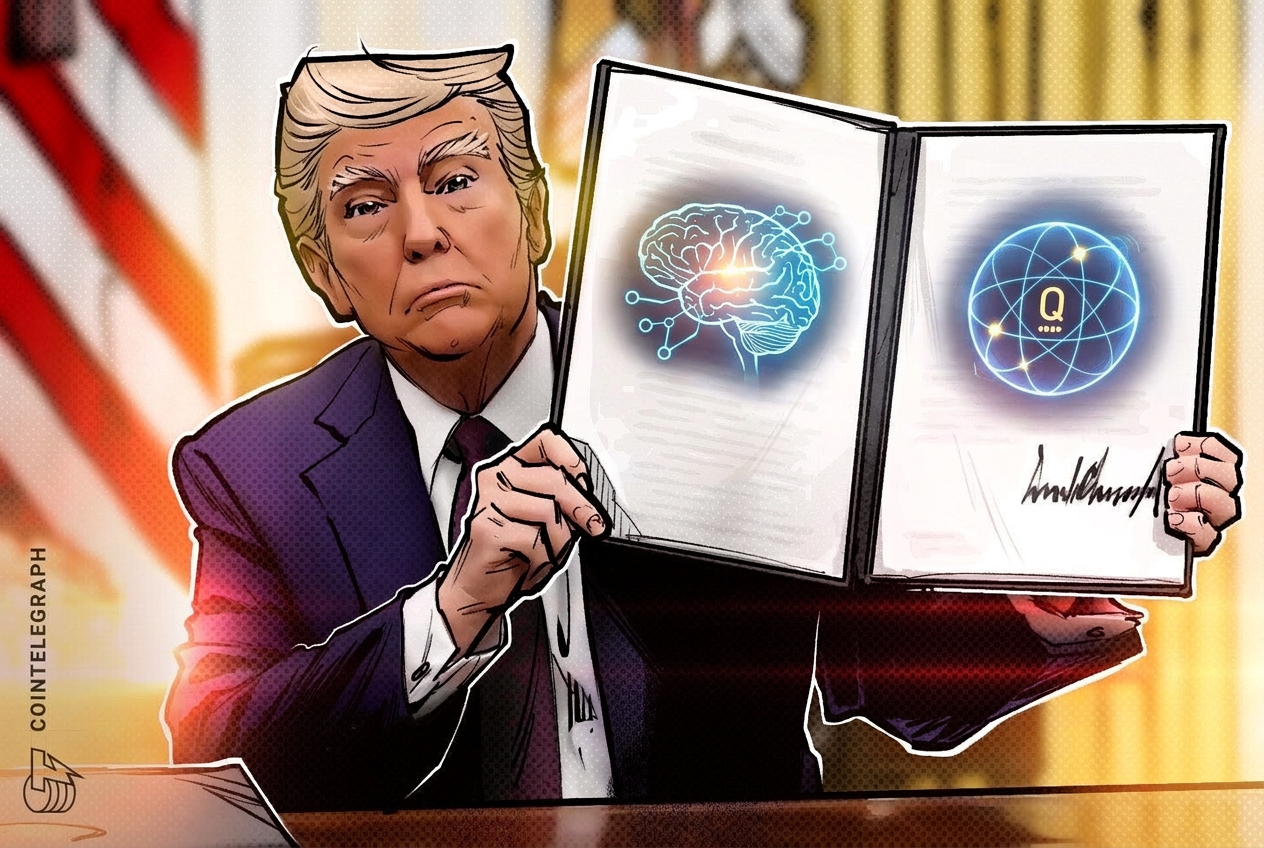
Washington is finally showing its hand. The new administration recently rolled out a massive science initiative, earmarking roughly $6 billion to stay ahead in the tech race. At the center of this budget are two things we talk about every day: Artificial Intelligence and quantum computing. For most people, these are just buzzwords. For builders in the crypto and AI space, this is a clear signal that the infrastructure we are building is now a matter of national security.
We are looking at a $215 million quantum computing competition and over $2.4 billion in commitments from the private sector regarding AI. It is a lot of capital, but as someone who has seen the rise and fall of various tech trends, I look at these numbers with a bit of skepticism. It is not just about the money; it is about who controls the standards. If the government is funding the race, they are also writing the rulebook.
The Quantum Threat to Crypto
Let’s talk about the elephant in the room: quantum computing vs. blockchain. For years, the threat of quantum computers breaking SHA-256 or ECDSA was considered a far-off science fiction problem. It was the kind of thing you’d discuss at a bar during a late-night dev conference. But the White House putting hundreds of millions into a quantum competition suggests that the timeline is accelerating.
Most of our current cryptographic foundations rely on the fact that traditional computers are slow at solving certain mathematical problems. A functional, large-scale quantum computer changes that math. If a state actor develops a machine capable of cracking these codes, the entire premise of decentralized security is at risk. We are not there yet, but the administration is clearly worried about it. As a founder, you shouldn't be panicking, but you should be looking at post-quantum cryptography (PQC) as a requirement rather than a roadmap item.
AI Commitments and the Founder's Dilemma
Then there is the AI side of this. The $2.4 billion in industry commitments is impressive on paper, but we have to ask what that actually buys. When the government partners with big tech to 'ensure safety and security,' it often means establishing barriers to entry that make it harder for the solo builder or the small startup to compete. I have always advocated for a builder-first mentality, and this looks like a move toward centralization under the guise of progress.
The push for AI supremacy is basically a race for compute and data. By aligning with the government, the major players are securing their positions. For those of us building decentralized AI or working on open-source models, this is a double-edged sword. On one hand, more funding for the sector validates the work. On the other, it increases the likelihood of heavy-handed regulation that favors the incumbents who can afford the compliance costs.
Infrastructure Over Hype
What I find most interesting about this science push is the focus on infrastructure. We are moving away from the era of 'AI as a toy' and into 'AI as a utility.' The administration's focus on domestic manufacturing and science-based growth shows that they view these technologies as the new steel or oil. This isn't just about making better chatbots; it's about power grids, defense systems, and financial networks.
For crypto builders, this means our systems need to be more than just clever code. They need to be resilient against a new class of threats. If the government is bracing for a quantum future, we cannot afford to be lazy with our security audits. We need to stop focusing on short-term price action and start focusing on the long-term durability of the protocols we build.
The Reality of the $6 Billion Spend
While $6 billion sounds like a massive figure, in the context of global tech competition, it is actually quite modest. China and other nations are pouring similar or even larger amounts into their own sovereign tech stacks. What this $6 billion represents is a 'starter pistol.' It is a signal to the private markets that the government is backing these sectors, which usually leads to a flood of venture capital following suit.
However, I’ve seen enough government projects to know that a lot of this capital will be eaten up by bureaucracy and legacy contractors. The real innovation will still happen in the fringes, in the small dev shops, and in the open-source communities. The challenge for us is to make sure that as these billions flow into the ecosystem, the core values of decentralization and privacy aren't traded away for a seat at the table.
The Takeaway for Builders
If you are building in AI or Web3 right now, your strategy needs to shift. You can no longer ignore the geopolitical reality of your tech stack. If you’re building a blockchain, you need to be researching quantum-resistant signatures now. If you’re building AI, you need to be thinking about how to remain independent as the big players tie themselves closer to the state.
The government's science push is a wake-up call. The technology we are working on is no longer a hobbyist's playground; it is the front line of global influence. My advice? Take the validation, watch the regulations closely, and keep building for the users, not the regulators. The tools that survive the next decade will be the ones that are both quantum-secure and truly permissionless.
What to Watch Next
- The results of the quantum competition and which firms win the grants.
- Potential new mandates for cryptographic standards in financial services.
- How the $2.4 billion in AI commitments affects open-source licensing.
Read the original at Cointelegraph →