The $1 Billion Reality Check
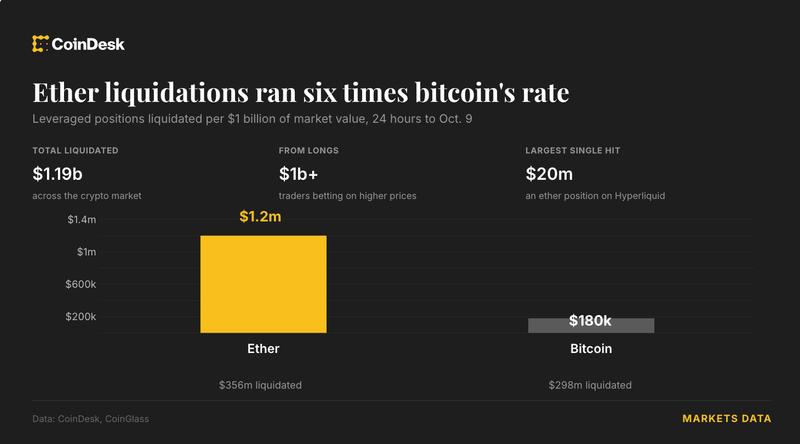
We just saw a massive flush in the crypto markets that wiped out about $1 billion in open positions. While the headline number is flashy, the real story is buried in the ratio of who got hurt. Despite Bitcoin being the undisputed heavyweight champion of market cap, it was the Ethereum traders who got carried out on stretchers this time around.
Data shows that roughly $356 million in Ether positions were liquidated in a 24-hour window. To put that in perspective, that is a significantly higher rate of destruction than what we saw in Bitcoin, especially when you consider that Ether’s total market value is less than a fifth of Bitcoin’s. When a smaller asset sees six times the liquidation intensity of the market leader, it tells you everything you need to know about the current state of leverage and sentiment.
The Leverage Trap
As a founder, I look at these numbers and see a massive disconnect between utility and speculation. For years, we have been told that Ethereum is the global settlement layer, the home of DeFi, and the foundation of the programmable economy. But during these volatility spikes, it behaves less like a utility and more like a high-beta casino for traders who can’t afford to lose.
The reason Ethereum got hit so much harder than Bitcoin isn't necessarily because the technology failed. It is because the people trading it are playing a different game. While Bitcoin has matured into a sort of digital gold that institutional funds are happy to hold on a spot basis, Ethereum remains the primary playground for high-leverage bets. When the market moves even a few percentage points the wrong way, those over-leveraged long positions evaporate instantly.
Why Builders Should Care
You might think that market liquidations are just noise for people actually building products, but that’s a dangerous assumption. Massive flushes like this impact the entire ecosystem in a few ways that founders need to account for. First, it kills liquidity in the DeFi protocols that many of you are building on. When traders get wiped out, they stop providing liquidity to pools, and they stop interacting with smart contracts.
Second, it affects the cost of gas and the stability of the network. During high-volatility events, everyone rushes for the exits at once. If your application relies on timely transactions to function—like a lending protocol or an automated market maker—these $1 billion flushes represent your greatest operational risk. You aren't just competing with other users; you are competing with the panic of thousands of liquidated bots.
The BTC vs. ETH Divide
We have to talk about the growing divergence between these two assets. Bitcoin is increasingly seen as a safe haven within the crypto space. It is where capital goes to hide when things get ugly. Ethereum, despite its massive ecosystem and the transition to Proof of Stake, is still struggling to find its footing as a reliable store of value during market stress.
The fact that ETH positions were wiped out at six times the rate of BTC suggests that the market still views Ether as a speculative asset first and a platform second. For those of us building in the space, this is a sobering reminder. We are building on a foundation that is still subject to the whims of aggressive speculators who are often wrong about the short-term direction of the price.
The market can stay irrational longer than you can stay solvent, but in Ethereum's case, the leverage seems to be getting more irrational than the underlying tech can justify.
Sentiment and the Path Forward
What happens next? Usually, these flushes are healthy. They clear out the "weak hands" and the gamblers who were propping up prices with borrowed money. For a builder, this is actually the best time to focus. The noise dies down, the gas fees eventually stabilize, and the only people left in the room are the ones who actually care about the code.
However, we shouldn't ignore the reputational damage. Every time a billion dollars disappears in a day, it makes the job of onboarding the next million users that much harder. It reinforces the narrative that crypto is just a giant shell game. As founders, our job is to build products that provide enough real-world value that the price of the underlying token becomes secondary to the utility of the service.
Final Takeaway for Founders
If you are building on Ethereum, keep a close eye on these liquidation ratios. They are a better thermometer for market health than the price alone. A high liquidation rate means the ecosystem is still heavily reliant on speculative leverage rather than organic demand.
Focus on creating sticky users who don't care about the 24-hour chart. The more we move away from being a playground for levered traders and toward being a functional infrastructure for the world, the less we will see these lopsided $1 billion wipes. Bitcoin has already started that transition; Ethereum is still in the middle of it. Build accordingly.
Read the original at CoinDesk →