We have entered the phase of the market cycle where the novelty wears off for the suits. When Remixpoint, a publicly traded firm in Japan, first decided to diversify their balance sheet with digital assets, they didn't just dip their toes into Bitcoin. They went for the full basket: Ethereum, Solana, XRP, and of course, Dogecoin. It was a classic corporate move to capture the 'upside' of the broader crypto market.
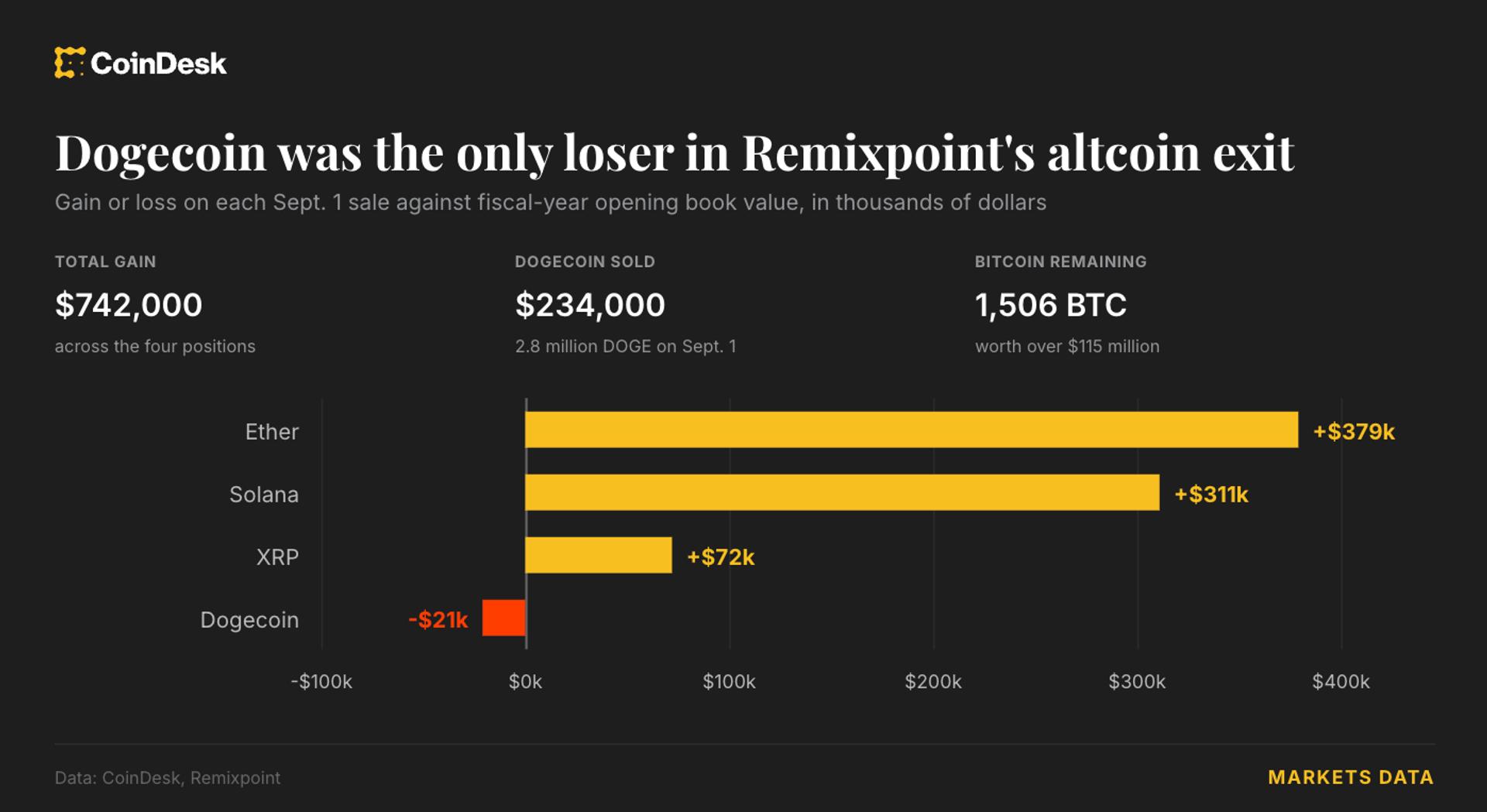
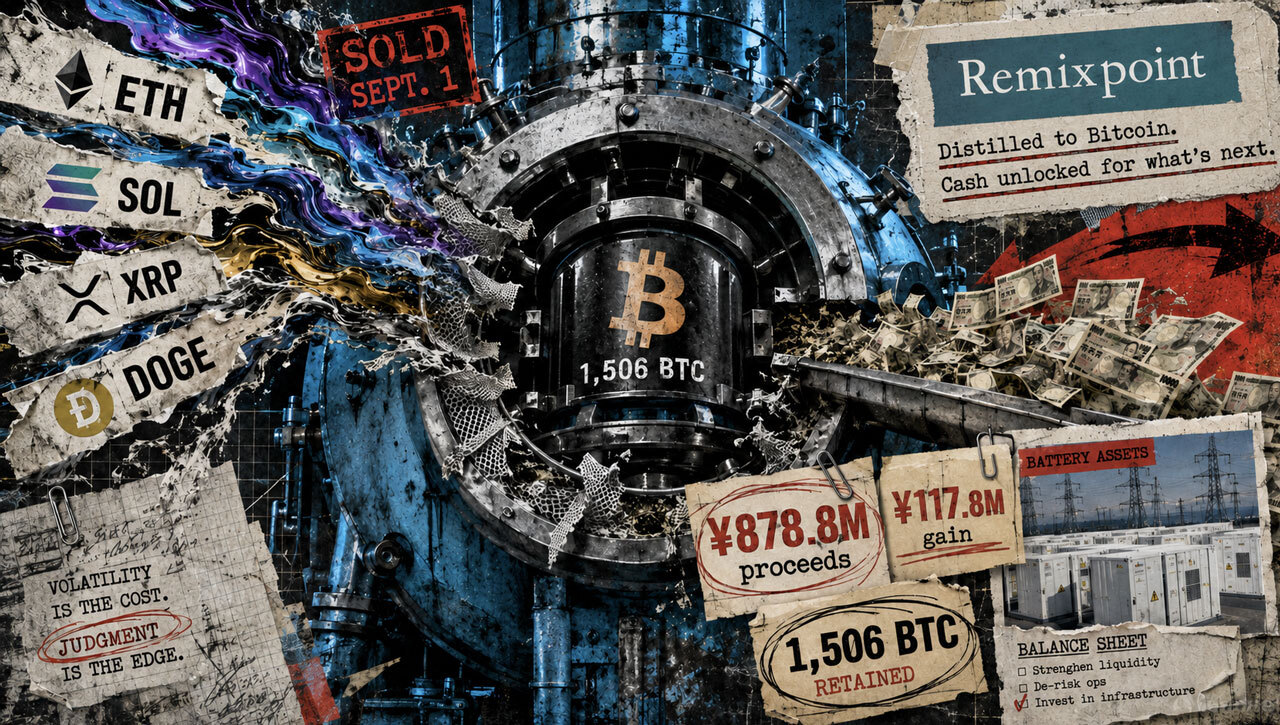
But the numbers just came in, and the experiment is being refined. Remixpoint is dumping its altcoin positions to consolidate back into Bitcoin. The reason? While their ETH, SOL, and XRP holdings actually moved into the green, Dogecoin proved to be the outlier. It was the only bet that resulted in a loss relative to its valuation at the start of their fiscal year. For a founder, this isn't just a story about one company's portfolio; it is a lesson in the difference between a liquid asset and a cultural artifact.
The Cost of Meme-Based Volatility
For a public company, volatility is manageable if it trends upward over a long enough time horizon. Bitcoin provides that narrative. Even Solana and Ethereum have developer ecosystems that provide a fundamental 'why' for their existence. Dogecoin, however, relies almost entirely on social momentum. When that momentum stalls, the price doesn't just consolidate; it decays.
Remixpoint realized that holding DOGE was a liability that didn't offer the same risk-adjusted returns as the others. By selling off these assets, they aren't exiting crypto; they are admiting that the 'alt-basket' strategy is harder to manage than it looks on paper. They booked gains on their other holdings, but the Dogecoin loss was the signal they needed to simplify their strategy.
Why Builders Should Care
If you are building in this space, you need to understand how institutional money views your sector. To an executive at a Japanese firm, a token isn't a community or a movement; it is a line item. When that line item stays red while the rest of the market moves, it gets cut. This is a reminder that utility and clear value propositions eventually win out over hype when the fiscal year ends.
- Bitcoin is the baseline: For corporations, BTC is the only asset that feels like a safe harbor. Everything else is a speculative venture.
- Altcoin liquidity matters: Remixpoint was able to exit their positions, but the decision to consolidate shows they no longer see the 'beta' of altcoins as worth the headache.
- The Meme Premium is fading: We are seeing a shift where even retail-adjacent assets are being scrutinized for their actual performance rather than their social media engagement.
As a founder, I see this as a healthy cleansing of the market. When public companies stop treating the crypto market like a casino and start treating it like a treasury management tool, we get closer to actual maturity. Remixpoint isn't giving up on the tech; they are just giving up on the jokes.
The Shift to Bitcoin Maximalism in Corporate Treasuries
We are seeing a trend here that mirrors what MicroStrategy started. Companies start by experimenting with various coins, but they almost always gravitate back to Bitcoin. Why? Because explaining a Bitcoin loss to shareholders is easier than explaining a Dogecoin loss. One is a macroeconomic hedge; the other looks like a mistake made by a bored intern.
The reality of corporate finance is that consistency beats moonshots. Remixpoint is choosing the path of least resistance by focusing on the asset with the most institutional support and the clearest regulatory status.
This consolidation is a signal to builders: if your project doesn't have a clear path to being a 'serious' asset, you will eventually be liquidated when the market tightens. The days of 'number go up' based on tweets are being replaced by 'number go up' based on institutional inflows.
The Takeaway for the Ecosystem
The takeaway here is simple: simplicity wins. Remixpoint’s decision to dump their losing DOGE position and trim their winners in ETH, SOL, and XRP to buy more BTC shows that the 'diversified crypto portfolio' might be a retail myth. For the big players, it is Bitcoin and then everything else.
If you are building on these platforms, your goal should be to make your ecosystem so indispensable that you aren't the first thing sold when the fiscal year looks shaky. Dogecoin failed that test for Remixpoint. The question is, who is next?
Read the original at CoinDesk →