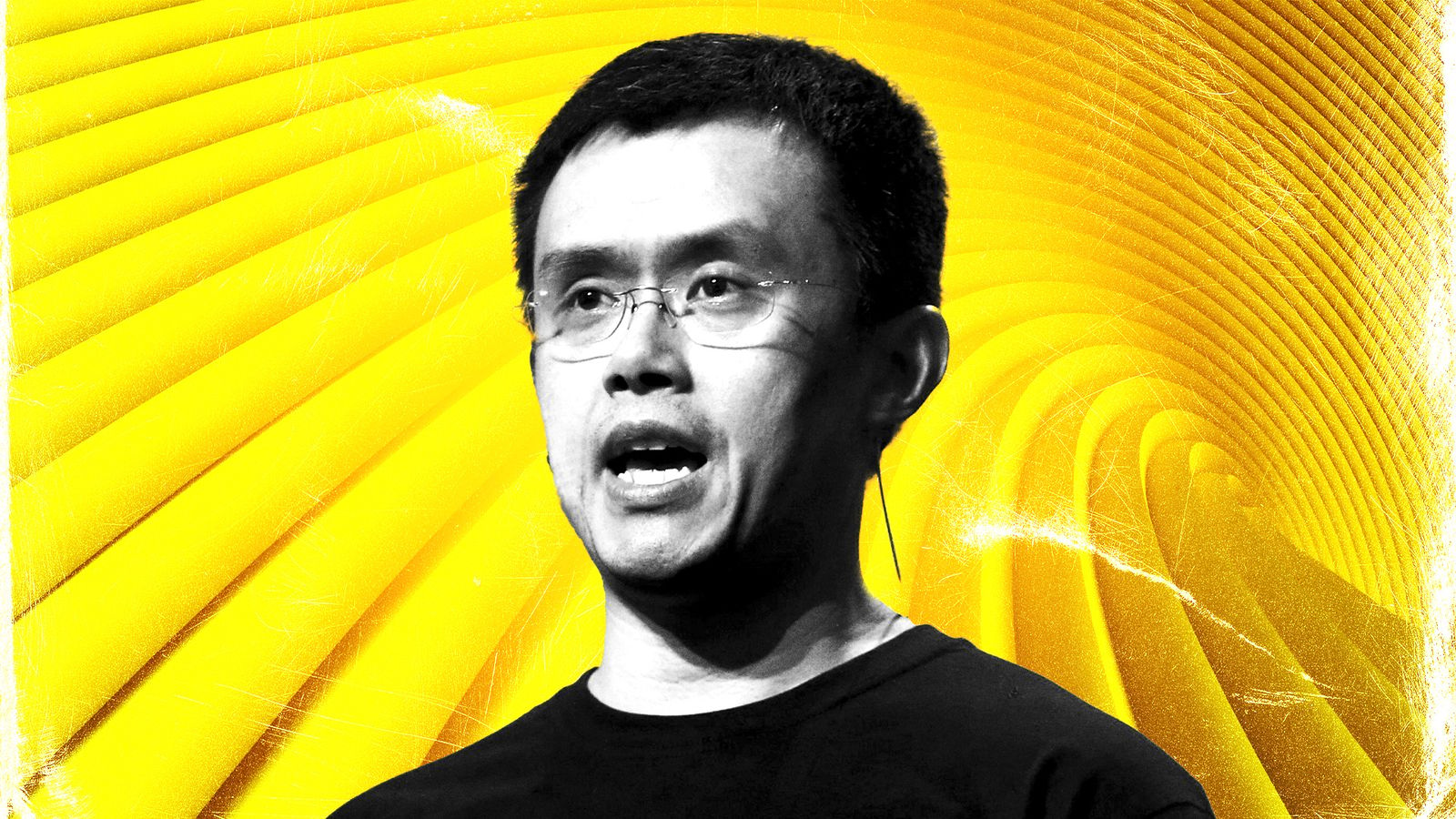
Security in this space has always been a game of cat and mouse, but the cats just got a massive upgrade. Changpeng Zhao, speaking out for the first time since the recent Binance exploit, isn't just talking about patches or better firewalls anymore. He is sounding the alarm on how artificial intelligence is weaponizing code at a speed that makes human response times look like they are standing still.
The AI Asymmetry Problem
For years, the standard playbook for a hacker involved manual reconnaissance. You found a vulnerability, you tested it, and you manually executed the exploit. It took time. It took a certain level of focused human intellect. AI has effectively removed those barriers. We are now seeing automated systems that can scan smart contracts for logic flaws in milliseconds, generating tailored exploits before a dev team even finishes their morning coffee.
CZ’s core argument is that the individualist nature of crypto—the 'every man for himself' ethos—is becoming our greatest liability. When a major exchange like Binance gets hit, it’s not just a loss for their balance sheet. It’s a blueprint for the next attack on a smaller protocol. The attackers are learning from every successful breach, feeding that data into models that refine their next move. If the builders aren't sharing defensive data at the same rate, we are essentially fighting a losing battle against an adversary that never sleeps and learns exponentially.
Why Builders Should Be Nervous
If you are building a dApp or a new L2, you probably think your audit is your shield. It isn’t. An audit is a snapshot in time. AI-driven attacks are dynamic. They look for the 'unintended consequences' of complex interactions between different protocols—what we often call composability risk. As AI tools become more accessible to bad actors, the cost of launching a sophisticated attack drops to near zero.
This creates a massive barrier to entry for new founders. If the baseline security requirement involves outrunning a machine-learning model, the small teams are the ones who will get crushed first. CZ is pushing for a collective defense mechanism—a security alliance—because he realizes that even with Binance's resources, you can't out-engineer the entire world's worth of malicious AI alone.
The Proposed Security Alliance
What does an alliance actually look like? In practical terms, it means a real-time, shared repository of threat intelligence. Currently, when a team spots a weird transaction pattern or a new type of drainage script, they usually keep it quiet until they’ve patched it, or they disclose it through a private bug bounty channel. This lag time is the window where AI thrives.
A security alliance would require competitors to act like allies. It means sharing the 'how' and 'where' of an attack the moment it is detected. For a industry built on the idea of 'don't trust, verify,' this requires a massive shift in culture. We have to start trusting our competitors enough to share the dirty details of our failures for the sake of the ecosystem's survival.
The Skeptic's Take
I’ve seen plenty of 'alliances' in this industry. Most of them are just marketing vehicles or glorified Telegram groups that fizzle out after the initial hype dies down. The challenge with CZ’s proposal is the incentive structure. Why would a small protocol share its vulnerabilities with a giant? Why would a giant share its expensive security research with a competitor?
The only reason to do it is survival. If the public perceives crypto as a place where your funds are constantly at the mercy of an invisible AI bot, the liquidity will dry up. The 'institutional grade' narrative dies if the institutions can't secure the gates. CZ is smart enough to know that Binance can be the safest exchange in the world, but if the rest of the industry is a dumpster fire, Binance eventually burns too.
Practical Steps for Founders
Don't wait for a formal alliance to change how you approach security. Here is what this means for your workflow today:
- Automate your defense: If the attackers are using AI to find holes, you need to use AI to monitor your state. Static analysis isn't enough.
- Redundancy is mandatory: Multi-sig isn't a suggestion; it's the bare minimum. AI can spoof identities and automate phishing, making human-in-the-loop verification more important, not less.
- Open communication: Build relationships with security teams at other protocols now. Don't let the first time you talk to them be during a crisis.
The Binance hack was a wake-up call, but it was also a preview. We are entering an era where the 'code is law' mantra meets its match in 'code is a weapon.' The tools we use to build are being turned against us, and the only way to stay ahead is to stop pretending we can solve this in isolation.
The Bottom Line
CZ is right about the threat, but the industry's ability to actually cooperate is still unproven. AI has shifted the power dynamic in favor of the attacker. If we don't find a way to pool our defensive resources and share threat data in real-time, we are just waiting our turn to be the next headline. Security can no longer be a competitive advantage; it has to be a shared foundation.
Read the original at The Block →