We have been lying to ourselves about blockchain privacy for a decade. The industry likes to use the word pseudonymous because it sounds sophisticated, but in the age of high-speed artificial intelligence, that word is just a fancy way of saying exposed. If you are building on a public ledger today without a privacy strategy, you aren't just transparent; you are vulnerable.
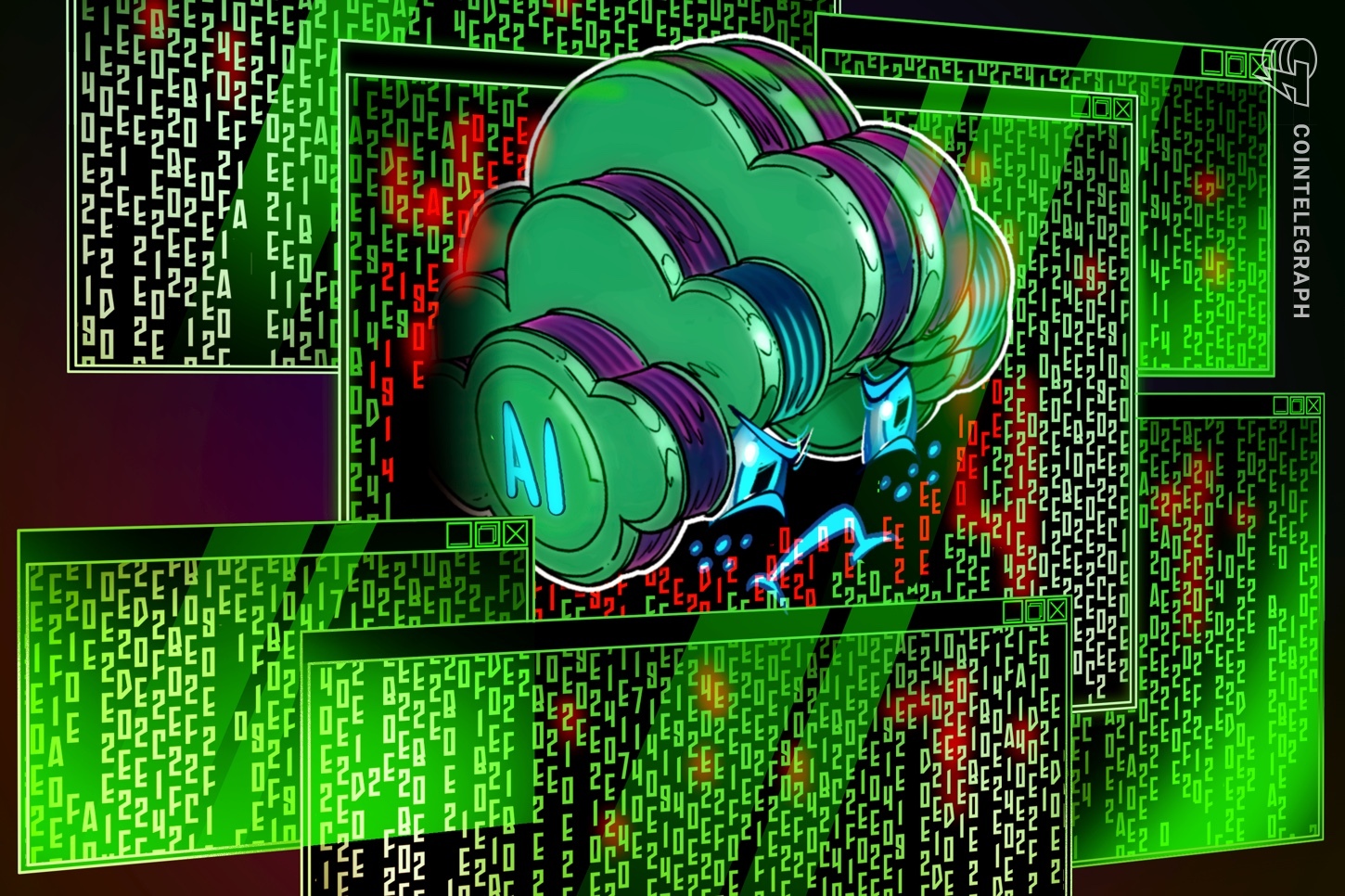
The current state of on-chain analysis has shifted. It used to take a dedicated team of forensic analysts weeks to map out a cluster of wallets and attach them to a real-world identity. Today, AI models do that work in seconds, at a fraction of the cost, and they do it at scale. They thrive on the very thing we celebrate about blockchain: the permanent, immutable record of every move we make.
The Problem of Eternal Memory
In the physical world, your data has a shelf life. If you bought something with cash five years ago, that transaction record is effectively gone unless someone kept a dusty receipt in a shoebox. In crypto, your mistakes from 2017 are just as visible and linkable as the trade you made five minutes ago. AI doesn't get tired and it doesn't forget. It connects the dots between your KYC-compliant exchange withdrawal, your DeFi degens phase, and your current professional treasury.
This isn't just a concern for people trying to hide something. It is a massive hurdle for legitimate builders. If you are running a company and paying your developers in USDC on-chain, you are effectively giving every employee a front-row seat to your entire corporate balance sheet and every other vendor you pay. That is not how a functional economy works. Business requires a level of discretion that current transparent ledgers simply cannot provide.
Zcash and the Shift Toward Shielding
This brings us to Zcash. For a long time, Zcash was the quiet kid in the corner, often overshadowed by the hype of smart contract platforms and the sheer market dominance of Bitcoin. But the tech behind it—Zero-Knowledge Proofs—is finally moving from a niche academic interest to the center of the conversation. Recent data indicates that nearly 29% of the total ZEC supply is now sitting in the shielded pool. That is a significant metric because it shows a shift in behavior. Users are no longer just holding the asset; they are actively using the privacy features.
For the uninitiated, Zcash operates with two types of addresses: transparent (t-addresses) and shielded (z-addresses). The transparent ones work just like Bitcoin; everyone can see the sender, the receiver, and the amount. The shielded ones allow you to transact without revealing those details to the public, while still ensuring the transaction is valid on the network. This is the balance we need. It’s not about breaking the law; it’s about having a door you can close.
Why Builders Should Care
If you are a founder, you need to look at privacy through the lens of risk management. When AI can scrape the entire history of a chain to front-run your moves or profile your users, your competitive advantage evaporates. We are seeing a growing trend where privacy is being rebranded as data sovereignty. If you don't control who sees your data, you don't own your business.
The integration of Zcash-style privacy into the broader ecosystem is the next logical step. We are seeing the rise of ZK-rollups on Ethereum, which borrow the same mathematical foundations that Zcash pioneered. The goal is the same: scalability and privacy. By moving the heavy lifting off-chain and only posting a proof that the work was done correctly, we get the security of the mainnet without the total exposure of every data point.
The Friction of Privacy
I’m not going to tell you that using privacy tech is easy. It’s not. There is still too much friction. For years, shielded transactions required significant computational power, making them difficult to do on a mobile device. That is changing with upgrades like Halo, which removed the need for the controversial trusted setup and made shielded transactions much more efficient. But we aren't at the one-click stage yet.
As builders, our job is to reduce that friction. If privacy tools are hard to use, people won't use them until it's too late. We need to integrate these features at the protocol level so that the default state is protected, not exposed. The fact that nearly a third of Zcash is shielded suggests that the user base is willing to deal with some friction to gain that protection. That is a loud signal for anyone paying attention.
The Institutional Perspective
We also have to address the elephant in the room: regulation. The knee-jerk reaction from many regulators is that privacy equals illicit activity. But we are starting to see a more nuanced conversation. Institutions cannot participate in a system where their proprietary trading strategies and client data are visible to competitors in real-time. To get the big money on-chain, we have to provide the same level of privacy they get in the traditional banking system, if not better.
Zcash’s approach allows for selective disclosure. You can provide a viewing key to an auditor or a regulator without broadcasting your business to the entire internet. This is the middle ground. It satisfies the need for compliance while protecting the user from the predatory data scraping of AI-driven bots.
The future of the open web isn't just about being decentralized; it is about being private by design. If we don't solve this, we are just building a more efficient surveillance state.
The Founder’s Takeaway
Stop thinking of privacy as a feature and start thinking of it as the foundation. The AI tools available to track you are only going to get smarter, cheaper, and more aggressive. If your project relies on the hope that no one will bother to look at your public wallet history, you are building on sand.
Watch the Zcash shielded pool metrics. Watch how ZK-proofs are being integrated into L2s. Most importantly, start asking yourself how you can protect your users' data before an AI model decides to do something with it. The window for being accidentally anonymous is closing. It’s time to get intentional about shielding.
Read the original at CoinDesk →