The Macro Shadow Over the Build
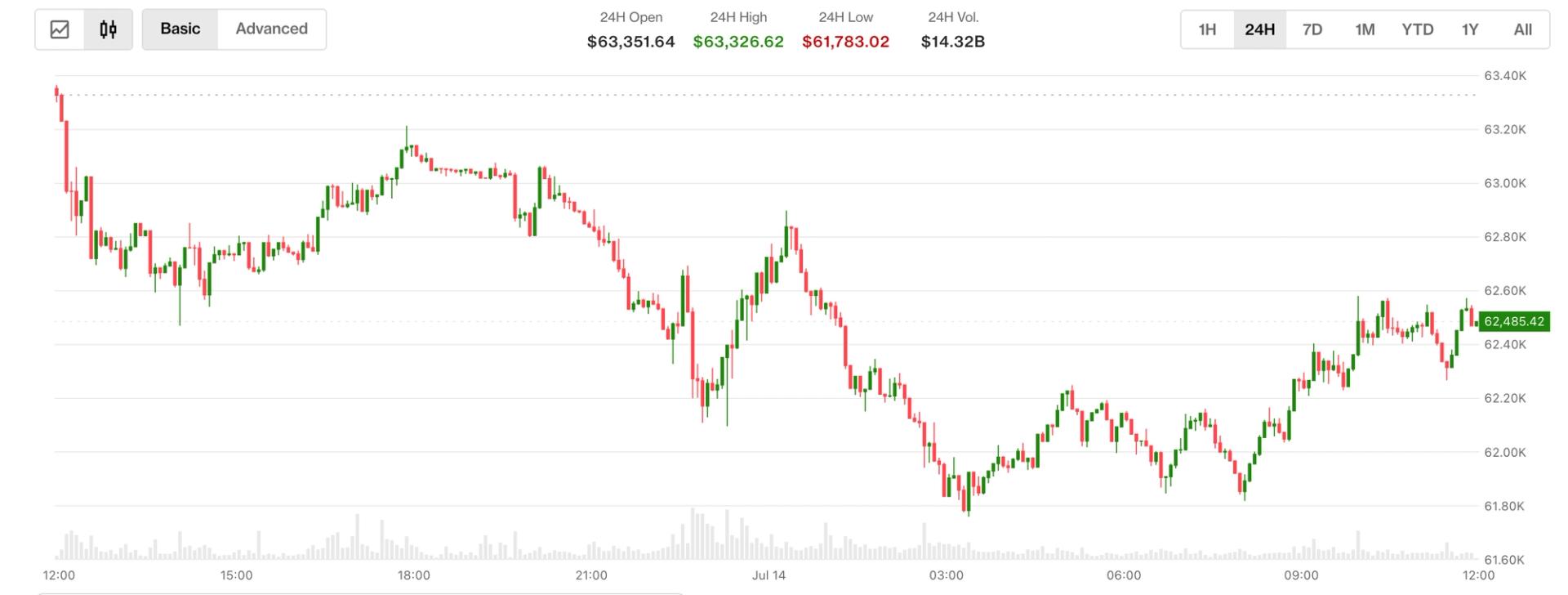
Every time we think we have decoupled from the traditional financial plumbing, the Federal Reserve reminds us who holds the keys to the liquidity gates. Over the last 24 hours, Bitcoin and the broader market took a noticeable 2% haircut. While that sounds like a standard Tuesday in crypto, the catalyst is what actually matters for those of us building in this space. Traders are pricing in a much higher probability of a July rate hike, and the air in the room is getting thinner.
As a founder, I look at these fluctuations differently than a day trader. When interest rates go up, the cost of capital follows suit. The risk-free rate of return becomes more attractive to the big money, and suddenly, that experimental DeFi protocol or AI-driven DAO looks a lot riskier to an investor who can get 5% or more just by sitting on their hands. This pull-back isn't about Bitcoin's fundamentals shifting; it is about the broader market hedging against a Federal Reserve that isn't finished tightening the screws.
The Inflation Report Anxiety
The immediate trigger for this volatility is the upcoming inflation report. The market is nervous, and nervous money is rarely smart money. Traders are raising their bets that the Fed will hike rates again this month to keep downward pressure on consumer prices. For builders, this creates a frustrating feedback loop. Even if your product has perfect product-market fit and growing active user numbers, your valuation and your runway's purchasing power are still tied to the whim of Jerome Powell.
We are seeing a flight to perceived safety, which ironically means leaving the hardest money ever created (Bitcoin) for the fiat currency that the Fed is actively trying to manipulate. It is a paradox, but it is one we have to navigate. If you are a founder currently in a fundraising round, these macro shifts are your biggest enemy. A 25-basis point hike might seem small, but the signal it sends to VCs is to wait and see, which is the last thing a startup needs.
Why High Rates Stifle Innovation
Why should a software engineer or a blockchain architect care about the Fed? Because we operate on the fringes of the economy. When the Fed hikes rates, several things happen that directly impact the build cycle:
- Capital Flight: LPs start pressuring VCs to be more conservative. This leads to longer due diligence and lower valuations.
- Burn Rate Sensitivity: The dollar becomes stronger, but the ability to raise more of them becomes harder. Efficiency becomes the only metric that matters.
- Consumer Behavior: When rates are high, discretionary spending drops. This hits consumer-facing crypto apps and NFT platforms first.
We are essentially building in a high-gravity environment. The weight is heavier, the movements are slower, and only the leanest teams survive. But there is a silver lining here. High-interest environments act as a filter. The junk, the hype, and the low-effort clones get washed out of the market because they no longer have access to cheap, easy money. What remains is a core group of builders focused on utility rather than just price action.
The Decoupling Delusion
For years, the narrative has been that Bitcoin is an inflation hedge. While that might be true over a ten-year horizon, the short-term reality is that Bitcoin trades like a high-beta tech stock. When the Fed gets aggressive, Bitcoin gets hit. We haven't achieved the level of institutional adoption or regulatory clarity required to truly decouple from the U.S. dollar's interest rate cycle.
This is a wake-up call for founders who have been coasting on the hope of a quick market recovery. We are in a prolonged period of tightening, and the move we saw today—traders shifting their bets toward a hike—shows that the market expects this to last longer than the optimists predicted. If you are building, you need to assume that the cost of capital will remain high for the foreseeable future. Don't wait for a pivot that might not come this year.
What This Means for Technical Roadmaps
When liquidity dries up, your roadmap needs to reflect reality. This is not the time for multi-year R&D projects with no pathway to revenue. It is the time for shipping features that provide immediate value or reduce costs for users. Efficiency isn't just a financial buzzword; it needs to be part of the technical architecture. Gas optimization, faster settlement, and simplified UX are the features that win when users are pinched by macro-economic pressure.
Real builders thrive in high-interest environments because they are forced to solve actual problems instead of just chasing the next liquidity injection.
The 2% drop we are seeing today is noise, but the reason for the drop is the signal. The Fed is still in the driver's seat. For those of us in crypto and AI, our job is to build systems that are so resilient and so valuable that they eventually become more attractive than the "safe" bets provided by the traditional financial system. We aren't there yet, but every rate hike brings us closer to a world where decentralized alternatives are no longer just an experiment—they are a necessity.
Foundation Over Fright
Instead of watching the charts, builders should be watching their retention metrics. In a high-rate environment, user loyalty is the only currency that doesn't devalue. If people are still using your protocol when their cost of living is rising and their investment accounts are stagnant, you have something real. The market's reaction to the Fed is a distraction from the work at hand, though it is a distraction we must account for in our financial planning.
My advice to founders right now is simple: stop checking the price of BTC every ten minutes. It’s going to be volatile as long as the Fed is playing with the interest rate lever. Focus on your runway, focus on your users, and be prepared for a summer where the noise from Washington and the Fed overshadows the innovation happening in the labs. The macro cycle will eventually turn, but only the builders who ignored the hype and focused on the plumbing will be around to see it.
Read the original at CoinDesk →