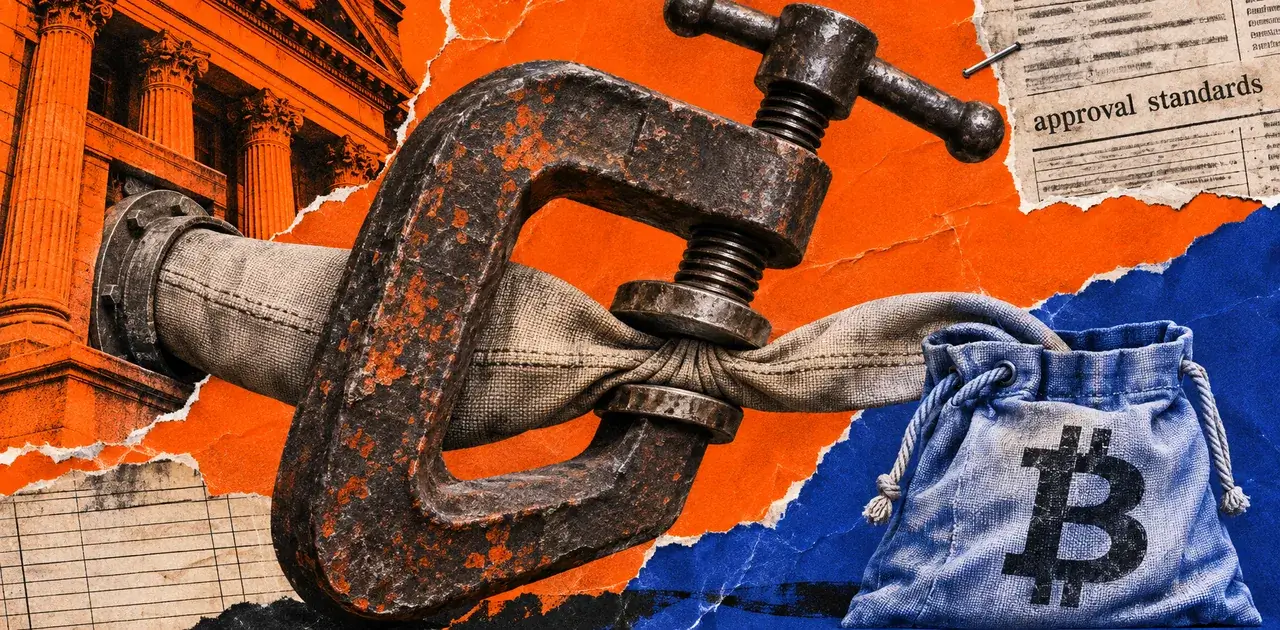
We are watching a slow-motion tightening of the traditional financial system. The Federal Reserve recently released its November Senior Loan Officer Opinion Survey, and the data confirms what many founders have felt on the ground for months: banks are pulling back. They are raising the bar for who gets capital, increasing the costs of borrowing, and effectively shrinking the pool of available liquidity.
For the average Bitcoin holder, this might seem like a distant macroeconomic headline. But if you are building in this space or managing a treasury, this is the signal you cannot ignore. When the pipes of traditional finance get clogged, the pressure builds in the crypto markets. This isn't just about interest rates anymore; it is about access to capital.
The Credit Squeeze Is Real
The Fed's survey highlights a significant trend toward tougher approval standards for both businesses and households. Banks are citing a less favorable economic outlook and a reduced tolerance for risk as the primary reasons for tightening their belts. In plain English, the banks are scared. They are protecting their balance sheets, which means they are less willing to fuel the speculative cycles that often drive retail interest in digital assets.
When banks tighten lending, the velocity of money slows down. This creates a ripple effect. Businesses have less capital to expand, consumers have less disposable income to invest, and the broader market begins to feel the weight of high-cost debt. For Bitcoin, which has often been treated as a high-beta play on global liquidity, this tightening is a headwind that requires a different strategy than the easy-money eras of the past.
The Rise of Nonbank Demand
Interestingly, the Fed noted that while bank lending is drying up, demand for nonbank financing is holding steady or even increasing. This is where the story gets interesting for the crypto sector. As traditional institutions step back, alternative lenders and decentralized protocols are being asked to fill the gap. We are seeing a shift where capital is migrating from the regulated, transparent banking sector into the "shadows" of the financial world.
For builders, this is an opportunity. If the banks won't lend, the demand for decentralized credit markets becomes a necessity rather than a luxury. However, this shift also brings volatility. Nonbank lenders don't have the same backstops that the Fed provides to commercial banks. When things go wrong in the nonbank sector, they go wrong quickly, and we see the kind of flash liquidations that can send Bitcoin's price into a tailspin.
The Forced Sale Myth
One of the more nuanced takeaways from the recent data is the lack of evidence regarding forced Bitcoin sales. There has been a lot of chatter about whether investors are being liquidated to cover traditional margin calls or bank debt. So far, the data doesn't support a mass-exodus narrative. People aren't necessarily dumping their Bitcoin because a bank called their loan; they are holding, but they aren't exactly buying more either.
This suggests we are in a period of stagnation. The conviction of long-term holders is being tested by a lack of new liquidity entering the system. If you are building a product that relies on a constant influx of new retail users, you are going to have a hard time. The "new money" is currently locked behind bank vaults that are harder to open than they were a year ago.
What This Means for Builders
If you are a founder, your runway is your most important metric right now. You cannot rely on a sudden surge in Bitcoin's price to bail out a weak business model. The tightening lending rules mean that venture capital will also remain selective. VCs get their money from Limited Partners who are also feeling the credit squeeze. It is a closed loop.
- Focus on Utility: Speculation is expensive when credit is tight. Build tools that solve actual problems for people who already have capital in the system.
- Monitor Liquidity Gauges: Keep an eye on the Fed's lending surveys. They are a better leading indicator of market health than most technical analysis charts.
- Diversify Your Treasury: If your startup is holding BTC, ensure you have enough stable liquidity to weather a six-month credit drought without being forced to sell at the bottom.
The Long Game
I have always said that Bitcoin is the ultimate exit ramp from a failing legacy system. But the transition isn't going to be a clean break. As the Fed tightens rules, the friction between the old world and the new world increases. The banking sector is trying to preserve itself by being conservative, but in doing so, they are pushing more activity toward the very assets they fear.
We aren't seeing a collapse, but we are seeing a consolidation. The weak hands—both in terms of investors and companies—are being pruned by high interest rates and strict lending. This is a healthy, albeit painful, process. It flushes out the noise and leaves behind the builders who are actually solving for a world where central banks no longer provide a safety net.
The Fed is essentially telling the market that the era of cheap, easy leverage is over. Those who can thrive without it are the ones who will own the next decade.
In the short term, Bitcoin investors might indeed "pay the price" in the form of sideways price action and higher volatility. But the real takeaway is that the traditional system is becoming more restrictive, making the case for a decentralized, permissionless alternative stronger every day. Just don't expect the banks to make it easy for you to get there.
Read the original at CryptoSlate →