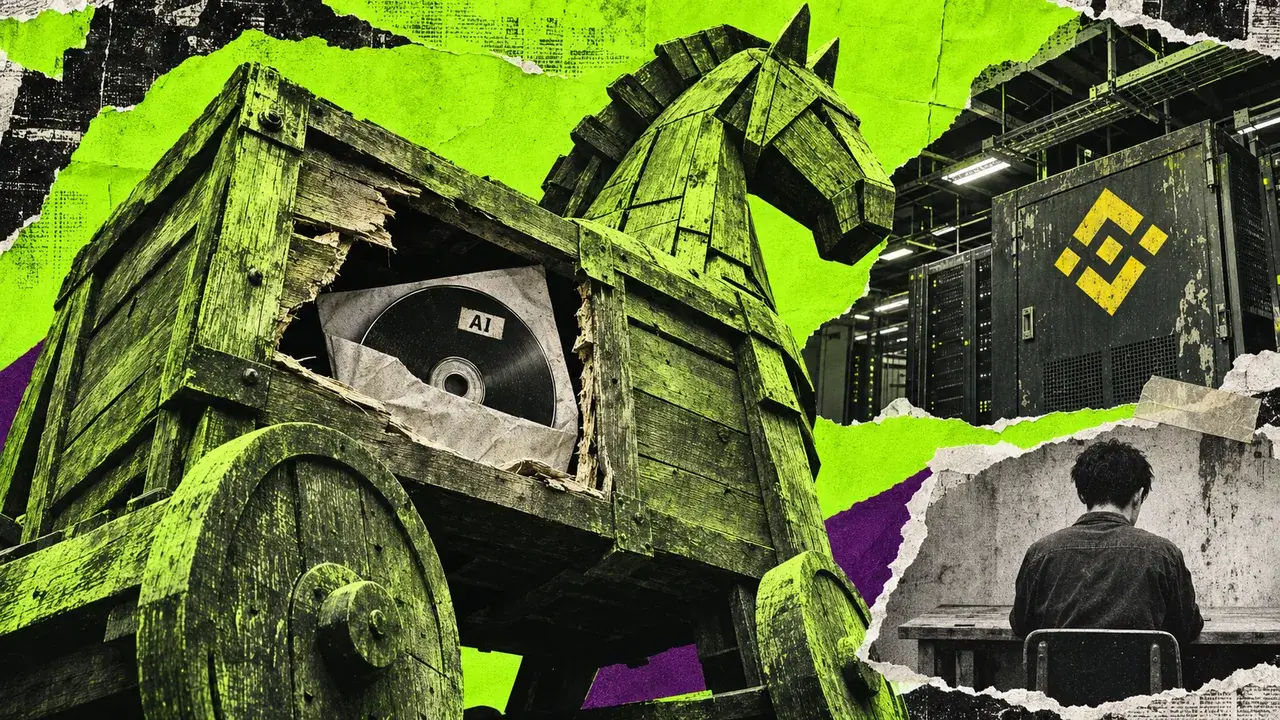
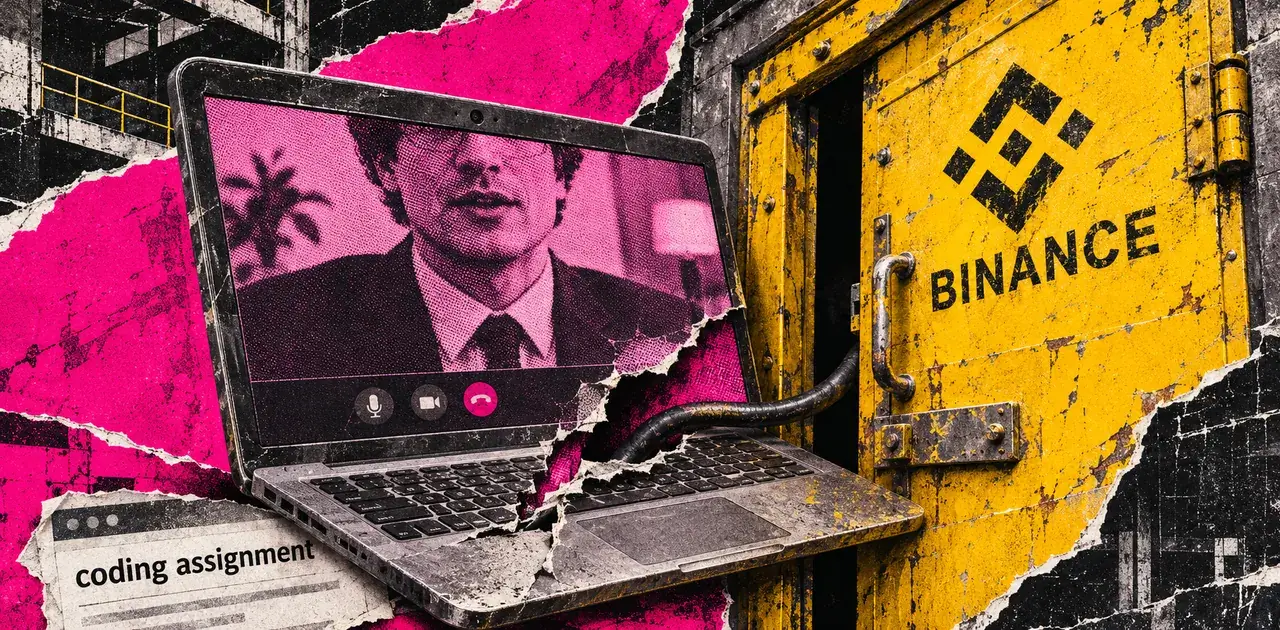
We have reached the point in the cycle where the tools we built to protect us are being turned into skeleton keys. The recent disclosure from Binance regarding a $6.34 billion theft is not just another headline about a bridge exploit or a phishing scam. It is a fundamental warning to every founder building in the intersection of AI and decentralized finance.
According to the exchange's recent security report, the attack was not a brute-force assault on their vault. It was a surgical strike that began with a single compromised workstation and spiraled out of control through an internal AI tool. By leveraging the very automation meant to streamline their operations, attackers were able to subvert the authority of two lead engineers responsible for the company's wallet infrastructure.
The Illusion of Automation Security
For the last two years, the narrative in crypto security has been heavily focused on AI-driven threat detection. The pitch is always the same: humans are slow, code is complex, and we need machine learning to spot anomalies in real-time. But as a founder, you have to ask yourself what happens when the watchdog is trained to follow the wrong scent.
In the Binance case, the attackers didn't just bypass the AI; they used it as a lever. By gaining access to an employee's computer, they found their way into an internal AI environment. This wasn't a failure of encryption. It was a failure of trust in automated workflows. The AI tool, which likely had elevated permissions to assist engineers with deployment or monitoring, became the primary vector for taking over high-level administrative functions.
This is the dark side of developer productivity. We give these tools deep access to our repositories and our cloud infrastructure because they save us hundreds of hours a month. We treat them like junior partners. But a junior partner who can be tricked into handing over the keys to the kingdom is a liability, not an asset.
Why Builders Should Be Worried
If you are building an app or a protocol today, you are likely using LLMs to help write smart contracts or automate your DevOps. The temptation is to integrate these tools as deeply as possible. The Binance breach proves that this creates a new, massive attack surface that most security audits aren't even looking at yet.
We talk a lot about 'prompt injection' in a consumer context, but we aren't talking enough about 'infrastructure injection.' If a malicious actor can influence the inputs or the training data of an internal AI tool, they don't need to crack your private keys. They just need to wait for the AI to execute a legitimate-looking command that opens a backdoor.
The scale of this loss—over six billion dollars—is staggering even by crypto standards. It highlights a recurring theme in this industry: we are so eager to be at the bleeding edge of technology that we often forget the basic principles of compartmentalization and least privilege.
The Myth of the 'Self-Healing' System
There has been a lot of hype recently about self-healing code and autonomous security agents. The idea is that the AI will see a bug and patch it before a human even wakes up. On paper, it sounds like the holy grail of blockchain security. In practice, it is a nightmare.
If an AI has the permission to patch code, it has the permission to change the rules of the system. The Binance incident shows that attackers are already thinking several steps ahead of this trend. They aren't looking for the bug in the code; they are looking for the tool that has the power to change the code. By compromising the engineer's environment and then utilizing the internal AI, they essentially social-engineered the system itself.
Practical Lessons for Founders
So, what do we do? We can't stop using AI. The efficiency gains are too high, and the competition is already moving at light speed. However, we have to stop treating AI tools as 'trusted' entities within our tech stack. Here is how I’m looking at it from a builder's perspective:
- Air-gap your AI: Internal AI tools should never have direct write access to production environments or wallet infrastructure. They should generate suggestions that require a manual, multi-sig style approval from human engineers.
- Monitor the Monitors: We need specific logging for how AI tools are interacting with internal systems. If an AI tool suddenly requests access to a sensitive module it hasn't touched in months, that should trigger an immediate lockdown.
- The Human Factor: Even the best engineers are susceptible to sophisticated phishing. If your security model assumes your engineers will never be compromised, you’ve already lost. You need systems that assume the engineer's computer is already infected.
A Reality Check on Innovation
I’ve always been skeptical of 'magic bullet' solutions. AI is being sold as a magic bullet for crypto security, but right now, it looks more like a double-edged sword. The Binance theft is a humbling reminder that no matter how much capital you have or how many PhDs you employ, the fundamental vulnerabilities remain the same: human error and over-centralized control.
For those of us building in the trenches, the takeaway is clear. Efficiency is great, but not at the cost of visibility. When you automate your security, you are essentially outsourcing your intuition. And in a high-stakes environment like crypto, your intuition is often the only thing that stands between a successful quarter and a multi-billion dollar catastrophe.
The goal of security isn't to build a wall that can't be climbed; it's to build a system where no single ladder can reach the top.
We need to stop building ladders for the sake of convenience and start focusing on the structural integrity of our platforms. If Binance can lose six billion dollars through an internal AI loophole, your startup isn't safe just because you use a hardware wallet and a VPN. It’s time to rethink the 'AI-first' approach and move toward an 'AI-monitored, human-verified' standard.
Read the original at CryptoSlate →