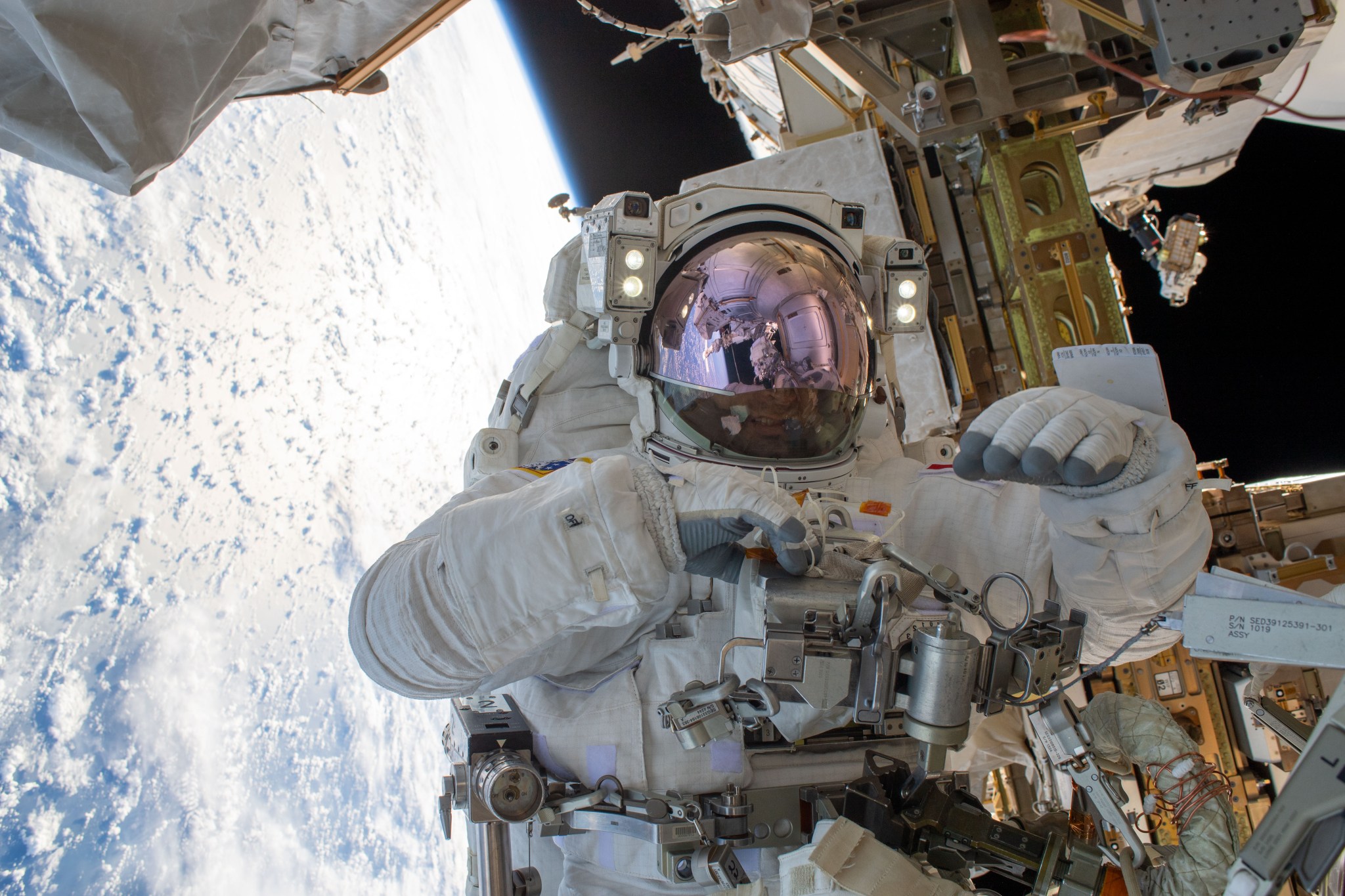
We talk a lot about the digital frontier in crypto and AI, but sometimes looking at the literal frontier provides the best sanity check for how we build systems. On October 29, 2026, CSA astronaut Joshua Kutryk and NASA astronaut Anil Menon were floating 267 miles above the South Atlantic Ocean. They weren't there for a photo op. They were there to swap out aging hardware for something more efficient: new roll-out solar arrays.
For those of us in the builder community, the International Space Station (ISS) is the ultimate legacy codebase. It is a massive, aging infrastructure project that requires constant patching and updates just to stay functional. The recent spacewalk to install these solar arrays is a masterclass in modularity and technical debt management.
The Power Problem in Hostile Environments
In the tech world, we worry about server uptime and latency. In space, power is the only thing standing between life and a very cold, very silent end. The ISS has been relying on massive, rigid solar wings for decades. As these wings age, their efficiency drops. Instead of scrapping the whole station, NASA and its partners have moved toward iROSA—roll-out solar arrays.
This is a lesson in modularity. The new arrays are smaller, lighter, and roll out like a rug. They sit on top of the old ones, utilizing the same tracking mechanisms but providing a significant boost in energy output. For developers, this is the equivalent of adding a more efficient microservice layer on top of a legacy database without having to rewrite the entire backend.
Building for Resilience
Kutryk and Menon weren't just installing hardware; they were performing "get-ahead" work. This is a term I wish we used more in the startup world. In space, if you have twenty minutes of oxygen and battery left after finishing your primary task, you don't just head back to the airlock. You do the maintenance tasks scheduled for six months from now.
This proactive stance is what keeps the ISS viable. When you are 267 miles up, you don't have the luxury of reactive development. You fix things before they break because the cost of failure is absolute. Builders in the AI and blockchain space often wait for a bug bounty to be claimed before patching a vulnerability. The ISS model suggests we should be doing the opposite: aggressive, preemptive maintenance as a standard operating procedure.
The Canadian Contribution and Global Collaboration
Joshua Kutryk represents the Canadian Space Agency (CSA), and his presence alongside NASA’s Anil Menon highlights the necessity of distributed teams. No single nation can maintain the ISS. It requires a protocol—a set of shared standards—that allows different agencies to plug their people and their tech into the same system.
This is why open-source matters. The ISS is, in many ways, an open-source hardware project. The interfaces are standardized so that a Canadian astronaut can install a US-made solar array on a structure built with parts from around the globe. In crypto, we strive for this kind of interoperability. We want our smart contracts to talk to different chains without friction. The ISS achieved this in the physical realm decades ago.
What This Means for Builders
If you are building a platform today, you need to look at how Kutryk and Menon handled this mission. They weren't just workers; they were highly specialized nodes in a high-stakes network. Here are three takeaways for founders:
- Modular over monolithic: The old rigid solar arrays were hard to replace. The new roll-out arrays are designed for easier deployment. Build your software so you can swap out the power source (the logic) without tearing down the frame.
- Technical debt is a slow killer: The ISS is constantly fighting degradation. If you ignore the small bugs in your stack, they accumulate until you need an emergency "spacewalk" to save your company.
- Proactive maintenance: If you have the bandwidth, do the get-ahead work. Don't wait for the next sprint to fix the UI jank or the inefficient query.
The Reality of the High Ground
It’s easy to get lost in the romance of a photo of an astronaut hovering over the blue marble of Earth. But the reality is much more gritty. It is hours of tethering, checking seals, and fighting the physical resistance of a pressurized suit. It is manual labor in a vacuum.
We see the same thing in the current AI boom. People see the glossy output of a large language model and forget the thousands of hours of data cleaning, RLHF, and infrastructure tuning that made it possible. The spacewalk is the "dirty work" of the cosmos. As a founder, you have to be willing to do that dirty work to keep the lights on—literally.
Building a resilient system isn't about the initial launch; it's about the decades of maintenance that follow. If your tech can't survive a hardware swap, it isn't ready for the long haul.
Final Thoughts for the Frontier
The image of Kutryk above the South Atlantic is a reminder that we are still in the early stages of infrastructure development, both in orbit and on the ground. Whether you are deploying code to a decentralized network or deploying solar panels to a space station, the principles remain the same: simplify the components, standardize the interfaces, and never stop maintaining the system.
The ISS is a miracle of engineering not because it was perfect when it launched, but because it has been successfully patched for twenty-five years. That is the kind of longevity we should be aiming for in our own builds. Stop worrying about the hype of the launch and start worrying about how you'll handle the maintenance five years down the road.
Read the original at NASA Breaking News →