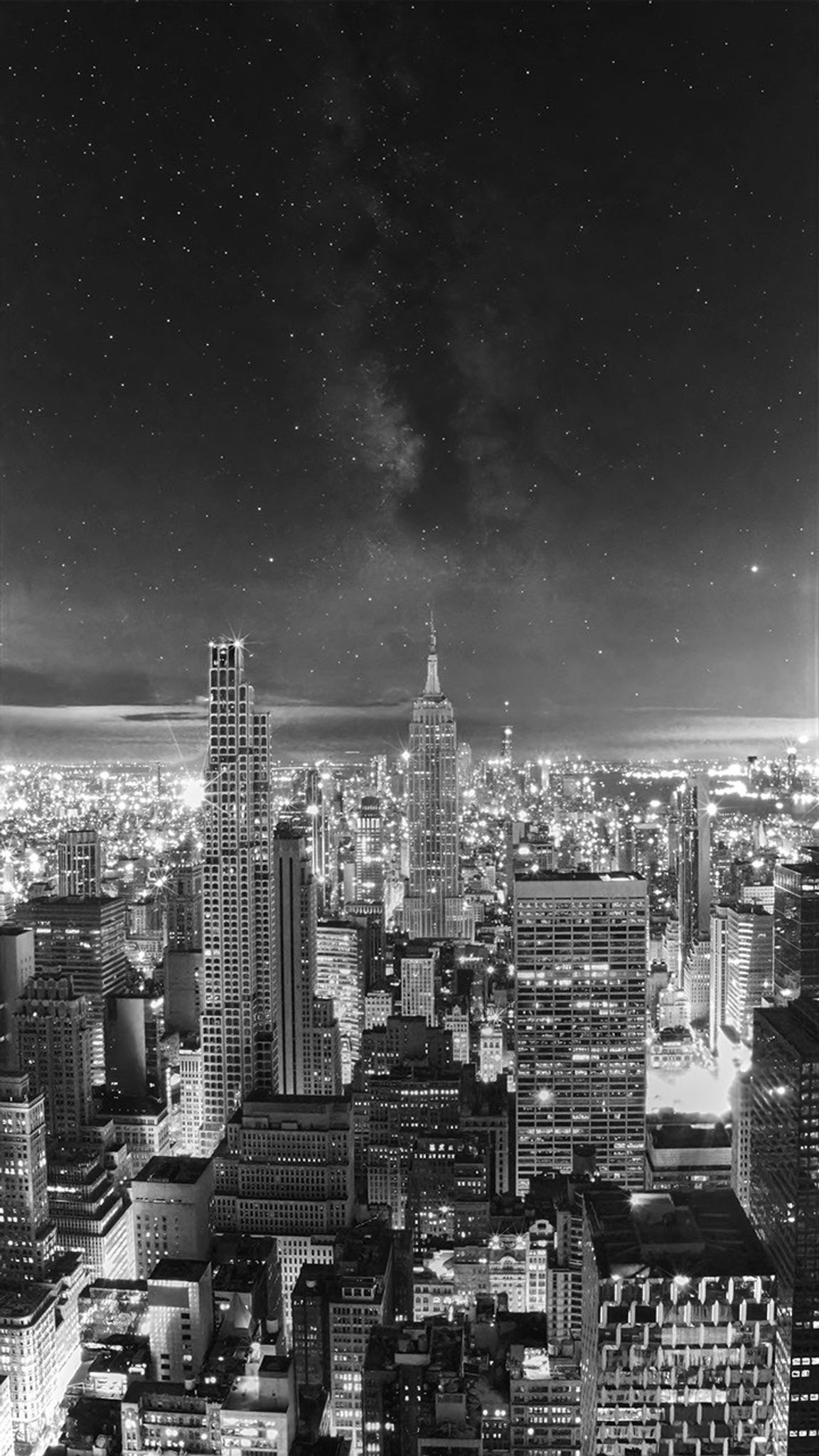
We have all seen the images. A crisp, impossible view of the Milky Way stretching its violet and stardust limbs directly over the spire of the Empire State Building. In the real world, Manhattan light pollution makes it hard to see the moon, let alone the galactic center. But in the world of high-end composite photography, these views are becoming our new baseline for reality. NASA recently featured a piece titled The Milky Way over Manhattan, and while it is a beautiful work of art, it serves as a massive case study for those of us building in the tech and crypto sectors.
As a founder, I look at this and I do not see a pretty picture. I see a data integrity challenge. This image is what we call a composite—a blend of multiple exposures taken at different times, or perhaps different locations, to create a final product that the human eye could never actually witness. In the context of space photography, this is accepted practice. It is about education and inspiration. But as we move deeper into the era of generative AI and deepfakes, the line between an inspired composite and a deceptive fabrication is getting thinner by the hour.
The Value of Constructed Reality
For builders in the AI space, there is a temptation to automate everything. We want the most efficient path to the most beautiful result. The creator of the Manhattan composite likely spent hours, if not days, aligning pixels and correcting color grades to ensure the lighting on the buildings matched the theoretical lighting from a galaxy thousands of light-years away. That is human labor. That is craft.
But now, a prompt engineer can generate a similar image in six seconds using Midjourney or DALL-E. The problem for the builder isn't the speed; it's the lack of an anchor. When NASA features a composite, there is a level of institutional trust. We know they aren't trying to trick us into thinking the sky actually looks like that at 42nd Street. They are showing us what exists behind the veil of smog and neon. However, when a startup uses these tools, the trust isn't built in. It has to be earned.
If you are building a creative platform today, your biggest hurdle isn't the rendering engine. It is the provenance. How does a user know if they are looking at a hard-won composite of real data or a hallucinated sky generated by a server farm in Virginia? This is where the intersection of AI and blockchain actually starts to make sense, away from the hype of JPEGs and monkey drawings.
Verification as the New Premium
We are entering an era where the raw, unedited truth is going to become a luxury good. Just like organic produce became a premium when processed food took over the shelves, unmanipulated data is going to be the gold standard for high-trust industries. Yet, for the average consumer, the composite—the polished, better-than-real version—is what they actually want to buy.
This creates a paradox for founders. Do you build tools that help people create these hyper-real fantasies, or do you build the tools that debunk them? The smart money is currently looking at both. We need the tools to create, but we desperately need the metadata layers to prove the origin. If NASA’s featured image was minted with a clear cryptographic trail showing exactly which telescope took the sky plates and which camera took the city shots, the value of that art would be objectively higher than a generic AI generation.
- Authenticity is not about avoiding tools; it is about disclosing them.
- The more we lean into AI-generated visuals, the more we need immutable ledgers for source material.
- Builders should focus on the bridge between raw data and polished output.
The Founder Perspective on Digital Illusions
I have spoken with dozens of founders who think the goal of AI is to replace the artist. They see a photo of the Milky Way over a city and think, I can code a bot to do that. They are missing the point. The reason that specific image matters is because it represents a specific human perspective on two real things: a city we built and a galaxy we inhabit. A bot can mimic the pixels, but it cannot mimic the intent.
In the crypto world, we talk a lot about decentralization. But we should be talking more about transparency. If you are building a protocol that handles media, your primary feature shouldn't be speed. It should be the ability to show the work. In a world where anyone can fake a miracle, the person who can prove the miracle happened—or explain exactly how they staged it—is the one who wins the long-term trust of the market.
The beauty of a composite isn't that it is real; it is that it represents a truth we can't see with our own eyes. But without a trail of breadcrumbs, a beautiful truth is indistinguishable from a beautiful lie.
We are seeing this play out in the news cycles every day. We see images of conflict, of political figures, and of scientific discoveries where the first question isn't What am I looking at? but rather Is this real? That is a stressful way to live. As builders, our job is to reduce that friction. Whether you are building an NFT marketplace, a decentralized social media app, or a new AI model, you have to solve for the 'is this real' problem before you can solve for the 'is this cool' problem.
The Takeaway for the Tech Stack
Don't get distracted by the aesthetics. The Manhattan photo is a reminder that humans have a deep-seated desire to see the impossible made manifest. We love the spectacle. But as a founder, your job is to look under the hood. You need to be thinking about how we verify the pixels of the future. The next decade won't be won by the company that makes the prettiest pictures; it will be won by the company that makes the pictures we can actually believe in.
Stop chasing the hype of perfect generation. Start chasing the infrastructure of honest representation. If you can provide a way for creators to show their process and for consumers to verify the source, you are building something that will outlast the current AI bubble. The stars are beautiful, but the ground we stand on needs to be solid.
Read the original at NASA Breaking News →