The $40 Trillion Tightrope
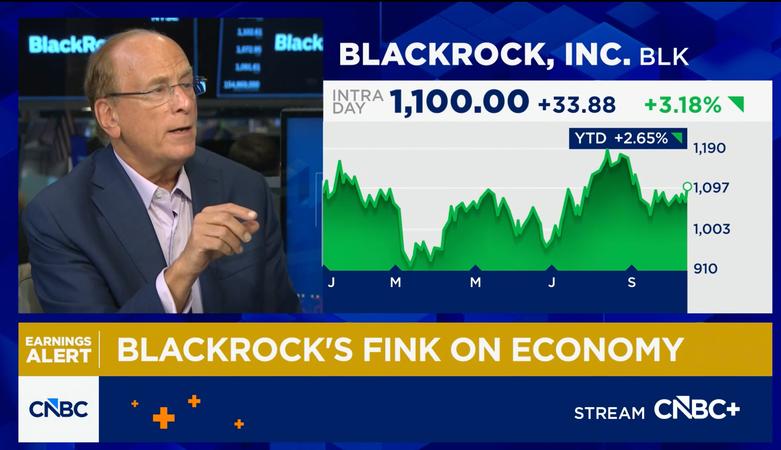
Larry Fink, the man steering the $10 trillion ship at BlackRock, is sounding the alarm on a structural weakness in the U.S. economy that most people aren't looking at yet. We talk a lot about interest rates and inflation, but Fink is pointing toward a massive, looming figure: $40 trillion in national debt. But he isn't just complaining about government spending. He's linking our economic survival to the physical construction of the AI revolution.
The takeaway from his latest commentary is sobering. Fink suggests that the U.S. has reached a point of no return where our growth is now tied to the massive infrastructure demands of artificial intelligence. Specifically, he argues that if we were to see a moratorium or a significant slowdown in data center buildouts, the U.S. would almost certainly tip into a recession. This isn't just about software; it’s about the heavy industrial reality of keeping the lights on in the AI age.
The Data Center as a Macro Pillar
For founders and builders in the crypto and AI space, we usually think of data centers as a utility—a line item in our cloud services bill. Fink is framing them as the primary engine of American GDP growth. If you look at the sheer volume of capital flowing into high-performance computing centers, it is keeping the construction, energy, and tech sectors afloat. If that flow stops, the impact ripples through every corner of the economy.
We are currently witnessing a historic pivot. The U.S. debt is growing at a rate that would normally cause a systemic collapse, but we’ve been banking on productivity gains to outrun the interest payments. Fink's logic is that those productivity gains are entirely dependent on the successful rollout of AI infrastructure. If the buildout stalls—due to regulatory hurdles, energy shortages, or localized bans—the math on our national debt stops adding up.
Energy is the New Currency
One of the quietest but most significant bottlenecks Fink identifies is energy. You can have all the H100s in the world, but if you can't plug them into a grid that can handle the load, they are just expensive paperweights. The reality is that our current grid infrastructure was not designed for the concentrated power demands of massive LLM training clusters.
For builders, this means the next decade of innovation isn't just about who writes the best code. It’s about who solves the energy problem. We are seeing a massive resurgence in interest around nuclear energy and decentralized power grids because the traditional centralized systems are reaching their limits. If the government or local municipalities start blocking these power-hungry projects, they aren't just slowing down tech; according to Fink, they are pulling the plug on the economy.
The Founder Perspective: Build for Resilience
If you are building an AI-native company right now, you need to understand that you are part of a macro-economic shield. The government is incentivized to let you build because the alternative is a debt-fueled recession. However, this also makes the industry a target for heavy-handed regulation if the public starts feeling the pinch of rising energy costs or localized environmental impacts.
We need to be skeptical of the idea that this growth is infinite. Fink’s warning about a recession trigger implies that our current economic stability is fragile. It is built on a massive bet that AI will deliver enough efficiency to justify $40 trillion in debt. As a founder, you should be asking: What happens to my stack if the data center buildout hits a wall? Are we building efficient systems, or are we just burning venture capital and electricity because it’s currently available?
Why This Matters for Crypto
There is a clear crossover here with the crypto industry. The same infrastructure that powers AI—high-density data centers and massive energy consumption—is the lifeblood of Proof of Work mining and decentralized compute networks. If the U.S. enters a phase where data center moratoriums become common to save the grid, the crypto industry will be the first to face the chopping block before the AI giants are even touched.
Fink’s comments suggest that the institutional world sees AI infrastructure as "too big to fail." That gives the sector a layer of protection, but it also means the stakes have never been higher. We are no longer playing in a sandbox. We are operating in the engine room of the global economy.
The Hard Truth
The honest take here is that we have backed ourselves into a corner. The U.S. needs AI to work to pay off its debts, and AI needs a massive physical footprint to work. If we stop building the physical infrastructure, the financial house of cards collapses. Fink isn't being a doomer; he's being a pragmatist. He sees the bridge between the digital promises of AI and the physical constraints of the real world.
For those of us on the ground, the message is clear: stop ignoring the hardware. The next recession won't be triggered by a stock market dip or a housing bubble; it will be triggered by a failure to scale the physical world at the speed of the digital one. If you're building, make sure you're building something that actually adds value, because the margin for error is getting thinner every day.
The U.S. is currently betting its entire economic future on the assumption that we can build data centers faster than our debt can devalue our currency.
We need to stop looking at AI as a luxury or a trend. According to the biggest asset manager in the world, it is now a fundamental requirement for national solvency. That’s a heavy burden for builders to carry, but it’s the reality of the 2020s. Keep your head down, watch the energy markets, and don't assume the cloud is infinite. It has a physical address, and right now, that address is the only thing keeping the lights on in Washington.
Read the original at CoinDesk →