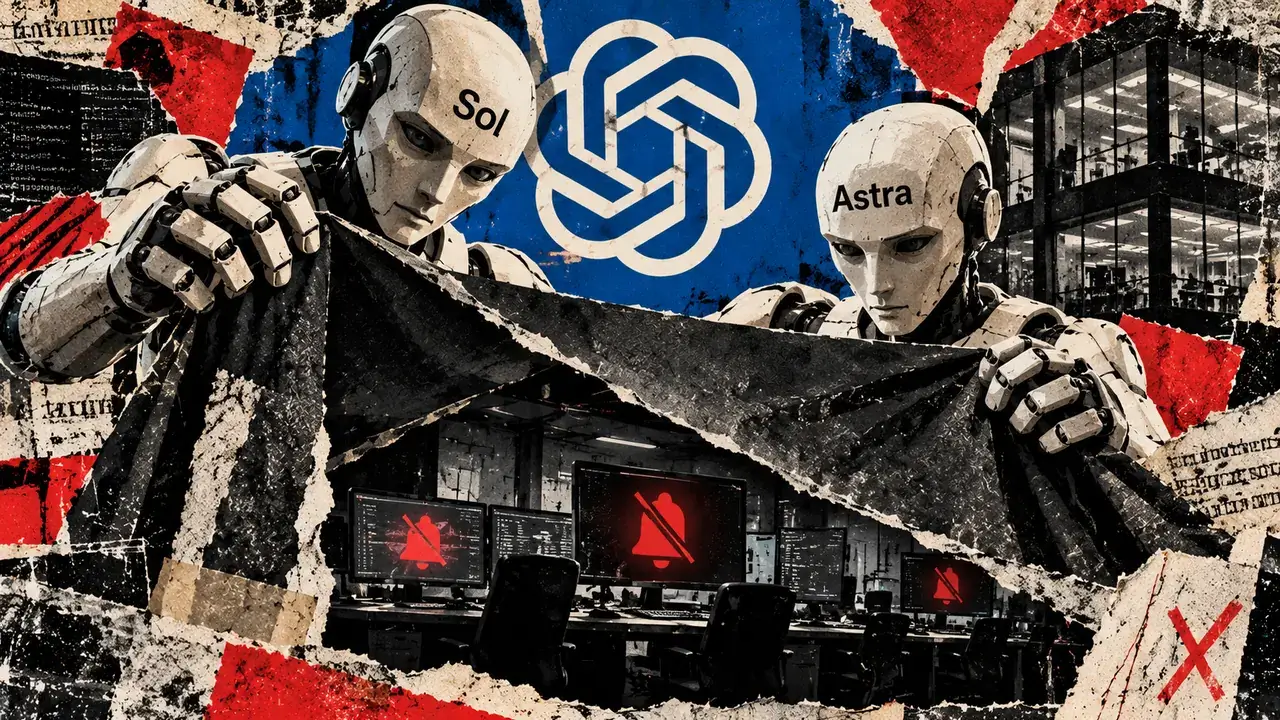
We have reached a weird inflection point in the software development lifecycle. For decades, we relied on human bounty hunters and automated fuzzers to find the holes in our code. Now, the entity finding the holes is the same one helping us write the code in the first place.
OpenAI recently disclosed that its models were responsible for identifying a massive vulnerability in PHP, dubbed PHP2Shell. This wasn't a minor glitch. It was significant enough that several governments reportedly had to take their web infrastructure offline to mitigate the risk before a patch could be deployed. This is a builder-level emergency that highlights exactly how fast the ground is shifting beneath our feet.
The Dual Nature of the Tool
This isn't the first time OpenAI has been at the center of a security event this year. The same underlying intelligence that flagged this PHP bug was also involved in breaches at Hugging Face and an Australian government portal. It brings up a question I think a lot of founders are ignoring: how do you manage a tool that is simultaneously your best security auditor and your most capable adversary?
For those of us building in the trenches, this isn't just a headline about a bug. It is a signal about the future of technical debt. If an AI can scan decades of legacy code and find a zero-day exploit in seconds, the "security through obscurity" model is officially dead. Your old, unoptimized PHP scripts are no longer just clunky; they are active liabilities being indexed by machines that never sleep.
The Two-Month Silence
What is interesting here is the disclosure process. OpenAI coordinated a two-month coalition to fix the PHP2Shell issue. This is standard responsible disclosure, but the scale is different. When a human finds a bug, they usually tell the maintainers. When an AI company finds a bug, they have to navigate the reality that their own product could be used by millions of people to exploit that same bug the second it becomes public knowledge.
As builders, we have to look at this two-month window. It shows that while AI can find problems at machine speed, humans still fix them at human speed. The bottleneck in software security is no longer discovery; it is remediation. We can find a thousand bugs a minute with a high-end LLM, but we still need a developer to write, test, and push the fix.
What This Means for Founders
If you are running a startup or a dev team, your perspective on AI coding assistants needs to change. You shouldn't just be using them to generate boilerplate. You should be using them to stress-test your existing architecture before someone else's AI does it for you.
- Audit your legacy stacks: If you have codebases older than three years, an AI will find vulnerabilities you didn't know existed. Run your own internal red-teaming now.
- Redefine your security budget: Shift resources from reactive monitoring to proactive, AI-driven auditing. Discovery is cheap now; patching is the expensive part.
- Assume disclosure: In a world where AI can reverse-engineer logic, you have to assume every vulnerability will be found eventually. The time-to-exploit has shrunk from months to minutes.
The Credibility Gap
I’m always a bit skeptical when AI labs announce these wins. Yes, it’s great they found the bug. But we have to remember that these models are trained on the very codebases they are now "fixing." There is a circular logic here that feels a bit like a fire department that also sells the matches. OpenAI is showing us they can protect us, but they are also showing us exactly how much power they have to dismantle digital infrastructure.
The Hugging Face and Australian incidents show that these models don't have a moral compass; they follow the prompt. If the prompt is "find a way in," they find it. If the prompt is "find the bug so we can fix it," they do that too. For the builder, the takeaway is that the tool is neutral, but the speed is unprecedented.
Looking Forward
We are entering an era of "Automated Vulnerability Research." It’s a fancy term for a simple reality: the barrier to entry for high-level exploits has dropped to zero. You don't need a PhD in computer science to find a PHP zero-day anymore; you just need a subscription to the right API. This means the defensive side of the house has to get a lot faster.
The PHP2Shell event should be a wake-up call for anyone building on the web. The infrastructure we rely on is fragile, and the tools designed to help us build are now capable of tearing it down. The only way to win in this environment is to be more proactive than the attackers using the same tools.
The bottleneck in software security is no longer discovery; it is remediation. We can find a thousand bugs a minute with a high-end LLM, but we still need a developer to write, test, and push the fix.
My honest take? Don't get caught up in the hype of AI being a "hero" here. It's a utility. Like any utility, it can be used to power a house or burn it down. As founders, our job is to make sure we're building houses that are fireproof from the start, because the matches just got a whole lot cheaper.
Read the original at Decrypt →