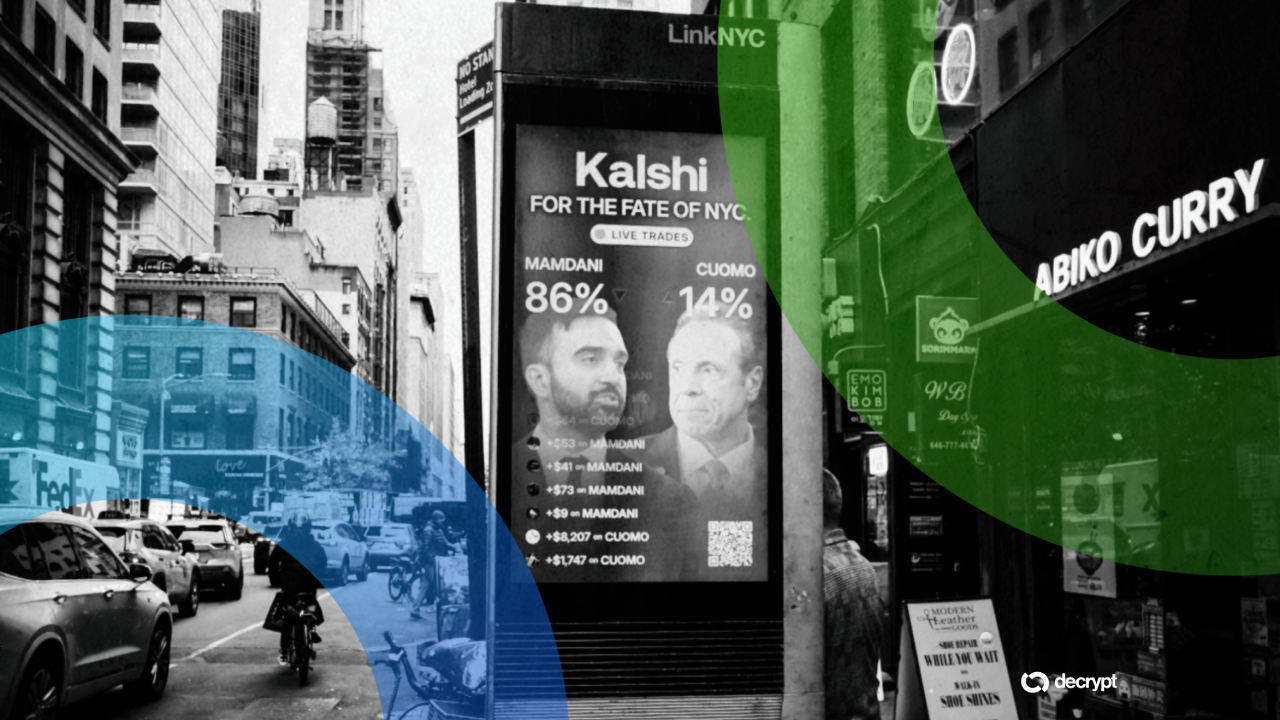
We talk a lot about the 'Wild West' of crypto, but it turns out the real shootout is happening in the prediction markets. Kalshi, the platform that recently fought the federal government for the right to let Americans bet on elections, is now staring down the barrel of a state-level criminal prosecution in Utah. This isn't just another regulatory slap on the wrist. It is a full-blown felony case targeting the founders personally.
The Multi-Front War
For those who haven't been following the play-by-play, Kalshi has been locked in a high-stakes legal battle with the Commodity Futures Trading Commission (CFTC). They won a significant victory in federal court that allowed them to list election-based contracts, essentially arguing that prediction markets are a form of hedging and price discovery, not just degenerate gambling. But while they were celebrating that win in D.C., Utah was quietly building a different kind of case.
The Utah Attorney General’s office alleges that Kalshi allowed an undercover agent to place a series of sports bets. In the eyes of Utah, this isn't a complex financial derivative debate; it’s an illegal gambling operation. The state has filed felony charges against the company and its co-founders, Tarek Mansour and Luana Lopes Lara. This represents a massive escalation in how state governments are choosing to police fintech innovators who try to bypass local statutes by citing federal oversight.
Why Utah?
Utah is notoriously strict when it comes to gambling. It is one of the few states in the U.S. where almost all forms of wagering are strictly prohibited. While other states have rushed to legalize sportsbooks and DraftKings-style apps to bolster tax revenue, Utah has dug in its heels. For a founder, this is the ultimate cautionary tale: your federal compliance strategy means nothing if a local prosecutor decides you’re breaking state criminal law.
The timing here is particularly aggressive. These charges landed just a day after the CFTC sued the state of Utah in an attempt to block these very enforcement actions. It’s a jurisdictional turf war, and the founders are caught in the crossfire. The federal government is essentially saying, 'We regulate these guys,' and Utah is responding with, 'Not in our backyard, you don't.'
The Founder's Dilemma
As builders, we often operate under the assumption that if we get the big blessing from the three-letter agencies in Washington, we’re safe. We hire expensive D.C. lobbyists and compliance officers who speak the language of the SEC or the CFTC. But the U.S. is a patchwork of jurisdictions. If you are building a product that touches money, risk, or speculation, you aren't just dealing with one regulator. You’re dealing with 50 different sets of state laws and 50 different attorneys general who might want to make a name for themselves by taking down a 'Silicon Valley disruptor.'
The specific allegation involves an undercover agent placing a dozen sports wagers. This suggests that Utah isn't just looking at the broad 'election betting' headline; they are hunting for specific instances where the platform’s guardrails failed to meet state-specific criteria. For any founder building in DeFi or prediction markets, the lesson is clear: geofencing and KYC aren't just checkboxes. They are your only defense against felony charges.
The Innovation Tax
This is what I call the Innovation Tax. When you push the boundaries of what is legally permissible, the system doesn't just push back with a fine. It pushes back with the threat of jail time. Kalshi has spent millions of dollars on legal fees to prove their model is legitimate under federal law. Yet, they are now facing a situation where that legitimacy is being bypassed by a state-level criminal complaint. It’s a exhausting, resource-draining reality that kills most startups before they ever find true product-market fit.
The friction between state and federal law is the most dangerous zone for a startup to inhabit. You can be 100% compliant with the CFTC and still be a felon in the eyes of a local prosecutor.
What This Means for Prediction Markets
Prediction markets are the 'killer app' of the current cycle. They provide better data than polls and more transparency than traditional news outlets. But their greatest strength—their ability to quantify the future—is also their greatest liability. Because they look like gambling, smell like gambling, and feel like gambling to a casual observer, they will always be a target for conservative jurisdictions.
If Utah succeeds in this prosecution, it sets a terrifying precedent. It means that every time a fintech company wins a battle against a federal regulator, they have to turn around and fight 50 more battles in state courts. For a builder, this makes the cost of entry almost impossible. Unless you have a massive war chest and a stomach for potential criminal litigation, the 'regulated' path is looking just as dangerous as the 'offshore' path.
A Skeptical Takeaway
I’ve seen this movie before. The government rarely likes it when private companies build better versions of public infrastructure or social systems. Whether it’s money (Bitcoin), information (AI), or sentiment (Prediction Markets), the reflex of the state is to control or crush. Kalshi tried to play by the rules, they went to court, and they won. The fact that they are now facing felony charges suggests that 'playing by the rules' is a moving target.
For founders, the takeaway is simple but brutal: do not assume a federal win protects you. If your product involves any form of wagering or risk-transfer, your compliance team needs to be looking at state-level 'dark zones' where the local laws haven't caught up to the 21st century. Utah isn't just an outlier; it's a warning. The next phase of the building isn't just about code or users—it's about surviving the jurisdictional crossfire.
- Federal approval does not equal state immunity.
- Local prosecutors can and will target founders personally to make a point.
- Geofencing needs to be airtight, especially in high-friction states like Utah.
We’ll be watching how the CFTC responds to this. If the federal government can’t protect the companies it regulates from state-level criminal charges, then the very concept of a 'regulated US exchange' starts to lose its value. Why jump through the hoops if you're going to get tackled at the finish line anyway?
Read the original at Decrypt →