The Sword of Damocles in Salt Lake City
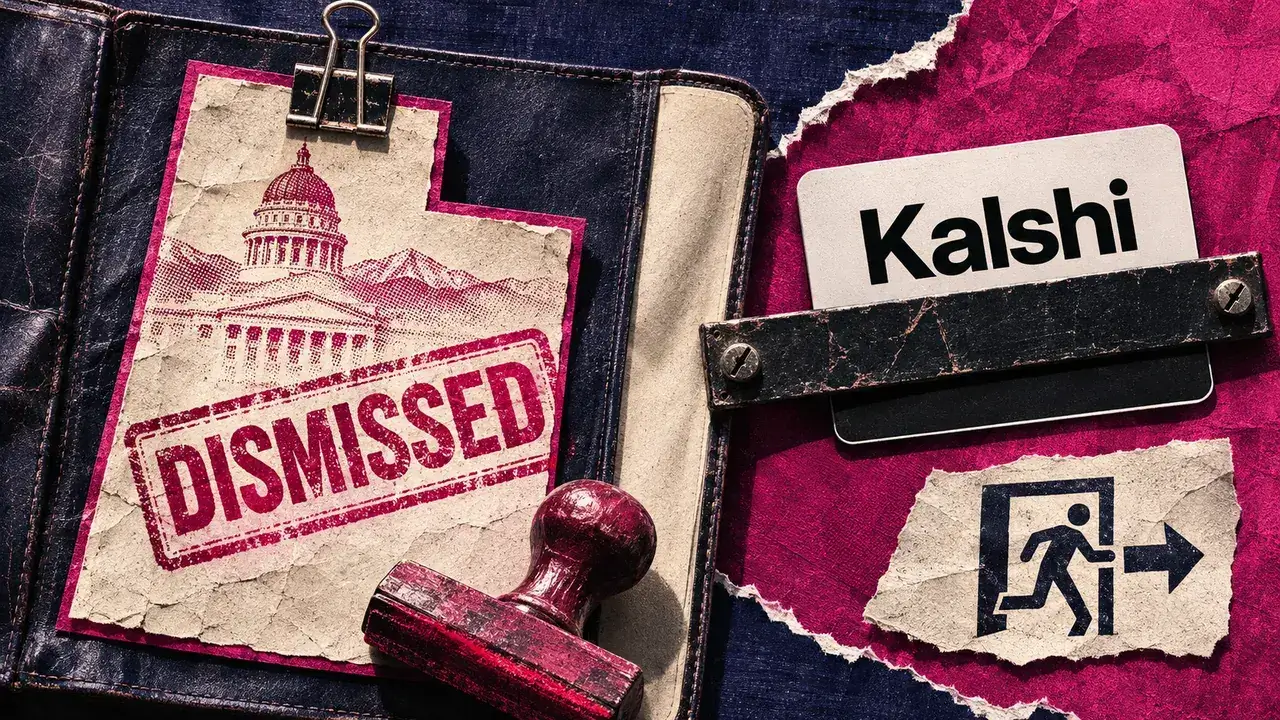
In the world of prediction markets, the house usually wins, but in the case of Kalshi versus the State of Utah, nobody has truly cashed out yet. We recently learned that Utah prosecutors have dropped 14 criminal charges against the platform. On the surface, this looks like a win for a company that has been fighting a multi-front war with regulators. But if you look closer at the terms, it is less of a victory and more of a hostage situation.
Utah is not dropping these charges because they believe Kalshi is innocent. They are dropping them on the condition that the platform stays quiet. If trading resumes, the charges come right back. This is not how law is supposed to work in a functional innovation economy. It is governance by threat, and it creates a dangerous blueprint for how local jurisdictions can bully national platforms.
The Logistics of a Shutdown
For those holding positions on Kalshi, the immediate future is clear but limited. Users are allowed to close out their current bets and withdraw their capital. This is the bare minimum of functionality, but it is effectively a kill switch for the business model. When a regulator tells you that you can only let people leave, they are not regulating you; they are sunsetting you.
Kalshi has been adamant about their compliance efforts, but Utah’s stance highlights a growing friction between state-level consumer protection laws and the borderless nature of digital markets. For a founder, this is the ultimate nightmare. You spend years building for federal compliance, only to have a single state prosecutor decide your business model is a criminal enterprise under a local statute.
Why Builders Should Be Worried
I have spent a lot of time talking to founders in the prediction market and DeFi space. The common thread is always the same: they want to know where the line is. The problem with the Utah situation is that the line is moving. By using the threat of refiling charges as a leash, the state is bypassing the need for a trial or a definitive ruling. They are achieving their desired outcome—stopping the activity—without having to prove their case in a court of law.
This creates a massive amount of uncertainty for anyone building in the Web3 or AI agent space. If you are building an automated system that interacts with these markets, you now have to factor in the legal temperature of every individual state. We are seeing a fragmentation of the American market that looks more like the fractured regulatory landscape of Europe, but with the added spice of potential criminal records for the executives involved.
The Prediction Market Paradox
We need prediction markets. They are arguably the most honest way to aggregate information in an era of AI-generated noise and media bias. When people put money on the line, the signal gets clearer. Yet, these are the very tools being targeted by legacy legal frameworks designed for 1970s bucket shops.
The irony is that while Kalshi fights these battles in the U.S., decentralized alternatives are flourishing offshore or on-chain where these specific state-level threats hold less weight. By cracking down on a transparent, regulated entity like Kalshi, Utah is effectively pushing users toward darker, less regulated corners of the internet. It is a classic case of the Streisand Effect applied to financial regulation.
What This Means for the Roadmap
If you are a founder, you have to look at your jurisdictional risk as a primary feature of your product. You cannot just build and hope for the best. The Utah move shows that even if you win a temporary reprieve, the legal costs and the reputational damage of "14 criminal charges" hanging over your head can be enough to sink a Series B or scare off institutional partners.
We are entering a phase where the technical stack is the easy part. The legal stack is where the real engineering happens. If your project involves any form of wagering, prediction, or synthetic assets, you need to assume that a state prosecutor is looking for a headline-grabbing win. The strategy used here—dropping charges with the option to refile—is a way to drain a company's resources without ever providing them the day in court they need to clear their name.
The Long-Term Outlook
I expect we will see more of this. As federal agencies like the CFTC and SEC continue their own battles, state attorneys general are realizing they have significant power to disrupt national players. For the crypto and AI communities, this means the era of "move fast and break things" is officially dead. Now, you have to move deliberately and build moats that are not just technical, but jurisdictional.
Kalshi is currently a cautionary tale. They tried to play by the rules, they engaged with the system, and they still ended up in a standoff. The takeaway for the rest of us is that compliance is not a destination; it is a moving target. If you are building in this space, you need to be prepared for the fact that even when you think you have won, the game might just be getting started.
The strategy of keeping charges in a back pocket is a form of regulatory purgatory that prevents true innovation.
Ultimately, the Utah situation shows that the legal system is being used as a blunt instrument to stop innovation that regulators don't yet understand or know how to tax. For builders, the message is clear: watch your back, even when the news looks positive.
Read the original at CryptoSlate →