The Pragmatic Bet on Latin America
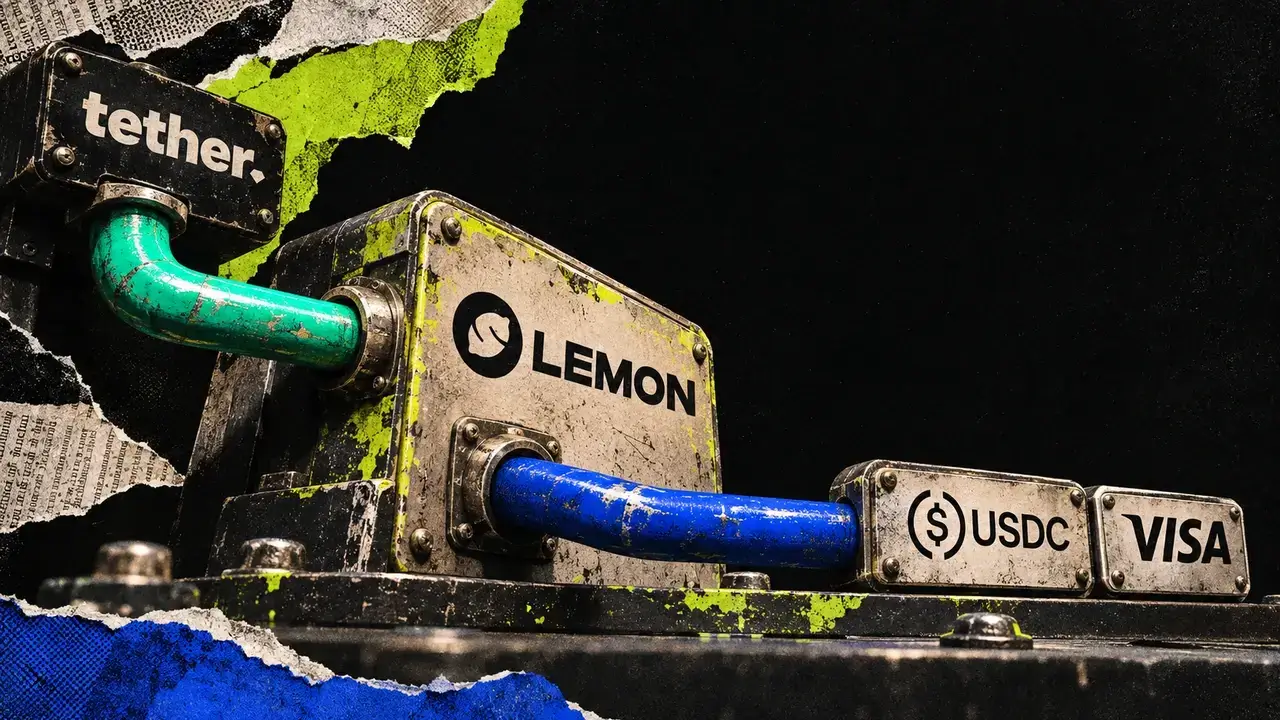
Tether just dropped $14.5 million into Lemon, an Argentine-born fintech that has become a staple for users in Latin America. On the surface, it looks like a standard venture play. A big stablecoin issuer wants a piece of a growing gateway. But if you look at how Lemon actually operates, the deal gets a lot more interesting and a little bit awkward. Lemon is famous for its Visa card, which currently uses Circle’s USDC for its settlement layer. This creates a scenario where the world’s largest stablecoin issuer is funding a platform that actively uses its biggest rival to move money through the traditional banking system.
For those of us building in this space, this isn't just a quirky headline. it is a signal of how the infrastructure is maturing. We are moving past the era of tribalism where you only use one protocol or one asset. Tether is realizing that to own the market, they don't necessarily need to own every single transaction hop. They just need to be the liquidity layer that people default to when they want to store value or escape local currency inflation.
The Multi-Stablecoin Reality
The Latin American market is a brutal testing ground for crypto. In places like Argentina, stablecoins aren't a luxury or a speculative gamble; they are a survival tool against triple-digit inflation. Lemon has succeeded because it doesn't force users to understand the nuances of ERC-20 versus TRC-20 at the point of sale. They just provide a bridge between the digital world and the local supermarket.
The irony of Tether funding a USDC-settled card shouldn't be lost on anyone. USDC has long positioned itself as the compliant, bank-friendly alternative, making it the natural choice for a partner like Visa. Tether, meanwhile, has historically been the king of offshore liquidity and peer-to-peer transfers. By backing Lemon, Tether is admitting that the future of finance is a hybrid model. They provide the USDT that users want to hold, while acknowledging that USDC might be the rails that the legacy financial system prefers for settlement.
Why Founders Should Care
If you are building a fintech or a decentralized application today, the lesson here is simple: stop trying to pick winners in the stablecoin wars. Your users don't care about the ticker symbol; they care about the friction. Lemon’s ability to swap between assets behind the scenes is exactly why they have millions of users. They solved the UX problem first and the liquidity partnerships second.
As a founder, you should be looking at your stack and asking if you are being too rigid. Are you locked into a single ecosystem because of a grant or a personal bias? Tether’s investment shows that even the biggest players are willing to be flexible if it means capturing more of the total addressable market. They are buying distribution, even if that distribution currently helps their competitor's settlement numbers.
The Settlement Layer vs. The Savings Layer
We need to start differentiating between where money stays and how money moves. USDT is effectively the savings account of the developing world. It has the deepest liquidity and the most trust among retail users who have been burned by their own central banks. However, when it comes to the highly regulated plumbing of a Visa transaction, the path of least resistance often involves USDC.
Tether isn't stupid. They know that by injecting capital into Lemon, they can eventually nudge the platform toward USDT-based settlement or at least ensure that USDT remains the primary asset held in Lemon wallets. This is a long-term play for dominance in the 'savings layer.' They are willing to let Circle handle the 'settlement layer' for now if it means Lemon stays alive and keeps growing the overall pie.
The Skeptic's View on Compliance
There is also the regulatory angle. Tether has faced endless scrutiny regarding its reserves and its relationship with regulators. By investing in a company like Lemon, which operates within the regulated frameworks of various Latin American countries, Tether gets a front-row seat to compliance-first growth. It’s a way for them to legitimize their influence without necessarily changing their own core offshore business model immediately.
For the builder, this suggests that the gap between 'offshore crypto' and 'onshore fintech' is narrowing. You can no longer afford to build in a vacuum. If you want to scale, you have to find ways to make these two worlds talk to each other, even if it means using a competitor's tool to get the job done.
What Happens Next?
Expect to see more of these 'cross-pollination' deals. The lines between stablecoin issuers, exchanges, and traditional fintechs are blurring. We are entering a phase where the winners won't be the ones with the best marketing, but the ones with the most integrated ecosystems. Tether’s $14.5 million is a drop in the bucket for them, but it’s a massive endorsement of the bridge-building strategy.
Keep an eye on how Lemon evolves after this cash infusion. If they suddenly announce a pivot to USDT for card settlement, we’ll know the investment came with strings attached. If they stay multi-asset, it proves that the market has finally reached a level of maturity where utility outweighs ego.
The future of crypto isn't a single winner-take-all chain or coin; it's a messy, interconnected web of assets that work together to solve real-world problems.
The Founder’s Takeaway
Don't get married to your rails. Whether it's the blockchain you build on or the stablecoin you settle in, remain agnostic. Tether is buying into a USDC-heavy ecosystem because they value the users more than the protocol purity. You should do the same. Build for the user who just wants to buy groceries, and let the billion-dollar companies fight over which stablecoin settles the transaction behind the curtain.
The real story here isn't the $14.5 million—it's the surrender of the idea that one stablecoin must rule them all. If Tether can play nice with USDC for the sake of growth, you can probably afford to be more flexible with your own tech stack.
Read the original at CryptoSlate →