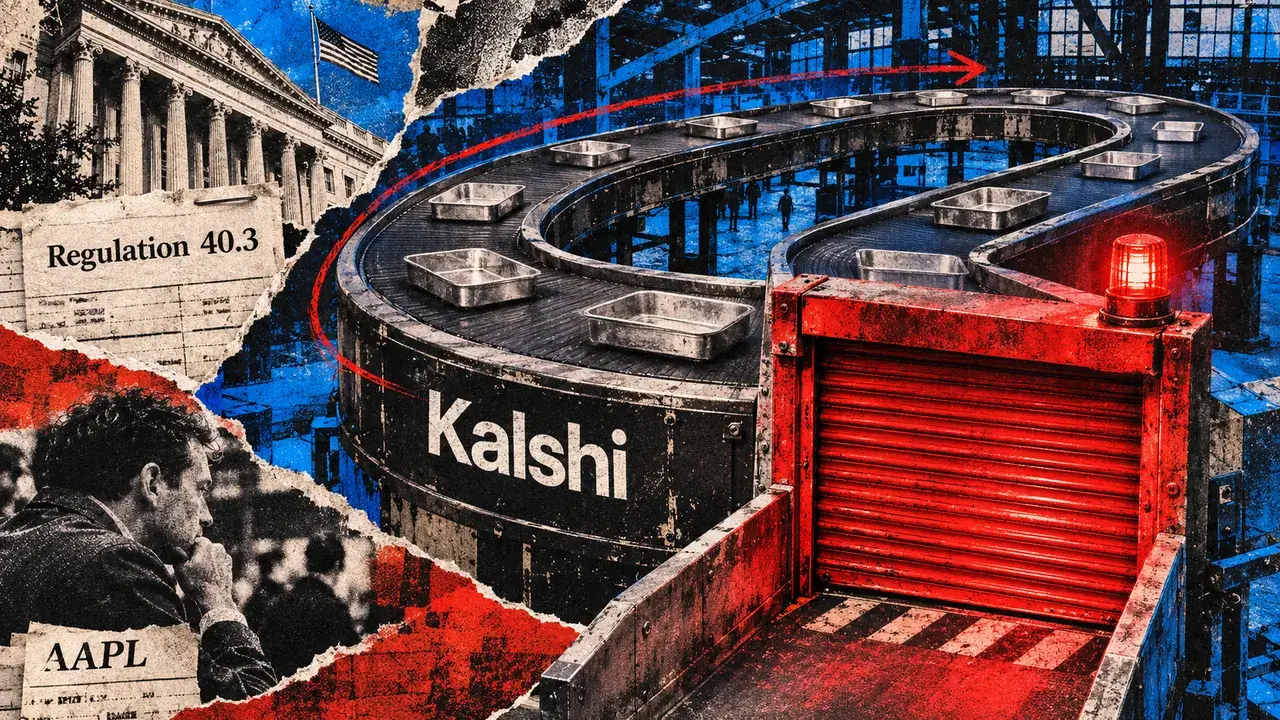
The dream of the 24/7 financial market just took a major step toward the mainstream, but as usual, the fine print is doing a lot of heavy lifting. We are seeing a new wave of regulatory clearance for U.S. stock perpetuals—essentially derivatives that let you bet on stock prices without an expiration date. On the surface, this is the ultimate bridge between the legacy stock market and the crypto-native way of doing business.
But if you are building in this space or trading these instruments, you need to look past the marketing. The term perpetual implies a trade that never sleeps. In reality, these markets are still tethered to the aging infrastructure of the New York Stock Exchange and the Nasdaq. When the lights go out on Wall Street, or when a volatility halt hits the tape, your perpetual trade might not be as liquid as you think.
The Illusion of Constant Liquidity
For years, crypto traders have been spoiled by perpetual swaps. You go long on BTC at 3:00 AM on a Sunday, and if you want out at 3:05 AM, there is almost always a counterparty or an automated market maker ready to take the other side. Bringing this model to U.S. equities is the logical next step for platforms like Kalshi and Coinbase, but stocks are not decentralized assets. They are heavily regulated securities tied to specific trading hours and clearing houses.
The recent developments with Kalshi's scheduled closures and Coinbase's proposals for 2026 show the friction. Even though the contract itself has no expiry date, the ability to exit that contract depends entirely on the underlying market being open and functional. If the underlying stock is halted because of a lopsided earnings report or a macro shock, the perpetual market doesn't just keep humming along—it freezes. This creates a dangerous gap where a trader thinks they have 24/7 protection but finds themselves locked in during the most volatile moments.
Why Builders Should Care About the Pipework
If you are a founder building a DeFi protocol or a neo-brokerage, this is a cautionary tale about abstraction. It is easy to build a slick UI that shows a 24/7 price feed. It is much harder to manage the risk when the primary source of liquidity for that price feed goes dark 128 hours a week.
- Settlement Lag: Traditional stocks still move at the speed of T+1 or T+2. Crypto perpetuals settle instantly in code. Bridging these two requires massive capital reserves or sophisticated credit lines to cover the gap when the banks are closed.
- Oracle Risk: When a stock market halts, what does your oracle do? If it stays at the last price, it is wrong. If it follows the off-hours private market, it might be manipulated.
- Regulatory Bottlenecks: The clearance these platforms are winning is hard-fought, but it often comes with strings attached, such as mandatory pauses that mimic the legacy market's circuit breakers.
We are essentially trying to run a high-speed electric motor (crypto perps) using an old steam engine (the traditional banking system) as the generator. It works until the pressure drops.
The September 2026 Horizon
Coinbase is looking toward a 2026 timeline for certain expansions of these products, which tells you everything you need to know about the complexity of the task. This isn't just a technical hurdle; it's a legal and structural one. They are navigating the Commodity Futures Trading Commission (CFTC) and the SEC, trying to convince regulators that 24/7 trading won't lead to a systemic meltdown.
The irony is that the people who want these products the most are the ones least likely to read the risk disclosures. A retail trader in Singapore or Berlin might see a U.S. stock perpetual and assume it behaves like their favorite altcoin. When they can't close a position at 8:00 PM EST because of a circuit breaker they didn't know existed, the frustration will land squarely on the platform, not the regulator.
The biggest risk in fintech is promising a crypto experience on top of a legacy backend without explaining the limitations.
What This Means for the Future of Markets
I am skeptical of the hype, but I am bullish on the direction. Moving toward a world where we don't have to wait for a bell to ring on a Tuesday morning to manage our wealth is the right move. However, we have to be honest about the current state of the tech. We are in a transitional phase where the products look like the future, but the plumbing is still stuck in the 1970s.
For founders, the opportunity isn't just in launching another perpetual exchange. The real win is in solving the liquidity gaps. Whoever figures out how to provide reliable, deep liquidity for synthetic equities during the hours the NYSE is closed will own the next decade of trading. This requires more than just code; it requires a deep understanding of market making and regulatory arbitrage.
The Bottom Line
Clearance for stock perpetuals is a win for the industry, but it is not a magic wand. The exit door is still controlled by the legacy exchanges. Until we see a total migration of the underlying assets to the blockchain—where the stock itself is a 24/7 token—we are just playing a high-stakes game of pretend. Watch the halts, read the fine print on closures, and don't assume that no expiry means no interruptions.
Read the original at CryptoSlate →