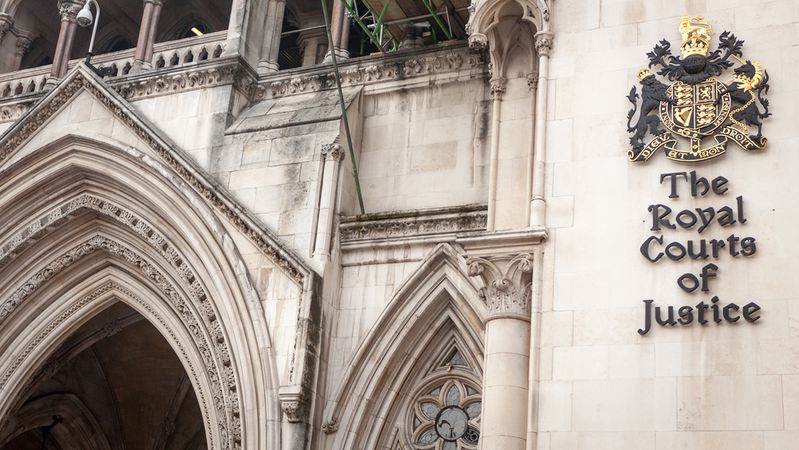
The United Kingdom just took a massive step toward becoming one of the largest Bitcoin whales on the planet, and they did it through the court system rather than a mining rig or an exchange. A recent ruling has significantly improved the government's odds of permanently retaining 61,000 BTC seized during a massive fraud investigation. At today’s prices, we are talking about a $5 billion windfall sitting in a government wallet.
For those of us building in this space, this isn't just another legal headline. It is a case study in how the legacy legal system is finally catching up to the speed of decentralized assets, and how governments are starting to see seized crypto not just as evidence, but as a legitimate fiscal asset class. This specific cache of Bitcoin traces back to Zhimin Qian, who was involved in a massive investment scam in China that defrauded nearly 130,000 people. When the Metropolitan Police stumbled upon the stash, it was one of the largest seizures in global history.
The Legal Mechanics of the Seizure
The court's recent decision centers on the state's ability to hold onto these assets even when the original victims are located in another jurisdiction. Traditionally, when the police bust a fraud ring, there is a complex process of restitution. However, the scale of the Qian case—spanning multiple continents and involving tens of thousands of victims—makes direct restitution a logistical nightmare. The UK government is essentially arguing that if no legitimate claimant can be verified through the proper channels, the state becomes the default custodian.
For builders, this highlights a massive gap in the current infrastructure. We talk a lot about "code is law," but in the real world, the physical location of the hardware holding the private keys is what determines jurisdiction. The Met Police didn't hack the blockchain; they found the keys during a physical search. This is a reminder that for all our talk of decentralization, the physical layer remains the ultimate vulnerability for anyone operating outside the law.
Why Builders Should Care
You might think a high-level fraud case doesn't affect your DeFi protocol or your AI-agent startup, but it does. This sets a precedent for how governments treat "unclaimed" crypto. If the UK manages to roll $5 billion into its treasury, other nations will follow suit. We are looking at the potential birth of sovereign wealth funds built entirely on the back of seized digital assets.
This creates a weird incentive structure. If governments realize that seizing crypto is a viable way to balance the books, we might see more aggressive enforcement actions against protocols that operate in regulatory gray areas. It is no longer just about stopping crime; it is about the state capturing the value that the crime generated. As a founder, you need to be aware that the regulatory environment isn't just about consumer protection anymore—it's about asset control.
The Complexity of Restitution
The core tension here is between the UK government and the victims in China. The Chinese government has its own claims, and the thousands of individuals who lost their life savings are technically the rightful owners. But how do you prove ownership for 130,000 people across a border that is increasingly hostile to Western legal requests? The UK courts are signaling that if the process is too complex, the state will simply absorb the value.
This is a massive failure of the current system, but also a massive opportunity for the next generation of builders. We need better on-chain identity and verification tools that allow victims of fraud to prove their claims without relying on central governments to play nice with each other. If we had better decentralized identity solutions, the UK wouldn't have a leg to stand on regarding the "difficulty" of returning these funds.
The Market Impact
Whenever a government sits on 61,000 BTC, the market gets nervous. We saw what happened when the German government liquidated their holdings recently—it created significant sell pressure and volatility. The UK government is likely to be more strategic, but the overhang is real. For founders building products that rely on low volatility or specific price oracles, these large-scale state liquidations are a new macro risk factor that didn't exist five years ago.
We are entering an era where the largest holders of Bitcoin are no longer just early adopters and institutional funds, but the very governments that once called crypto a scam. The irony is thick, but the reality is thicker. The UK is essentially becoming a major stakeholder in the success of the Bitcoin network, whether they admit it or not.
A Founder's Perspective on Custody
If there is one takeaway for people building in the AI and crypto space, it is that custody is the only thing that matters in the eyes of the law. The Met Police have the keys, so they have the power. This reinforces the need for non-custodial solutions and multi-sig arrangements for any project handling significant value. If your project can be "turned off" or seized by a single physical search warrant, you aren't really building a decentralized system; you're just running a vulnerable database.
We also need to look at the ethics of these seizures. Should a government be allowed to profit from the misfortune of foreign fraud victims? In any other industry, this would be a scandal. In crypto, it's just another Tuesday. As builders, we should be advocating for frameworks where seized assets are put into transparent, verifiable escrow accounts dedicated to victim restitution, rather than disappearing into a government’s general fund.
The Long Game
This court ruling is a win for the UK Treasury, but it’s a warning shot for the rest of us. It shows that the state is perfectly comfortable using the tools of the old world to control the assets of the new world. The skepticism I have isn't about the technology—Bitcoin is doing exactly what it was designed to do—it's about the institutions that are now realizing they can use that technology to their own advantage.
The UK government is proving that they don't need to ban crypto if they can just own a significant portion of it. For those of us in the trenches, the mission remains the same: build systems that are robust enough to withstand this kind of state-level pressure, and advocate for a future where the value goes back to the people it was stolen from, not the government that happened to find the hard drive.
The takeaway is simple: The legal system is adapting. It's no longer confused by Bitcoin; it's hungry for it. If you're building in this space, you need to understand that you aren't just competing with other startups—you're operating in a landscape where the state is now a major, and often aggressive, player.
Read the original at CoinDesk →