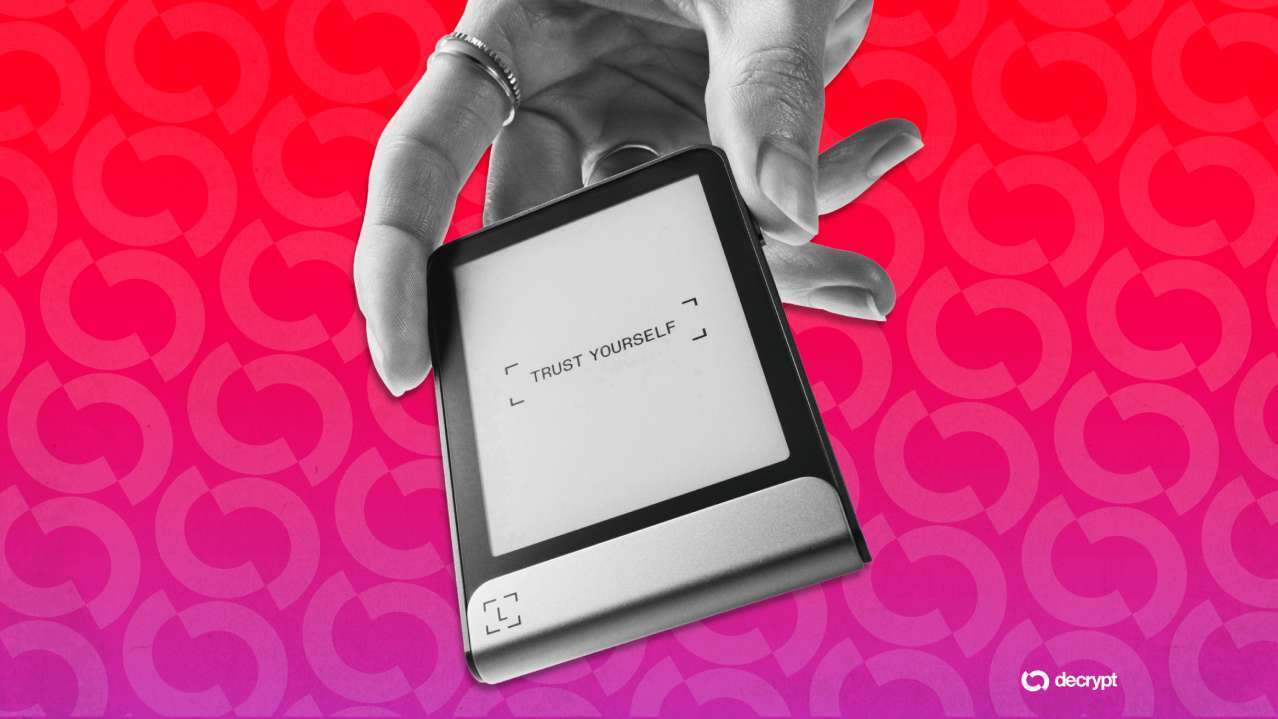
The Supply Chain is the New Private Key
For years, the crypto industry has operated under a simple, comforting assumption: if you keep your private keys off the internet, you are safe. We told everyone to buy a hardware wallet, write down the 24 words on a piece of paper, and lock it in a safe. But a recent discovery by the security team at Ledger has turned that assumption on its head, proving that the hardware itself can be a Trojan horse.
A sophisticated physical implant was discovered inside a compromised hardware wallet, designed to broadcast recovery phrases over an LTE cellular network. This wasn't a software hack or a bug in the code. It was a physical modification—a tiny, hidden chip soldered onto the board—that watched the user set up their device and sent the keys back to a remote server before the user even finished their first transaction.
How the LTE Implant Works
The brilliance, and the terror, of this attack is its simplicity. The attackers didn't try to break the Secure Element, which is the hardened chip where Ledger stores your private keys. That part of the hardware is notoriously difficult to crack. Instead, they bypassed the security entirely by targeting the bridge between the machine and the human.
When you set up a hardware wallet, the device generates a 24-word recovery phrase and displays it on the screen. You are told to write it down. The implant was positioned to read the signals being sent to that screen. Because the chip had its own LTE connection, it didn't need to connect to your Wi-Fi or your computer to phone home. It operated entirely in the background, independent of the device's main firmware.
This is what we call a supply chain attack. It didn't happen because Ledger's code was bad. It happened because somewhere between the factory and the customer's front door, someone opened the box, modified the hardware, and resealed it so perfectly that the user never suspected a thing.
The Illusion of Cold Storage
As builders, we talk a lot about "trustless" systems. But the reality is that trust is never fully eliminated; it’s just moved around. When you use a hardware wallet, you aren't just trusting math. You are trusting the factory workers, the shipping couriers, the warehouse staff, and the integrity of the plastic seal on the box.
This specific drain is linked to roughly $86 million in stolen assets. That is a staggering amount of capital removed from the ecosystem by a single physical exploit. It highlights a massive blind spot in how we think about security. We spend millions of dollars auditing smart contracts, yet a $10 chip and some clever soldering can render all that work useless.
Why This Matters for Founders
If you are building in the crypto space, you need to understand that your users' security is only as strong as their weakest link. If your platform requires users to manage their own keys, you are inherently betting on their ability to secure their physical environment. This incident suggests that for many users, that is a losing bet.
- Physical Security is Hard: You can't patch hardware once it's in a user's hand.
- Air-gapping is a Myth: If a device has a screen and a power source, it can be compromised to broadcast data.
- Complexity is the Enemy: The more complex our hardware becomes, the more places there are to hide malicious components.
The Skeptical Takeaway
I have always been a bit skeptical of the "hardware is king" narrative. Don't get me wrong, it's better than keeping your life savings on a centralized exchange, but it creates a false sense of absolute invincibility. This LTE implant proves that the physical world is just as messy and vulnerable as the digital one.
For founders and builders, the lesson here is that we need to move toward multi-party computation (MPC) and multi-sig setups that don't rely on a single piece of hardware. If the user in this scenario had been using a 2-of-3 multi-sig with devices from different manufacturers, the LTE implant wouldn't have been enough to steal their funds. They would have only captured one piece of the puzzle.
The most secure device is the one that doesn't hold the entire secret. We need to stop building systems that have a single point of physical failure.
Building a Better Standard
We need to stop telling users that hardware wallets are the final destination for security. They are a tool, not a cure-all. As we integrate AI and more complex automation into our wallets, the surface area for these attacks is only going to grow. Imagine an AI-powered supply chain attack that can dynamically alter its behavior based on the user's activity.
Ledger's discovery is a wake-up call. The fact that the Secure Element remained untouched is a testament to their engineering, but it’s a hollow victory if the money is gone anyway. We need to focus on verification methods that allow users to ensure their hardware hasn't been tampered with, perhaps through cryptographically signed physical components or more transparent manufacturing processes.
Until then, the best advice for anyone holding significant capital is simple: don't trust a single box. Diversify your hardware, use multi-sig, and never assume that just because something is "cold" it isn't being watched.
Read the original at Decrypt →