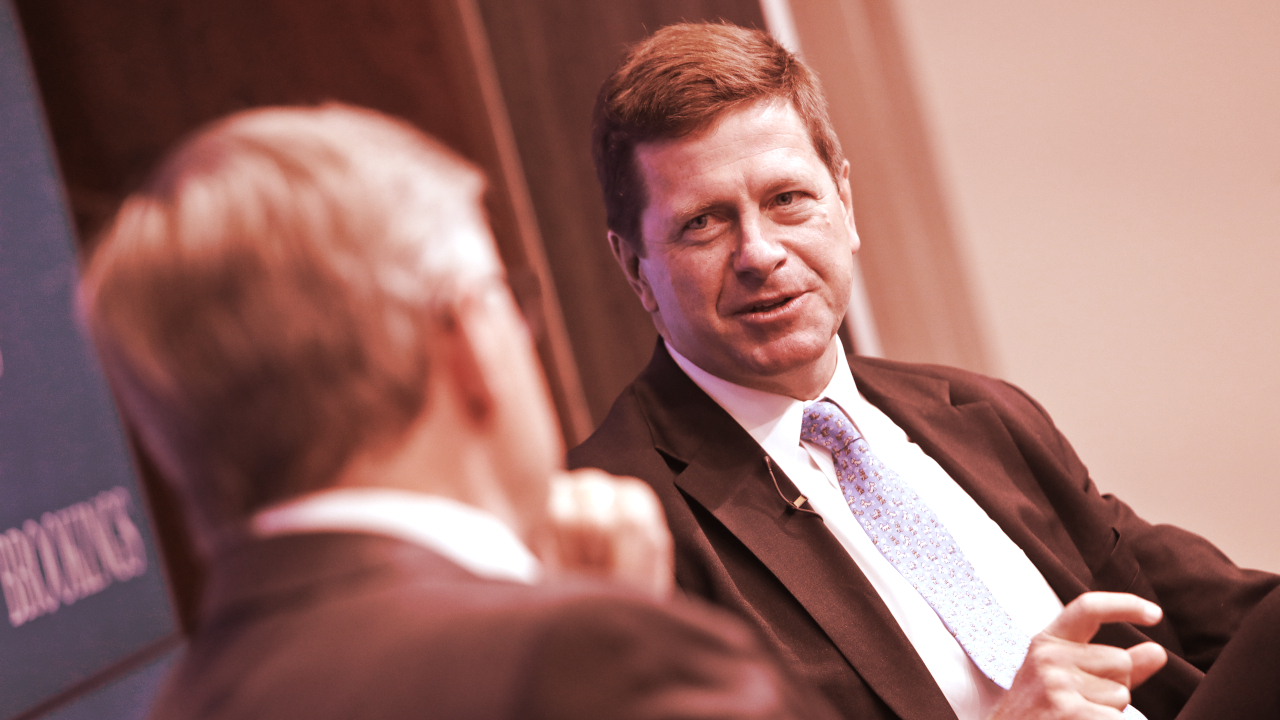
The intersection of crypto and artificial intelligence just got a whole lot more complicated. Donald Trump has officially named Jay Clayton, the man who led the Securities and Exchange Commission through a defining era of enforcement, to head up a new entity called the Super Intelligence Force. This group is designed to streamline and centralize federal AI policy under the banner of national intelligence.
The Clayton Legacy
For anyone who has been building in the blockchain space for the last five years, Clayton is a household name. He wasn't the loudest voice in the room, but he was the one who pulled the trigger on the Ripple lawsuit. That single legal action defined the regulatory fog we’ve been living in. He represents a specific kind of institutional governance: measured, legally rigid, and deeply concerned with traditional structures of power.
Now, he is being handed the keys to the AI kingdom. The Super Intelligence Force isn't just another committee. It is being positioned as a command center for how the United States approaches the computational arms race. By placing the former SEC chair and current Director of National Intelligence at the helm, the administration is sending a clear signal that AI is no longer just a consumer tech play. It is a matter of state security and regulated infrastructure.
What This Means for Founders
If you are a founder building in the AI space, you need to look at Clayton’s track record. He doesn't move fast and break things. He moves deliberately and protects established systems. His appointment suggests that the era of the wild west in AI training and deployment might be shorter than we anticipated.
We are likely to see a push for centralized oversight. In the crypto world, Clayton focused on whether digital assets were securities. In the AI world, he will likely focus on whether large language models and compute clusters are strategic assets. For builders, this means the overhead for compliance is about to skyrocket. You won't just be worrying about your API costs; you'll be worrying about whether your model alignment meets federal standards for “super intelligence” safety.
The Security Narrative
The naming of this task force as a “Force” rather than a department tells you everything you need to know. The government is viewing AI through the lens of defense. Clayton’s background at the DNI fits this perfectly. He isn't there to foster innovation in the sense of helping startups get off the ground; he is there to ensure that the U.S. maintains a lead over global rivals.
For those of us who believe in decentralized AI, this is a red flag. Centralized control by a former SEC head suggests a preference for “permissioned” innovation. We saw how this played out in crypto—it led to years of litigation and a drain of talent to offshore jurisdictions. If the same playbook is applied to AI, we could see the best developers moving to open-source ecosystems that exist outside of U.S. jurisdictional reach.
Infrastructure and Regulation
Clayton’s approach to Ripple was based on the idea that if it looks like a duck and quacks like a duck, it should be regulated like a duck. Applying that logic to AI, we can expect a heavy focus on the hardware layer. Control the chips, control the intelligence. The Super Intelligence Force will likely have significant sway over how compute is distributed and who gets access to high-end GPUs.
This creates a gatekeeper problem. If the government decides which AI projects are “safe” or “strategic,” they are effectively picking winners. It’s the same frustration the Ripple team expressed for years. The uncertainty of who is allowed to innovate and who is destined for a subpoena is a massive deterrent for venture capital and engineering talent.
The Takeaway
We shouldn't expect a hands-off approach. Jay Clayton is a regulator by trade and a security hawk by necessity. His appointment to lead AI policy means that the honeymoon phase for AI startups is coming to an end. We are entering a phase where the government wants a seat at the table for every major development in the field.
Builders need to stop thinking about AI as a separate silo from the regulatory world. The same people who brought you the crypto crackdown are now looking at your neural networks. The best path forward is to build with transparency and to expect that “super intelligence” will soon be a highly regulated utility, not just a cool new tool.
Read the original at Decrypt →