I’ve been watching the architectural shifts in Solana for a while now, specifically how it tries to bridge the gap between decentralization and the hyper-efficient demands of traditional finance. The latest development in Delivery versus Payment settlement—the mechanism that ensures assets change hands only when payment is confirmed—tells us exactly where the network is headed. It is doubling down on a builder-first, collateral-heavy reality that might frustrate Wall Street purists but should excite developers building the next generation of trustless markets.
The End of the IOU Culture
In the traditional banking world, settlement is a messy game of promises. When you buy a stock or a bond, the transaction doesn’t actually finish for days. During that window, banks and clearinghouses are essentially juggling IOUs, netting out who owes what to whom, and hoping nobody goes bust before the final tally is settled. It’s a system built on credit, trust, and a massive amount of hidden risk.
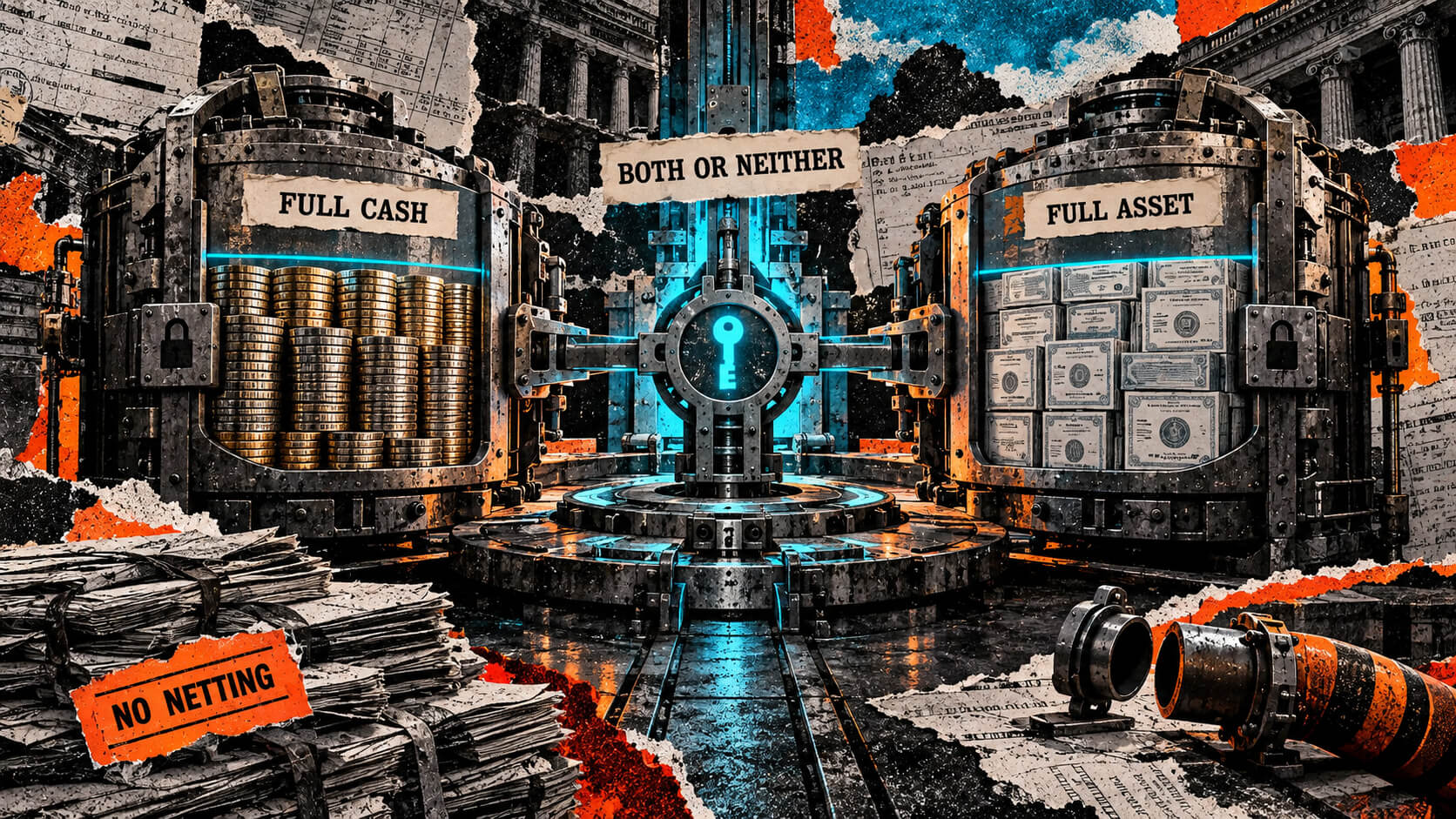
Solana’s published design for settlement takes the opposite approach. It requires 100% upfront cash for every single trade. In the technical sense, this is an atomic swap: if the token leg and the cash leg aren't both present and fully funded at the exact moment of the transaction, the trade simply doesn't happen. There is no waiting for three days. There is no "we'll figure out the difference later."
Why This Matters for Builders
If you are building a decentralized exchange or a specialized financial tool on Solana, this design is a double-edged sword. On one hand, you get absolute finality. You don't have to worry about counterparty risk because the protocol itself acts as the ultimate enforcer. If the money isn't there, the code won't execute. This removes the need for expensive middleman insurers and clearinghouses that take a cut of every trade.
On the other hand, this creates a liquidity challenge. In the legacy world, you can trade more money than you actually have because of netting. If I owe you $100 and you owe me $90, we only need $10 to settle. In Solana’s current DvP framework, we both need the full amounts available upfront to trigger the atomic exchange. For institutions used to operating on thin margins and high leverage, this is a culture shock.
Institutional Resistance and Opportunity
I’ve talked to a lot of founders who think institutions will just jump into crypto because it’s faster. That’s a naive take. Institutions love the current slow system because it allows them to use the same dollar in five different places before the bill comes due. Solana’s requirement for full funding effectively eliminates that flexibility.
However, this is where the opportunity for the crypto-native builder lies. By pushing the financing and netting responsibilities to the edges of the network—rather than building them into the core settlement layer—Solana is keeping the base layer lean and fast. If an institution wants to net their trades, they’ll have to build their own off-chain or side-chain solutions to handle the math before pushing the final, fully-funded settlement to the mainnet.
The Skeptic’s View: Is it Too Rigid?
I’m naturally skeptical of anything that claims to be a "settlement revolution" while adding friction. Requiring a 1-to-1 cash ratio for every trade is, by definition, less efficient for capital than the credit-based systems we have now. If I have to lock up billions in cash just to move billions in assets, I’m losing out on the interest or utility of that cash during the process.
But we have to look at the trade-off. We are trading capital efficiency for systemic safety. The 2008 financial crisis was essentially a settlement failure on a global scale—nobody knew who actually owned what or who was good for the money. Solana’s design makes that scenario impossible at the protocol level. You can’t have a bank run on a system where every transaction is verified to be fully collateralized before it’s even recorded.
Reframing the Value Proposition
For founders, the takeaway here is clear: stop trying to recreate the legacy banking system on-chain. If you try to build a credit-heavy, netting-dependent platform on a settlement layer that demands 100% upfront liquidity, you’re going to fight the architecture every step of the way.
Instead, the winning move is to embrace the transparency and finality of this design. Build tools that make it easier for institutions to manage their liquidity so they can have that 100% cash ready. Build real-time treasury management bots or automated collateral rebalancing tools. The network is giving us a rock-solid, trustless foundation; it’s up to us to build the layers on top that handle the complexities of modern finance.
The Long Game
We are moving toward a world where the settlement of an asset is as fast as the trade itself. That’s a massive leap forward from T+2 or T+3 settlement cycles. While the requirement for full funding feels like a hurdle today, it’s actually a feature that protects the network from the kind of cascading failures that plague the traditional world. As a founder, I’d rather deal with a liquidity constraint than a systemic collapse.
Solana isn't trying to be a bank; it’s trying to be a clearinghouse that never sleeps and never lies. If you can build within those constraints, you’re building on the only foundation that actually matters in the long run.
The choice is simple: do we want a system built on the speed of light and the certainty of math, or a system built on the speed of lawyers and the uncertainty of credit?
I’m betting on the math. Even if it means we have to bring our own cash to the table.
Read the original at CryptoSlate →