The House is Always Open
Prediction markets are finally having their moment, but not everyone is celebrating for the right reasons. While the industry spent years fighting the CFTC for the right to exist, a recent incident involving a Trump campaign aide, Kalshi, and a series of well-timed bets has exposed the massive gap between the theory of market wisdom and the reality of insider knowledge.
We are told that prediction markets like Polymarket and Kalshi are the ultimate truth machines. They are supposed to give us a clearer picture of the future than punditry or polling because people have to back their opinions with capital. But when the person placing the bet is the one holding the calendar, the truth machine starts looking like an ATM for the well-connected.
Inside the Trade
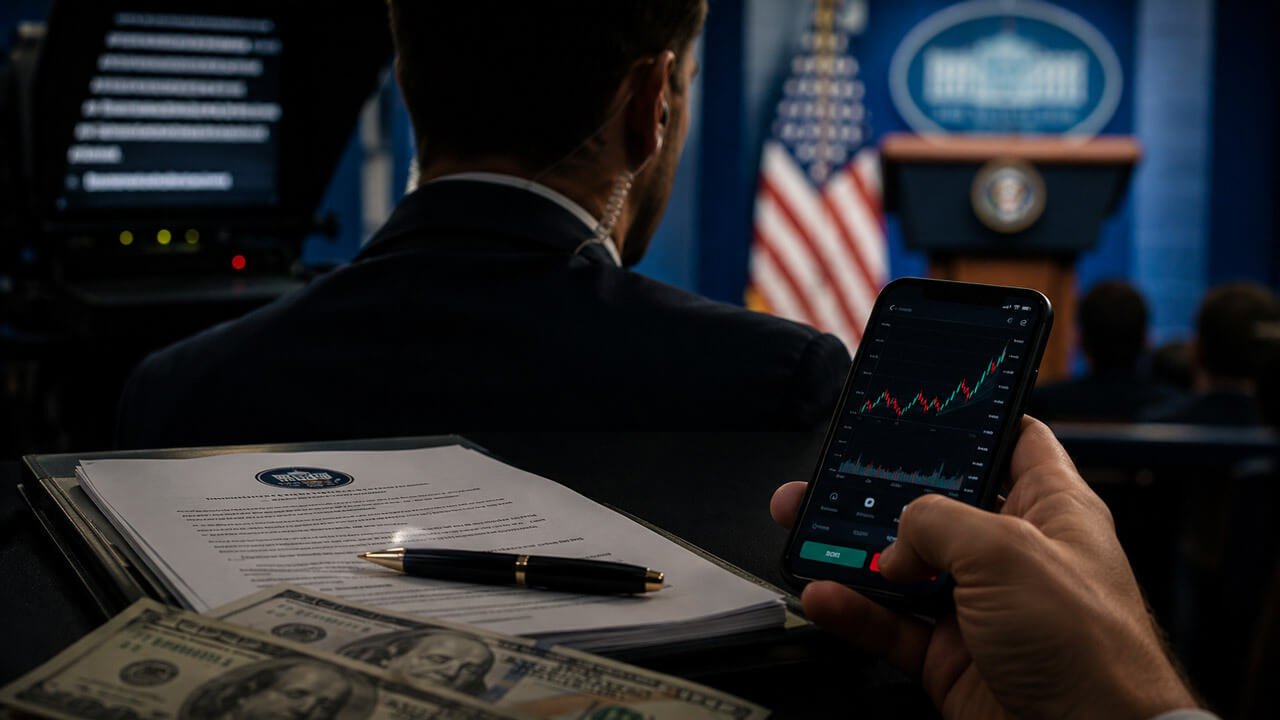
Reportedly, an aide with access to Donald Trump’s schedule realized that the frequency of his speeches was a tradable asset. By betting on whether or not the candidate would speak a certain number of times in a week, this individual managed to net roughly $100,000 in gains. On the surface, it is a clever trade. Below the surface, it is a nightmare for market integrity.
This was not a case of superior data analysis or a better understanding of political trends. It was a case of knowing the answer before the question was even asked. In a traditional financial market, this would lead to an immediate knock on the door from federal regulators. In the nascent world of regulated prediction markets, it has triggered a frantic scramble to define where prediction ends and manipulation begins.
The Gatekeeper Problem
Kalshi eventually stepped in, flagging the activity and alerting the authorities. This is exactly what a regulated exchange is supposed to do. However, for those of us building in crypto or decentralized finance, this situation feels incredibly familiar. We are constantly told that centralized oversight is the only way to prevent fraud. Yet, the central point of failure here was the human element within the campaign, and the centralized platform was the only entity capable of stopping it after the fact.
The tension here is obvious. If prediction markets are going to scale, they need liquidity. To get liquidity, they need the public to believe the game isn't rigged. If a campaign staffer can front-run a market using a private itinerary, the retail bettor is just a source of exit liquidity for the regime in power. That is a death sentence for any exchange, whether it’s on-chain or off.
Why Builders Should Care
If you are building in the crypto or AI space, you might think a political betting scandal is outside your lane. It isn't. This story highlights three specific challenges that every founder needs to solve if they want to build decentralized infrastructure for the future.
- The Oracle Problem Remains Unsolved: Most prediction markets rely on public reporting to settle. But what happens when the event being predicted is private until the moment it happens? We need better ways to verify real-world occurrences without relying on centralized actors who might have skin in the game.
- Regulation is a Double-Edged Sword: Kalshi’s compliance team did their job, but their reporting to the CFTC creates a paper trail that may lead to more restrictive legislation. Builders need to anticipate that the "Wild West" phase of these markets is closing fast.
- The Transparency Gap: In a truly decentralized market, we could see every wallet and every trade. In a centralized system, we only see what the platform chooses to disclose. As we build AI-driven trading bots and predictive tools, the source of our data becomes our biggest liability.
The Perception Crisis
The real damage here isn't the $100,000. In the grand scheme of the millions flowing through these platforms, a six-figure win is a rounding error. The real damage is the perception that these markets are just another playground for the elite. We spent a decade trying to convince the world that blockchain and transparent markets could fix the opacity of Wall Street. Watching a campaign aide treat a prediction market like a personal piggy bank makes that sell a lot harder.
It also invites the heavy hand of the state. The CFTC has been looking for a reason to shut these markets down for years. Every time an insider gets caught, they get a new bullet for their slide deck. For founders, this means the compliance burden is about to get a lot heavier, and the cost of building a compliant platform is going to skyrocket.
The Road Ahead
We shouldn't be surprised that people try to game the system. That is a feature of humanity, not a bug in the code. However, we should be concerned about the lack of robust mechanisms to prevent this on the front end. If the only way to catch an insider is for the platform to notice a suspicious winning streak, we aren't really building a smarter market—we’re just building a digital casino with a surveillance camera.
I’m skeptical that "more regulation" is the simple fix the government thinks it is. You can't legislate away the desire to use private info for a profit. What you can do is build systems where the data is so transparent and the settlement is so programmatic that the advantage of being an insider is minimized. We aren't there yet.
Takeaway for the Industry
The lesson for builders is simple: Integrity is your only real product. If you build a marketplace where insiders have a built-in advantage, your platform will eventually collapse when the liquidity dries up. Don't wait for the regulators to tell you how to protect your users. Build the protections into the protocol from day one. Prediction markets have the potential to change how we understand information, but only if we can trust that the deck isn't stacked before the first hand is dealt.
Read the original at CryptoSlate →