The Era of Real Yield Benchmarking
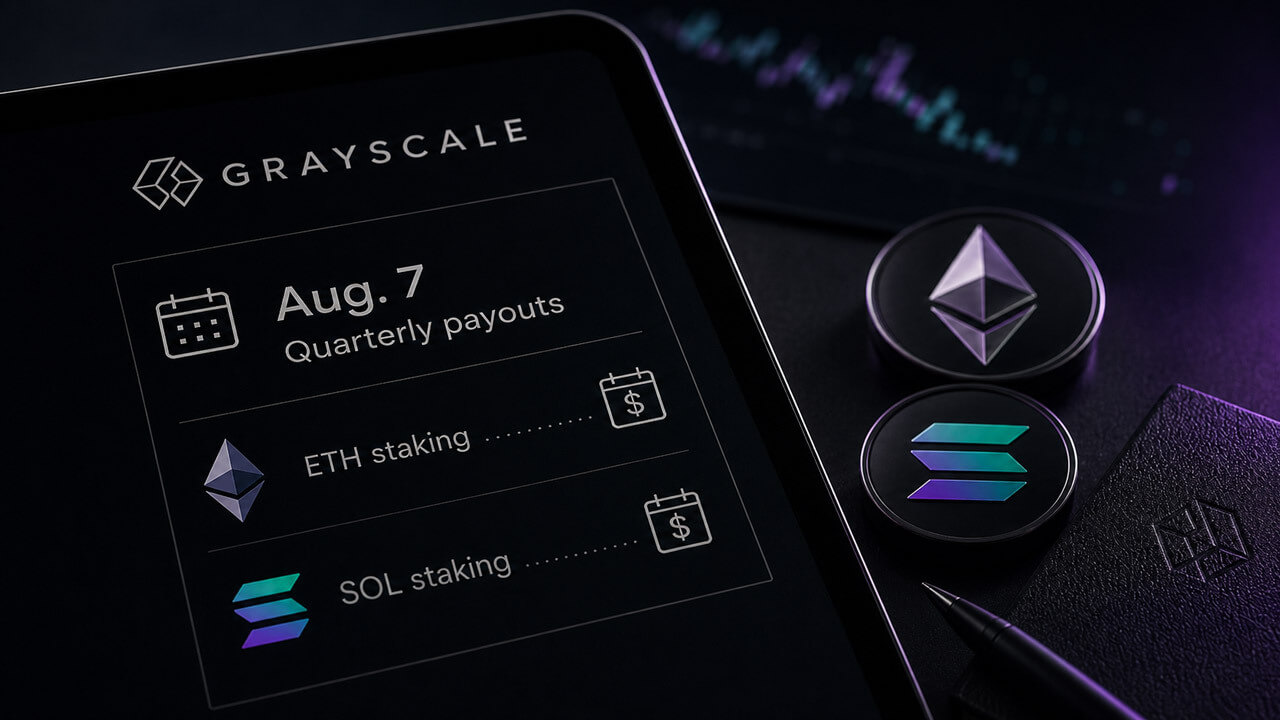
For a long time, the debate between Ethereum and Solana has been mostly vibes and whitepapers. One side talks about security and decentralization; the other talks about speed and throughput. But Grayscale is about to turn this into a math problem. By proposing new rules for its Ethereum and Solana trusts that mandate quarterly cash distributions, they are moving away from the speculative 'store of value' narrative and toward a 'yield-bearing asset' reality.
This isn't just a minor administrative tweak. It is a fundamental shift in how institutional capital views these networks. If you are a founder building in this space, you need to understand that the metrics are changing. We are entering a phase where the ability of a network to generate actual, distributable cash flow for its holders is going to be the primary metric for success.
Why Quarterly Cash Matters
Grayscale’s proposal specifically calls for no-less-than-quarterly distributions of income generated from staking. Until now, these trusts mostly just tracked the underlying asset. If the token went up, the trust went up. But by hard-coding a cadence for payouts, Grayscale is creating a common benchmark. This allows investors to compare the two networks side-by-side on a standardized schedule.
For builders, this is a signal directed at your runway and your protocol’s utility. When a major asset manager starts treating crypto like a dividend-paying stock, the market starts looking for consistency. They aren't looking for one-time spikes in activity; they are looking for sustainable fee generation that can feed a quarterly payout cycle. If your dApp doesn't contribute to that fee burn or staking reward pool, it might be viewed as noise rather than signal by the big money.
The Staking Showdown
The mechanics of Ethereum and Solana staking are vastly different. Ethereum has a more mature, albeit slower, staking mechanism with lower inflation. Solana offers higher nominal yields but often comes with higher hardware requirements for validators and different economic pressures on the token. By putting them on the same quarterly payout schedule, Grayscale is essentially setting up a performance trial.
I’ve always been skeptical of the 'total value locked' or TVL metric. It’s too easy to fake with circular lending and incentivized liquidity. But cash distributions are harder to hide. Either the network generated enough activity to pay out a meaningful amount to the trust holders, or it didn’t. This transparency is healthy for the industry. It forces a certain level of honesty that has been missing during the 'everything goes up' cycles.
The Founder's Dilemma: Speed vs. Security
If you’re building a project today, you’re choosing an ecosystem based on these underlying economics. Ethereum’s shift to a deflationary model (when activity is high) makes it an attractive yield asset because the supply isn't being constantly diluted to pay the validators. Solana, on the other hand, relies on massive volume to offset its issuance. Grayscale’s move puts these two different economic theories into a cage match.
As a founder, you have to ask yourself where your project fits in this payout war. If you are building on a network that can't sustain its staking yield through real transaction fees, that network is eventually going to have to lower its payouts or inflate its currency to keep up. Neither is a great long-term outlook for a builder looking for a stable foundation.
Institutional Logic is Not Dev Logic
We often get caught up in the technical elegance of a protocol. We talk about zero-knowledge proofs, sharding, and parallel execution. But Grayscale’s move reminds us that the people holding the purse strings don't care about the 'how' as much as the 'how much.' They want a predictable, liquid, and transparent return on their capital.
By mandating cash distributions rather than just rolling the rewards back into the trust’s net asset value, they are appealing to a specific type of investor: the one who needs cash flow. This includes pension funds, family offices, and traditional wealth managers. For these players, 'number go up' is nice, but 'cash in bank' is a requirement. This change is the bridge between the speculative crypto world and the traditional finance world.
The Skeptic's View on Yield
I’m still weary of the term 'yield' in crypto. In traditional finance, yield usually comes from someone else's debt or a company's profits. In crypto, yield is often just the network minting more coins. Grayscale is proposing to distribute this as cash, which means they’ll be selling the rewards on the open market to pay the trust holders. This creates a constant sell-pressure on the underlying token.
- Ethereum rewards will be sold for cash.
- Solana rewards will be sold for cash.
- The market will have to absorb these sales every single quarter.
This is the ultimate stress test for a network's liquidity. If a network’s rewards are worth millions but nobody wants to buy the coins, the 'yield' becomes a liability. Builders should keep an eye on how these sell-offs affect the price stability of their gas tokens.
What This Means for the Next Cycle
We are moving out of the era of pure speculation. The next phase of this industry is going to be dominated by assets that can prove their worth via revenue. If Grayscale succeeds in making this the standard for their trusts, expect every other ETF and trust provider to follow suit. The quarterly earnings call for crypto is essentially being born right now.
For founders, this is your wake-up call to focus on sustainable tokenomics. The days of 'we'll figure out the revenue later' are ending. If you want to be part of the ecosystems that thrive in an institutional environment, you need to be building things that people are willing to pay for—literally. Real users, real transactions, and real fees are the only things that will fuel these quarterly distributions in the long run.
The market doesn't care about your tech stack if it doesn't lead to a payout. This move by Grayscale is the first step in treating crypto like a business rather than a playground.
Final Thought for Builders
Don't get distracted by the price of the coins this month. Watch the distribution numbers. Watch which network can actually sustain its payouts without cannibalizing its own price. That is where the long-term builders will find the most stable ground. Let the speculators fight over the charts; you should be focusing on the cash flow.
Read the original at CryptoSlate →