The Arms Race of the Recovery Phrase
Security in the crypto space is rarely about making something impossible to break. It is almost always about making it too expensive or time-consuming for the attacker to bother. For years, the hardware wallet industry has operated on a standard set of assumptions: 24 words are enough, and a short secondary password is a nice bonus. But as the stakes get higher, those assumptions are being dismantled by real-world attacks.
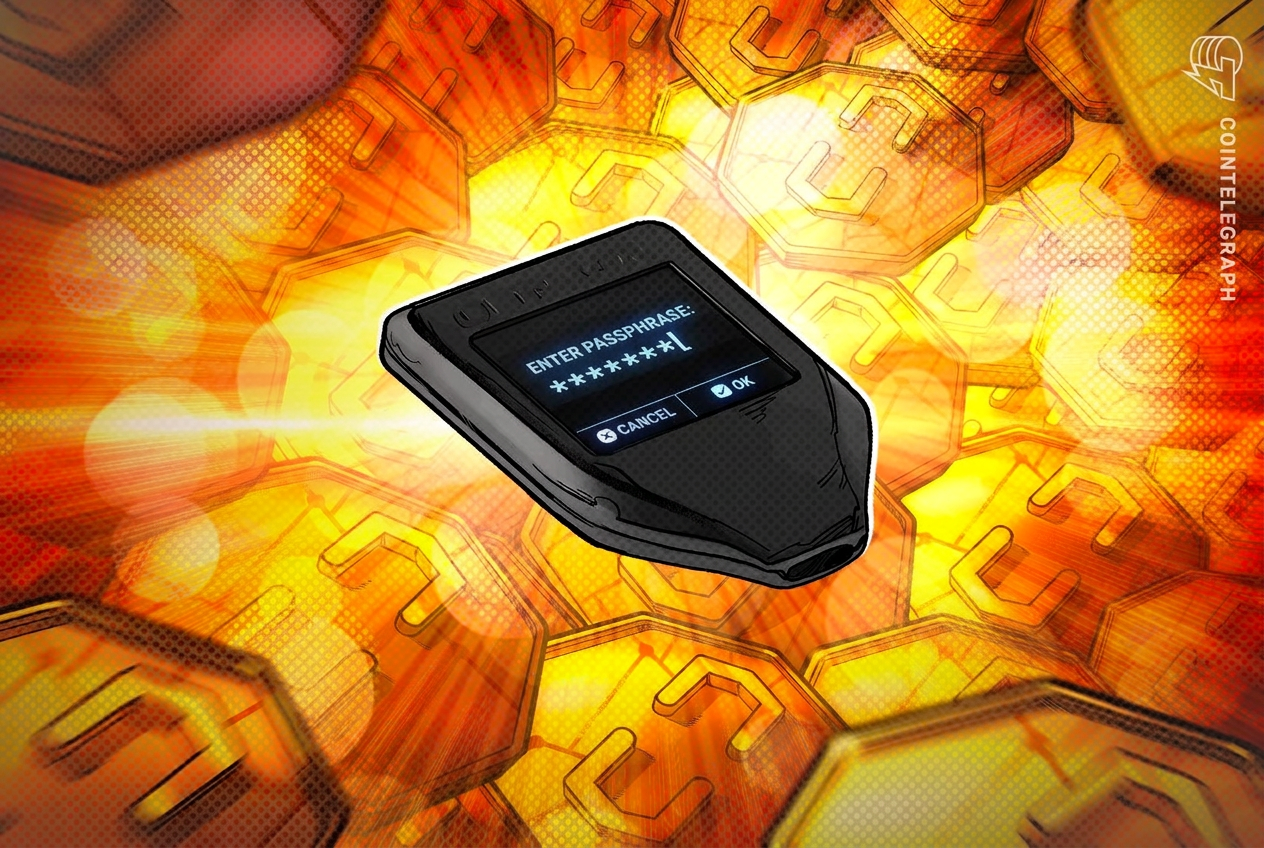
Trezor recently announced a significant shift in their firmware, extending the character limit for passphrases to 128 characters. This is not just a random software update. It is a direct response to a massive security failure involving their competitor, Coldcard, where over $100 million was drained from wallets. The post-mortem of that disaster revealed a stark truth: the users who survived were the ones who treated their passphrase not just as a secondary pin, but as a primary defense layer.
What We Learned from the Coldcard Incident
The July attacks on Coldcard users were a wake-up call for anyone who thinks their seed phrase is a vault. In several cases, the physical recovery information for wallets was compromised. In a traditional setup, that is game over. If a thief gets your 24 words, they own your capital. However, the users who had implemented long, complex passphrases—effectively a 25th word—created a barrier that the attackers could not easily brute-force.
A passphrase acts as an extension of the entropy generated by your wallet. Without it, the seed phrase points to one specific set of addresses. With it, the seed phrase points to a completely different, hidden set of addresses. The attacker might have the map, but without the passphrase, they are looking at an empty room while the gold is hidden behind a false wall they don't even know exists.
The Founder's Perspective on Friction
As a builder, I am usually a fan of reducing friction. We want users to have a smooth experience. But security is the one area where friction is actually a feature. By increasing the character limit to 128, Trezor is signaling that they are moving away from the "convenience first" model toward a "sovereignty first" model.
For a founder holding significant company treasury or personal wealth in cold storage, a 12-character passphrase is a joke. Modern compute power can churn through short character strings relatively quickly if the underlying seed is known. But a 128-character string? That is a different level of math. We are talking about moving the goalposts from a few days of brute-forcing to a timeframe that exceeds the heat death of the universe.
Why 128 Characters Matters for Builders
If you are building in the AI or Web3 space, you are likely handling sensitive API keys, private keys, or smart contract administrative rights. The standard hardware wallet setup is the baseline, but it is no longer the ceiling. Here is why this update matters for your operational security:
- Entropy Expansion: Higher character limits allow for the use of long-form sentences or random strings that are impossible to guess but easier for a human to memorize than a random 12-digit code.
- Deniability: With a long passphrase, you can set up multiple "decoy" accounts with shorter, less secure passphrases. If you are ever under duress, you give up the short one. The 128-character vault remains invisible.
- Future-Proofing: As AI-driven hacking tools become more efficient at pattern recognition and dictionary attacks, traditional passwords will fall. High-entropy passphrases are the only way to stay ahead of the curve.
The Skeptical Take: Is This Overkill?
I’ve always said that the greatest threat to your crypto is not a hacker in Russia, but your own ability to lose your password. There is a very real danger here. By encouraging users to move toward 128-character passphrases, we are increasing the risk of user error. If you lose that string, or even if you misplace a single capital letter or special character, your funds are gone. There is no "forgot password" button in self-custody.
We have to ask if the average user needs this. The answer is probably no. But for the builders, the whales, and the developers who are targets by default, the option needs to exist. Trezor is playing catch-up to a threat landscape that has become significantly more aggressive over the last twelve months.
The goal is not to be unhackable; the goal is to be a harder target than the person next to you.
Strategic Implementation for Founders
If you are going to take advantage of this new limit, do not just type in your favorite song lyrics. Use a password manager to generate the string, but do not store the final result in that manager. Treat the 128-character passphrase with the same physical reverence you treat your seed phrase. Split it, store it in stainless steel, and ensure your estate planning accounts for it.
The shift from Trezor shows that the industry is finally maturing past the "early adopter" phase where simple tools were enough. We are now in the "institutional grade" phase, where the tools must be robust enough to withstand targeted, well-funded attacks. The Coldcard theft was a tragedy for those involved, but it provided the data needed to harden the rest of the ecosystem.
The Bottom Line for Your Stack
This update is a reminder that your security stack is never finished. It is a living process. If you are still using a basic 24-word seed with no passphrase, you are relying on the hope that your physical security never fails. In a world where $100 million can vanish because of a compromised recovery sheet, hope is not a strategy. The 128-character limit is a tool. Use it, but understand the responsibility that comes with it. If you build on shaky ground, the whole project eventually collapses. The same applies to how you store your keys.
Read the original at Cointelegraph →