The Liquidity Hangover
We often talk about the Federal Reserve like it is a single, monolithic machine that turns a dial to make the economy go fast or slow. But for those of us building in the trenches, the reality is a lot messier. A recent study coming out of the Fed highlights a structural weakness in the way Treasury bonds are handled by primary dealers—the big banks that sit between the government and the rest of us. The takeaway is simple but unsettling: the financial burden of holding these bonds lasts much longer than the bonds actually stay on the dealers' books.
For a founder, this is like running a SaaS business where a customer cancels their subscription, but you are still forced to pay for their server overhead for another six months. It creates a massive, invisible drag on capital. If the institutions meant to provide liquidity to the system are bogged down by the ghost of past trades, the entire market starts to feel the squeeze. And as we have seen time and again, when the traditional financial plumbing gets backed up, the overflow usually hits the most volatile assets first. That means Bitcoin.
The Ghost in the Machine
The core of the issue is customer financing. When big institutions want to buy government debt, they do not always just pay cash and walk away. They use leverage, and the primary dealers facilitate that leverage. The Fed study found that even after a dealer sells a Treasury bond or offloads it from their inventory, the financing requirements associated with that position do not just vanish. They linger.
This is a major shift in how we understand market mechanics. Historically, analysts assumed that once a bond left a dealer's balance sheet, the capital was freed up. The data now shows that is not true. The dealers are carrying a "financing burden" that persists, effectively shrinking the amount of money available for new trades, new investments, and most importantly, risk-on appetite.
Why Builders Should Care
If you are building a protocol or a decentralized finance app, you might think the inner workings of Treasury primary dealers are irrelevant. You would be wrong. The crypto market is not an island; it is an extension of the global liquidity pool. When dealers are constrained, credit tightens. When credit tightens, the cost of borrowing goes up, and the first thing investors cut is their exposure to high-beta assets like crypto.
We are looking at a scenario where the plumbing of the U.S. financial system is becoming less efficient. If these dealers are perpetually weighed down by the tail-end of old financing deals, their ability to act as backstops during a market crash is diminished. We saw what happened during the repo market spike in 2019. If a similar liquidity crunch happens now, the contagion could move faster because the buffers are thinner than we realized.
The Bitcoin Connection
The study mentions that the spillover into crypto depends on the health of crypto credit markets. This is where it gets interesting for those of us in the space. In previous cycles, crypto was somewhat insulated from Treasury dealer mechanics because we had our own internal lending ecosystems. Then 2022 happened. The collapse of Celsius, BlockFi, and Voyager effectively nuked the private crypto credit market.
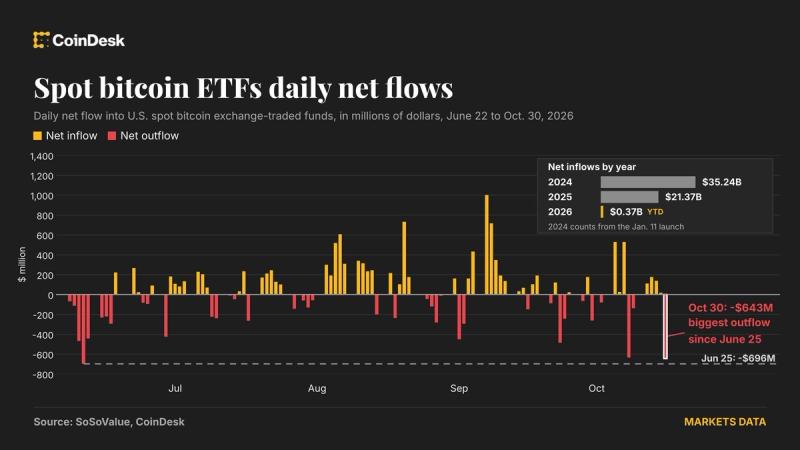
Now, we are increasingly reliant on institutional inflows—the ETFs, the hedge funds, and the corporate treasuries. These entities are directly tied to the very dealers the Fed is studying. If these dealers are struggling with a financing hangover, they aren't going to be aggressively facilitating the next leg of the Bitcoin bull run. They will be playing defense, trying to manage their own capital ratios.
The Founder's Perspective
As a founder, I look at this as a warning against over-leverage and a signal to watch the macro indicators more closely than the local crypto charts. The "inventory effect" is a lie; the debt lasts longer than the asset. This is a lesson in sustainability. If your project relies on constant cheap capital to survive, you are building on a foundation that is currently being eroded by legacy banking inefficiencies.
- Capital Efficiency: Dealers are becoming less efficient, which means the cost of capital is likely to stay higher for longer, regardless of what the Fed does with interest rates.
- Liquidity Gaps: Expect more frequent, sudden drops in liquidity. When dealers are tapped out, price discovery becomes violent.
- Regulatory Pressure: If the Fed knows the dealers are struggling, expect more scrutiny on how these banks interact with "risky" assets like crypto.
Traditional finance is built on layers of debt that never quite go away. Crypto was supposed to be the antidote, but as we integrate with the legacy system, we are catching their viruses.
Strategic Takeaways
What does this mean for the next six to twelve months? First, do not expect a massive surge in market depth. If dealers are constrained, they won't be providing the tight spreads we need for massive institutional adoption. Second, watch the repo markets. If we see stress there, it is a leading indicator that the Treasury financing burden is reaching a breaking point.
For those building in the space, the goal should be creating products that do not rely on the legacy banking system's permission or liquidity. The more we can move toward self-clearing, transparent credit markets on-chain, the less we have to worry about the Fed's latest discovery regarding bank balance sheets.
The Fed’s study is a rare moment of honesty about how broken the pipes are. It confirms that the system is slower and more burdened than the surface-level data suggests. For crypto to thrive, it has to be the faster, leaner alternative, not just a passenger on a sinking ship.
The Real Bottom Line
The Treasury market is the largest and most liquid in the world, yet the people running it are struggling with a financing hangover that doesn't end when the trade does. This creates a systemic fragility that will eventually leak into crypto. The best thing builders can do is maintain high cash reserves, avoid unnecessary leverage, and prepare for a market where liquidity is a luxury, not a given.
Read the original at CryptoSlate →