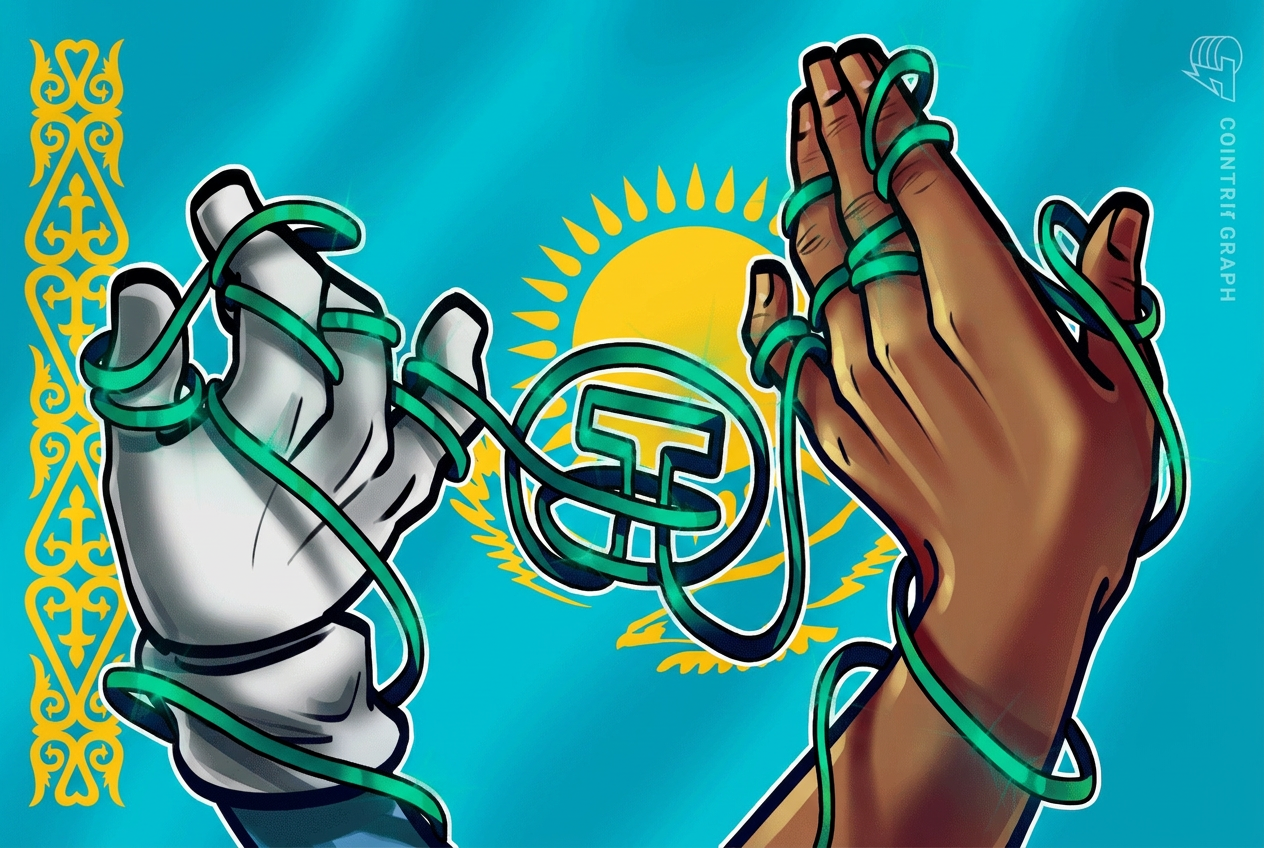
Tether is often criticized for being the big, opaque whale of the crypto world. But if you look at their recent movements, they are behaving less like a simple currency issuer and more like a shadow infrastructure layer for emerging economies. Their latest memorandum of understanding with the National Bank of Kazakhstan is the perfect example of this shift.
This isn't just a basic partnership. It is a strategic move to explore a tenge-pegged stablecoin and a comprehensive framework for tokenizing real-world assets. For builders in the space, this represents a major signal: the next wave of adoption isn't coming from retail traders in the West, but from state-level infrastructure projects in Central Asia.
The Kazakhstan Strategy
Kazakhstan has had a complicated relationship with crypto. They welcomed miners with open arms when China kicked them out, then struggled with the resulting energy crisis. Now, they are getting sophisticated. They aren't just looking at Bitcoin mining anymore; they are looking at how blockchain technology can modernize their entire financial system.
By collaborating with Tether, the National Bank of Kazakhstan is looking to pilot a digital version of their national currency, the tenge. While many countries are trying to build proprietary Central Bank Digital Currencies (CBDCs) from scratch, Kazakhstan is essentially asking the most successful stablecoin issuer in history for the blueprint. It is a pragmatic move.
Why This Matters for Asset Tokenization
The conversation around Real World Assets (RWA) is often filled with hype, but the practical application is usually stalled by regulatory friction. When a central bank enters the room, that friction starts to melt away. Tether and Kazakhstan are looking at tokenizing assets that actually matter to a sovereign nation—commodities, real estate, and financial instruments.
For a founder, this is the area to watch. If Tether can help a nation-state tokenize its assets, they are creating a template that every other developing nation will eventually copy. We are moving away from the era of 'magic internet money' and into the era of 'programmable national balance sheets.'
The Founder's Perspective: The Infrastructure Play
As a builder, you should be looking at the plumbing. Tether isn't just selling USDT; they are selling a technology stack that manages collateral, handles redemptions, and maintains pegs. In Kazakhstan, they are testing whether this stack can be exported to other currencies.
We have spent years talking about how crypto will bank the unbanked. The reality is that crypto might just end up banking the central banks first. If you are building in the RWA space, your target audience might not be the individual investor anymore. It might be the institutional custodian or the regional regulator who needs a way to make their local currency more liquid and globally accessible.
Risk and Skepticism
We have to be honest here. Tether is still a black box in many ways. While they have improved their transparency reports, a partnership with a central bank doesn't automatically mean the risks are gone. In fact, it raises new questions about centralization. If a stablecoin is backed by a national bank, is it still crypto, or is it just a digital database with extra steps?
Founders need to be careful about building on top of these state-sponsored layers. The beauty of crypto is its permissionless nature. The moment you tie a stablecoin to a central bank's specific regulatory framework, you lose a bit of that edge. However, from a pure business perspective, the liquidity that comes with state backing is hard to ignore.
The Shift Away from the Dollar
For a long time, Tether was synonymous with the US Dollar. By exploring a tenge-pegged stablecoin, Tether is diversifying its own political and economic risk. They are betting on a multi-polar world where the USD is still king, but local digital currencies are the preferred tool for regional trade.
This is a massive opportunity for developers building cross-border payment rails. If we get a reliable tenge stablecoin, then a dirham stablecoin, then a lira stablecoin—all running on the same underlying tech—global trade becomes significantly faster and cheaper. You won't need to route everything through a correspondent bank in New York.
A Lesson in Adaptation
If there is one takeaway for founders, it is the importance of adaptation. Tether could have stayed in their lane and just managed their USD reserves. Instead, they are becoming an RWA consultant and an infrastructure provider for governments. They are following the money, and right now, the money is moving toward state-sanctioned digital transformation.
Don't get caught up in the ideology of 'decentralize everything' if your goal is to build a platform that people actually use. Sometimes, the most effective way to scale is to work within the existing systems to upgrade them from the inside out.
The Bigger Picture
Kazakhstan is positioning itself as a hub for digital assets in the region. By partnering with Tether, they are skipping the experimental phase and jumping straight to an enterprise-grade solution. Whether this succeeds or fails will depend on how much control the central bank is willing to give up to the ledger.
Keep an eye on the technical standards they develop for this pilot. Those standards will likely become the default for other countries in the region. If you want to know what the future of finance looks like, stop looking at the price of Bitcoin and start looking at the MOU documents being signed in Central Asia.
The future isn't just about moving money; it's about the technology that proves the money exists in the first place.
Read the original at Cointelegraph →