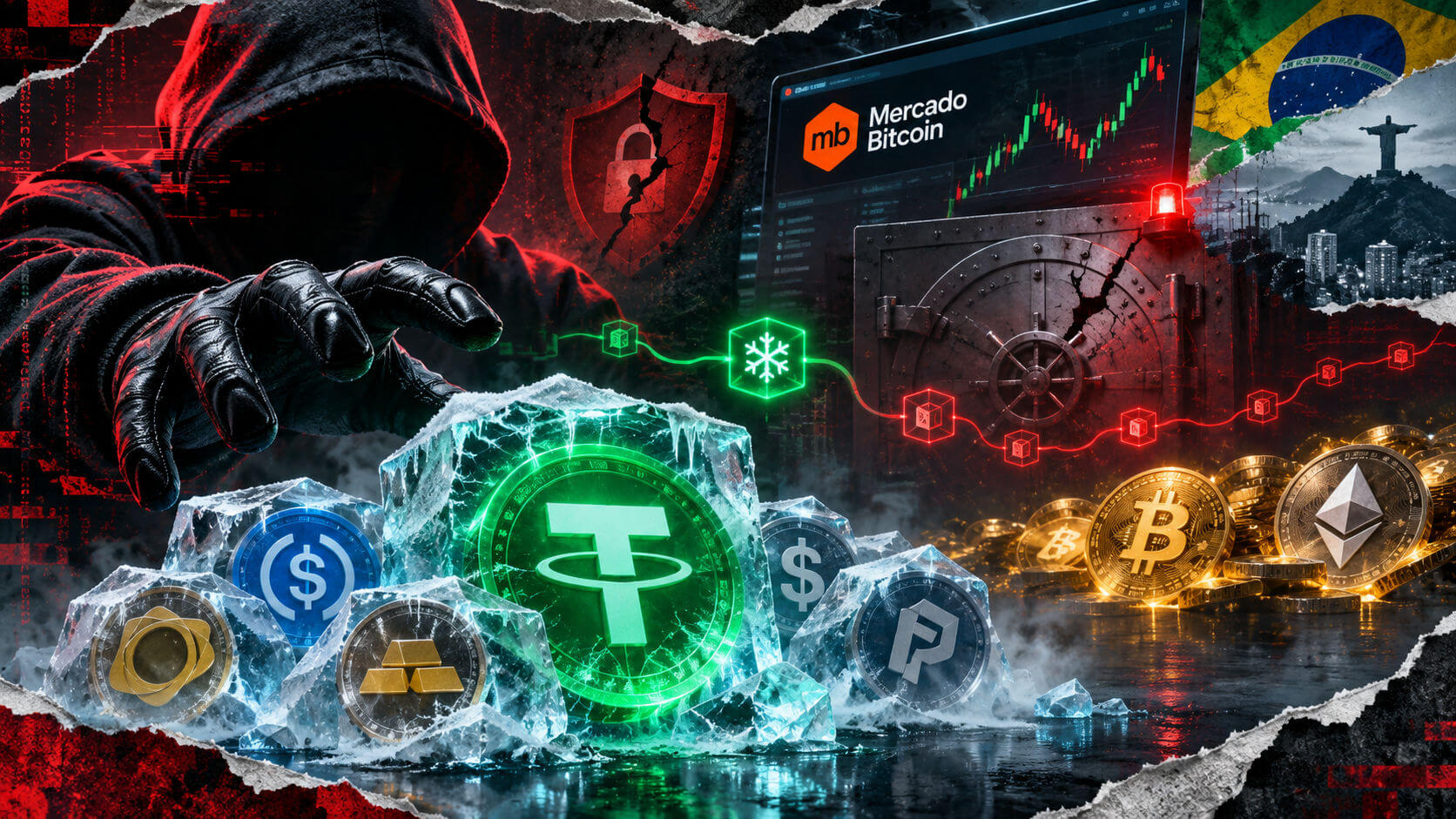
When we talk about the promise of crypto, we usually talk about the things that are unchangeable. We talk about the beauty of a ledger that nobody can touch. But lately, the narrative is shifting toward who has the biggest eraser. The recent breach of Mercado Bitcoin, resulting in a loss that underscores the vulnerability of even established regional players, has once again brought Tether into the spotlight as the industry's unofficial police force.
The Anatomy of the Breach
Mercado Bitcoin, a heavyweight in the Latin American market, recently faced a significant security failure. While the specific entry point for the attackers is still being dissected, the result was a swift drainage of assets into wallets that analysts have been tracking across the chain. The scale of the theft is sobering, with the hacker currently sitting on a stash valued at roughly $46 million. It is a reminder that in the builder space, your security is only as good as your weakest API or the most tired employee on your devops team.
The exchange has been relatively quiet about a specific reopening timeline. They are doing the standard dance of restoration work and address tracking. For those of us building products in this space, this silence is the loudest part. It indicates a massive internal scramble to patch holes while trying to maintain some semblance of user confidence. The release of tracking addresses is a plea for help from the broader community, a way to flag the stolen funds before they can be laundered through mixers or privacy protocols.
The Tether Intervention
As the hacker moved the stolen funds, Tether stepped in to freeze approximately $4.5 million in USDT. This isn't a new trick for the stablecoin giant, but every time it happens, it forces us to confront the reality of centralized control within a supposedly decentralized ecosystem. Tether has become the de facto backstop for large-scale exploits. If you steal money and you keep it in USDT, there is a non-zero chance that a single company in the British Virgin Islands can turn your loot into worthless digital dust with a few lines of code.
For the victims and the exchange, this is a win. It is a recovery of capital that would otherwise be gone forever. But for builders who value the permissionless nature of blockchain, it is a complicated victory. It proves that stablecoins, at least the ones with the most liquidity, are effectively regulated bank accounts that happen to live on a public ledger.
Why This Matters for Founders
If you are building an exchange, a wallet, or a DeFi protocol, this event should change how you think about your stack. We often spend so much time on the front-end user experience that we neglect the cold, hard reality of asset recovery. Relying on the benevolence of a stablecoin issuer to bail out your security failures is not a business plan.
- Security is not a checkbox: It is a living, breathing part of your infrastructure. If you are not auditing your outflows in real-time, you are just waiting for your turn in the headlines.
- The Centralization Trap: The more we rely on frozen funds to solve our problems, the more we invite regulators to ask why every transaction isn't subject to the same level of oversight.
- Transparency is Currency: Mercado Bitcoin's vague updates are a lesson in how not to handle a crisis. Users want data, not platitudes about restoration.
The Regulatory Shadow
Events like this fuel the fire for stricter oversight. When $46 million vanishes, and only $4.5 million is recovered through the manual intervention of a private company, regulators see a system that is both volatile and arbitrary. They don't see the innovation; they see a crime scene where the police are private entities with their own agendas. This incident will likely be cited in future legislative sessions as a reason why centralized exchanges need even more stringent reserve requirements and insurance mandates.
As builders, we have to recognize that the era of the 'wild west' is ending, not because the government stopped it, but because the industry itself is begging for these safety nets. We are trading the purity of the code for the security of our balances. It is a trade-off that many are willing to make, but we should at least be honest about what we are giving up in the process.
The tension in crypto today is between the desire for total financial freedom and the basic human need for a 'delete' button when things go wrong.
What Happens Next?
The hacker still holds a massive amount of capital, mostly in assets that are harder to freeze than USDT. The $46 million is currently a moving target, bouncing through various chains as the attacker looks for an exit. For Mercado Bitcoin, the path back to normalcy is long. They have to prove to their user base that this won't happen again, while likely navigating a massive financial hit that isn't fully covered by the Tether freeze.
We are going to see more of this. More hacks, more freezes, and more debates about who should have the power to stop transactions. The goal for anyone building in this space right now should be to make these interventions unnecessary. Better multi-sig requirements, more robust cold storage solutions, and a culture of security that goes beyond marketing fluff.
The Takeaway
The Mercado Bitcoin hack proves that while we can track every cent on the blockchain, we still lack a cohesive way to protect it without falling back on centralized power. Tether’s ability to freeze millions is a double-edged sword: it is a vital tool for justice and a stark reminder that in the current stablecoin era, your assets are only yours as long as the issuer says they are. Build accordingly.
Read the original at CryptoSlate →