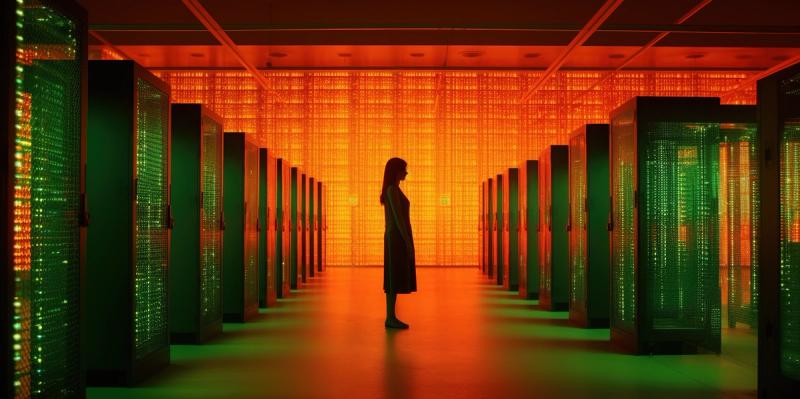
The ghost of FTX is still haunting the markets, but not in the way you might think. While the lawyers are busy counting pennies for creditors, the physical infrastructure left behind is becoming the bedrock for the next decade of compute. SWI Group just announced a massive capital injection of $894 million to take Genesis Digital Assets—a mining firm once tied to the SBF empire—and turn it into a high-performance AI data center operation.
This isn't just a corporate pivot. It is a sign of the times. We are watching a total revaluation of what energy-hungry real estate is worth. If you are building in the crypto space right now, you need to understand that you are no longer just competing with other protocols for attention; you are competing with the biggest AI labs in the world for electricity.
The Great Compute Migration
For years, bitcoin mining was the ultimate use case for stranded energy. You could set up a warehouse in the middle of nowhere, plug in some ASICs, and print digital gold. But the margins on mining have tightened, and the demand for AI training and inference has exploded. SWI isn't just buying hardware; they are buying the power permits and the physical space that Sam Bankman-Fried’s venture money helped build.
Converting a bitcoin mine to an AI data center isn't as simple as swapping out one box for another. Miners care about the cost of power above all else. AI workloads care about latency, massive cooling requirements, and high-speed networking. When you see nearly a billion dollars moving into this transition, you are seeing a bet that the future of the world’s compute needs is shifting from proof-of-work to proof-of-intelligence.
What This Means for Infrastructure Builders
If you are a founder in the decentralized physical infrastructure (DePIN) space, this should be a wake-up call. The centralization of power assets is accelerating. When a single firm can raise nearly $900 million to monopolize former mining sites, it makes the case for decentralized compute even more urgent. We are seeing a land grab for power that rivals the oil rushes of the 20th century.
- Power is the new oil: The ability to secure hundreds of megawatts is the only moat that matters right now.
- Pivot risks: Transforming mining rigs into H100 clusters requires a complete overhaul of cooling systems.
- Regulatory arbitrage: Many of these sites were approved under the guise of "blockchain innovation." Whether local governments allow the pivot to AI without new taxes remains to be seen.
The Irony of the FTX Legacy
There is a certain irony in the fact that the remnants of the industry's biggest failure are being recycled into the industry's biggest hype cycle. Genesis Digital Assets was one of the crown jewels in the FTX portfolio, or at least it was marketed that way. Now, that capital is being washed through a new fund to serve the needs of LLMs.
From a founder’s perspective, this is a lesson in asset utility. Bitcoin miners are essentially real estate plays with a specialized utility bill. By moving into AI, SWI is effectively de-risking the volatility of the BTC price by tethering their revenue to the enterprise AI boom. It’s a smart move on paper, but it also signals that the "pure play" crypto infrastructure model is under pressure.
The Skeptic’s Corner
We should be honest about the challenges here. You can't just put a liquid-cooled H200 rack into a dusty warehouse in rural Texas that was designed for air-cooled Antminers without spending a fortune on retrofitting. The $894 million price tag sounds high, but a significant chunk of that will disappear into HVAC systems and fiber optic lines before a single token is generated or a single model is trained.
The transition from mining to AI is less about the chips and more about the grid connection. The grid is the bottleneck for everything.
Builders need to watch how these facilities are integrated. If these large-scale centers become the only places where AI can be trained, we are just trading one set of gatekeepers for another. This is why I keep a close eye on projects trying to distribute this load. If the only way to compete is to raise a billion dollars to buy a bankrupt miner's site, the entry barrier for AI innovation is already too high for the average founder.
The Long Game
As we look at the next two years, expect to see more of these announcements. The era of the "mega-mine" might be ending, replaced by the era of the "sovereign AI cloud." SWI is just the first major mover to capitalize on the distressed assets of the last cycle to fuel the current one.
For those of us in the trenches, the takeaway is clear: infrastructure is the only thing that doesn't go to zero. Whether it's mining blocks or processing neural networks, the physical world—the wires, the fans, and the transformers—remains the ultimate source of value in a digital economy. If you aren't thinking about where your power comes from, you aren't thinking big enough.
Read the original at CoinDesk →