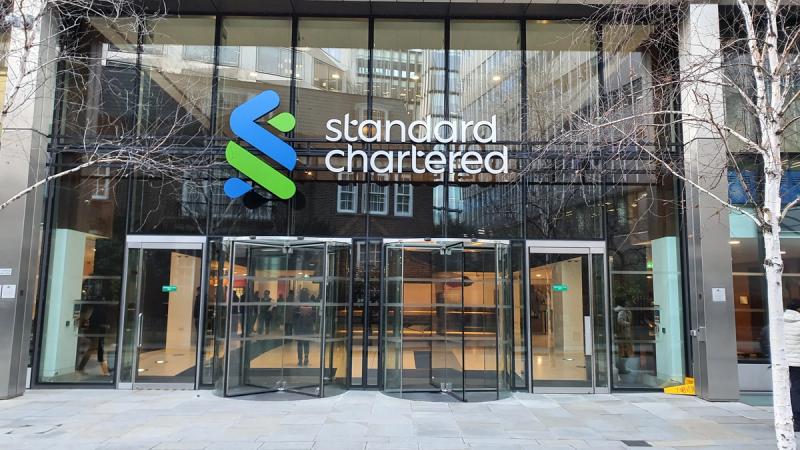
When we talk about stablecoins, the conversation usually circles back to Tether or USDC. But while the retail market focuses on liquidity pools and yield farming, a different kind of plumbing is being built in the background. Standard Chartered just signaled that Ripple’s RLUSD is more than just another ticker on a screen. By offering custody for RLUSD in Dubai and linking up with LMAX, they are showing us what the next phase of institutional crypto actually looks like.
The Dubai Sandbox and Institutional Trust
Dubai has become the testing ground for every major bank that wants to touch crypto without looking like they are gambling. Standard Chartered is not a small player; they are an international giant with a deep understanding of how money moves across borders. Their decision to provide custody for RLUSD in the UAE is a vote of confidence in Ripple’s regulatory approach.
For builders, this is a lesson in patience. Ripple has spent years in legal battles and regulatory discussions. While other projects were launching tokens and crashing within six months, Ripple focused on the dull, unglamorous work of compliance and institutional partnerships. Now, we are seeing the results. When a bank like Standard Chartered steps in, it means the compliance risk has been neutralized enough for them to put their reputation on the line.
Connecting to the Liquidity Engine
The second part of this news is the integration with LMAX. Earlier reports indicated that Ripple provided $150 million in financing to LMAX to ensure RLUSD was woven into their institutional infrastructure. This is not about marketing; it is about collateral. LMAX is where the big money moves. By making RLUSD a recognized form of collateral, they are turning a digital asset into a tool for capital efficiency.
If you are a founder building in the DeFi space, you need to pay attention to the collateralization of stables. A stablecoin is only as good as what you can do with it. If you can use it to back a trade on a major institutional exchange, it has more utility than a high-yield stable that only exists on a decentralized swap. RLUSD is positioning itself as the enterprise alternative to the current market leaders.
The Skeptic’s View: Competition and Centralization
I have always been a bit skeptical of the "XRP will replace the dollar" narrative. It was always too loud and too focused on retail hype. But RLUSD is different. It is a USD-pegged asset designed for the existing financial system. It doesn’t want to destroy the banks; it wants to be the oil in their machines.
The risk here is centralization. When you have Standard Chartered, Ripple, and LMAX all sitting at the same table, you aren't looking at a permissionless future. You are looking at a more efficient version of the old system. For some, that is a betrayal of what crypto was meant to be. For others, it is the only way to get mass adoption. As a founder, you have to decide which side of that fence you are building on.
What This Means for the Builder Community
We are entering an era where the "infrastructure" phase of crypto is maturing. We no longer need a hundred new blockchains; we need assets that institutions feel safe holding. If you are developing apps or protocols, you should be looking at how to integrate these bank-grade stables.
- Focus on Compliance: If the big banks are moving into custody, the apps they interact with will eventually need to meet similar standards.
- Interoperability over Isolation: The LMAX link proves that cross-platform utility is the goal. Your project shouldn't be an island.
- Stability as a Service: Builders should look at RLUSD not just as a currency, but as a layer of trust for B2B transactions.
A New Standard for Stablecoins
The $150 million investment into LMAX is a clear signal that Ripple is buying its way into the ecosystem, and that is not a bad thing. It provides the liquidity necessary for institutions to take notice. When liquidity is guaranteed, volatility in the underlying peg becomes less of a concern for the treasurers at these large firms.
We have to stop looking at crypto news as just price movements. The real story is the plumbing. Standard Chartered isn't doing this for the 24-hour trading volume; they are doing it because they see a future where the ledger for global trade is on-chain. Whether it is RLUSD or another competitor, the trend is clear: the banks are moving in, and they are bringing their own tools.
Final Founders Takeaway
The takeaway for anyone building in AI or Web3 is simple: follow the collateral. The assets that are accepted as collateral by the LMAXs and Standard Chartereds of the world are the ones that will survive the next five years. The noise of retail speculation is fading, and the era of institutional utility is finally arriving. Don't build for the hype cycle; build for the infrastructure that the banks are finally starting to trust.
Read the original at CoinDesk →