We have been hearing about the circular economy in crypto for a decade. The dream is simple: earn in crypto, spend in crypto, and never touch a bank again. But for most of us, reality is a bit more boring. We still need to buy groceries and pay for coffee at shops that have never heard of a private key. This is where stablecoin cards have stepped in, acting as a translator between the blockchain and the legacy financial system.
The Invisible Bridge
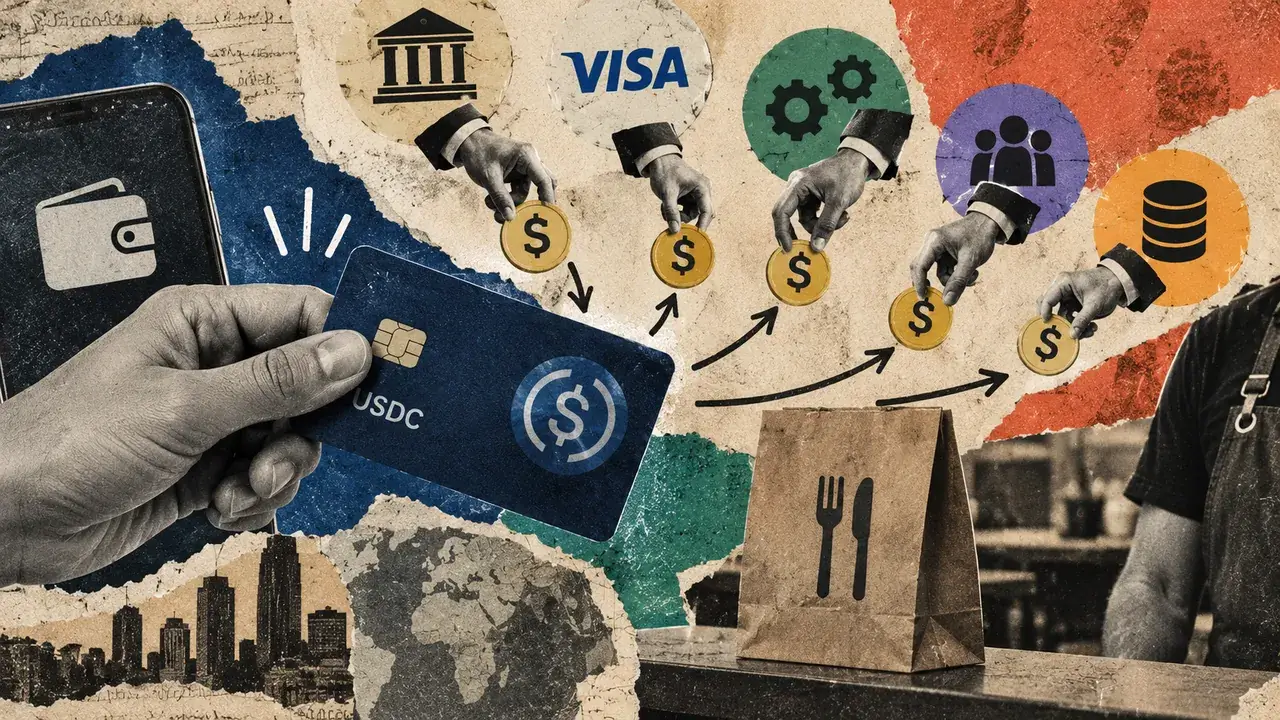
When you walk into a cafe and tap a card linked to your USDC balance, you are triggering a sophisticated sequence of events. To the merchant, nothing has changed. They see a standard transaction through their point-of-sale system, and they receive traditional fiat currency at the end of the day. They do not need to understand liquidity pools or gas fees. They just need the payment to clear.
For the builder, this abstraction is the holy grail of user experience. However, that seamless experience comes at a price. Because you are essentially forcing two completely different financial operating systems to talk to each other in real-time, there are a lot of hands in the cookie jar. Every time you swipe, a small army of intermediaries takes a piece of the action.
Following the Money
The economics of a stablecoin card are vastly different from a traditional bank card. In the old world, the bank makes money on interest and late fees. In the crypto card world, the profit comes from the friction of the bridge. The first layer is the exchange rate. Even though 1 USDC is pegged to 1 USD, the platform often charges a small spread when converting that digital asset into the fiat needed to settle the transaction.
Then you have the network fees. Visa and Mastercard do not work for free. They charge interchange fees, which are typically split between the issuing bank and the card network. Then there is the program manager—the company that actually builds the software connecting the wallet to the card network. They take a cut. Finally, the crypto platform itself needs to keep the lights on.
The Interchange Problem
For founders looking to enter this space, the interchange fee is the biggest hurdle. In the U.S., these fees are capped for large banks, but smaller "debit" programs can sometimes capture a bit more. The problem is that these fees are often not enough to cover the costs of running a crypto program. This is why many crypto cards have started stripping away their rewards programs. The math simply does not add up when you are paying for compliance, security, and real-time liquidation on top of the standard card network costs.
The Role of the Issuer
The real power in this ecosystem lies with the bank of record. Even the most decentralized crypto company still needs a partner bank to issue the physical or virtual plastic. These banks are often small, specialized institutions that have carved out a niche in fintech. They take on the regulatory risk, ensuring that every user has been properly vetted through KYC and AML procedures.
This dependency is the dirty secret of the crypto card boom. You can build the slickest app in the world, but if your partner bank decides that crypto is too risky this month, your users' cards stop working overnight. We have seen this play out multiple times over the last few years. The bridge is fragile because it relies on the very institutions crypto was meant to disrupt.
What It Means for Builders
If you are building in this space, you need to stop thinking about these cards as a way to "bank the unbanked" and start thinking about them as a customer acquisition tool. The margins on the swipe itself are razor-thin and getting thinner. If your business model relies solely on taking a piece of the interchange fee, you are likely going to fail.
- Vertical Integration: The winners will be those who control more of the stack. If you can act as your own custodian and your own liquidity provider, you can keep more of the spread.
- Utility Over Rewards: Stop trying to compete with Chase or Amex on cashback. You will lose. Instead, focus on the utility of being able to spend niche assets or the speed of moving money from a decentralized protocol to a physical card.
- The B2B Pivot: While consumer cards get the most hype, the real money is likely in B2B. Companies that need to pay contractors globally or manage corporate expenses in stablecoins represent a much more sustainable revenue stream than the average retail user buying a sandwich.
The Skeptical Takeaway
Stablecoin cards are a hack. They are a clever workaround for the fact that the world does not yet accept crypto as a primary medium of exchange. They are useful, and I use one myself, but we should not confuse them with true financial innovation. They are a layer of paint on top of a 50-year-old system.
The real breakthrough won't happen when we find a better way to swipe a card; it will happen when the merchant doesn't need the card network at all.
Until then, the boom in stablecoin cards is mostly a win for the intermediaries. The banks, the networks, and the processors are the ones getting rich off the transition. For founders, the challenge is to find a way to offer this bridge without becoming a slave to the legacy fees that define it. Use the card to get people into your ecosystem, but build your real value somewhere else.
Read the original at CryptoSlate →