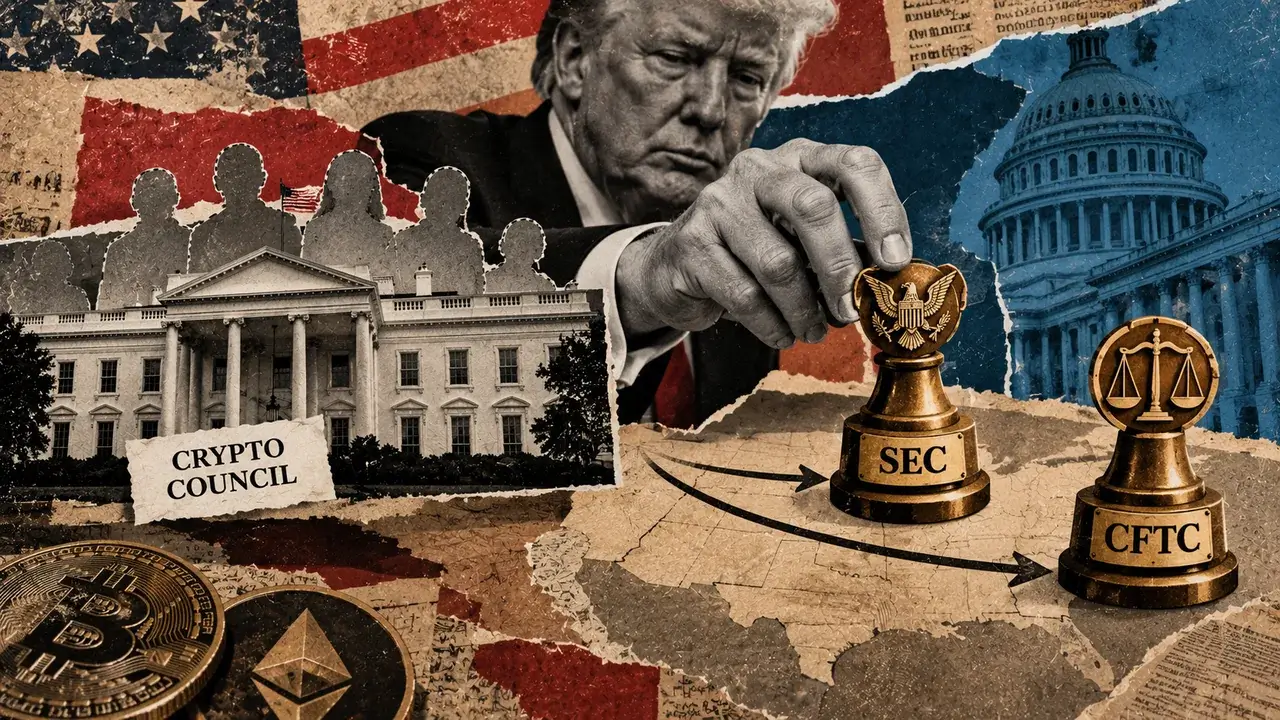
We have a short memory in this industry. Every time a new administration rolls in, we act like it is a clean slate. But if you look at the tail end of 2020, you will find a blueprint for the kind of surveillance that still keeps developers up at night. It was the moment the Treasury tried to put a leash on self-custody, only to back off when the political cost got too high.
The Midnight Rule
In December 2020, Steven Mnuchin was on his way out. With just weeks left in the Trump administration, the Treasury Department’s Financial Crimes Enforcement Network, or FinCEN, dropped a proposal that felt like a parting shot. They wanted to force crypto exchanges to collect names and physical addresses for any transaction over $3,000 involving a self-hosted wallet. If the transaction hit $10,000, the exchange had to report it directly to the government.
For those of us building in this space, this was a direct attack on the core value of crypto: the ability to hold your own assets without a middleman asking for permission. The government was trying to treat your hardware wallet or your software node like a suspicious offshore bank account. They gave the public 15 days to respond. Most federal rules get 60 days. Doing this right before Christmas was a classic move to bury a controversial policy while everyone was distracted by the holidays and a messy transition of power.
Why it Stalled
The pushback was loud and immediate. Thousands of comments flooded in from builders, privacy advocates, and even some traditional financial players who realized the technical nightmare this would create. How do you verify the physical address of a mathematical address? You can't. Not without forcing a level of centralization that kills the very thing that makes blockchain useful.
What is interesting is not just that they proposed it, but why it didn't cross the finish line. The administration was already dealing with the fallout of an election and a million other fires. Pushing through a highly technical, highly unpopular rule that would have been tied up in courts for years just wasn't worth the political capital at the time. The Treasury eventually extended the comment period, effectively kicking the can down the road to the next administration.
The Founder’s Perspective
As a founder, you have to read between the lines here. The government’s impulse is always toward visibility and control. They don't hate crypto because it's new; they hate it because it's opaque to them. Mnuchin wasn't a crypto hater in the way some senators are; he was a banker. And to a banker, an unhosted wallet is a loophole that needs to be closed.
We often hear talk about "pro-crypto" stances during campaign cycles, but the bureaucracy has a long memory. The people writing these rules at FinCEN don't always leave when the President does. The 2020 proposal wasn't just a random event; it was a signal of where the regulatory floor is moving. They want to turn every exchange into a deputy of the state, tasked with mapping the entire ecosystem of private wallets.
The Risk of Compliance by Default
If you are building an exchange or a gateway today, you are already feeling the pressure of this "ghost" policy. Even though the specific Mnuchin rule didn't pass in its original form, the spirit of it lives on in how compliance departments operate. Many platforms now voluntarily restrict transfers to self-hosted wallets or demand extra documentation just to avoid the headache of potential future rules.
This is how innovation dies—not with a bang, but with a thousand small compliance requirements that make it impossible for a small team to compete with the giants. If you have to hire fifty lawyers just to handle wallet verification, you aren't a tech startup anymore; you're a compliance firm that happens to use a database.
Building for Resilience
So, what do we do? We have to stop assuming that a change in leadership means a change in the fundamental desire for surveillance. The lesson of 2020 is that the Treasury will move fast when they think no one is looking. The only defense is building tools that make this kind of oversight technically impossible or prohibitively expensive to enforce.
We need to focus on privacy-preserving tech that doesn't rely on the kindness of regulators. If the protocol itself doesn't require PII, you can't be forced to hand it over. We should be looking at zero-knowledge proofs and other methods to prove identity without revealing sensitive data. That is the only way to get ahead of the next "midnight rule" that will inevitably come.
The Takeaway
Don't be fooled by political theater. The attempt to regulate self-custody in 2020 was a trial run. It showed us that the government views your private keys as a threat to their visibility. The fact that they backed down wasn't a victory for privacy; it was a tactical retreat based on timing and optics.
For builders, the mandate is clear: keep your head down and build for a world where privacy is a feature of the code, not a gift from the government. Relying on favorable regulations is a gamble that most founders will lose. The goal is to make the technology so decentralized and so robust that a 15-day comment period in December becomes irrelevant.
Read the original at CryptoSlate →