The Pivot to High-Margin Intelligence
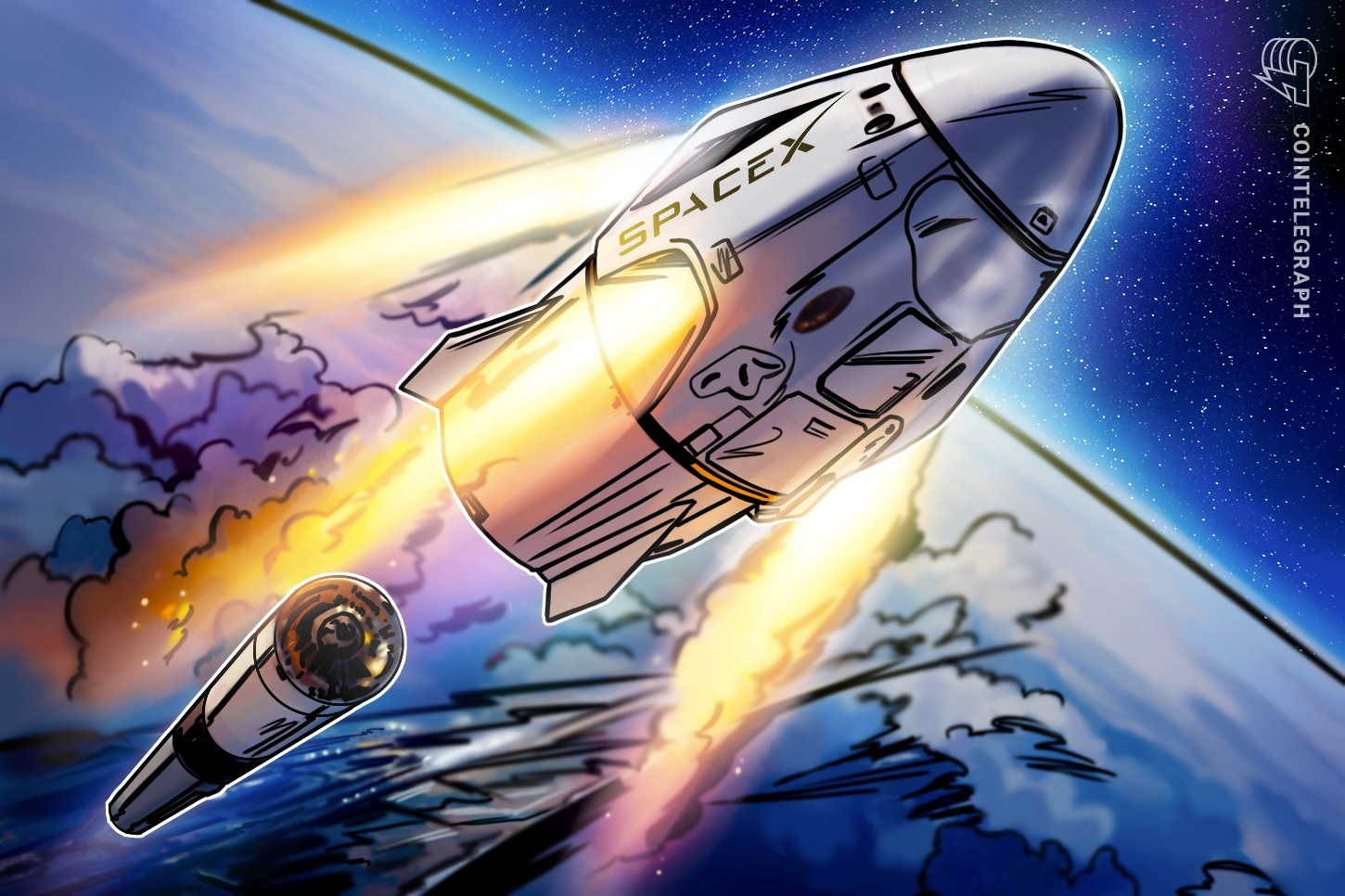
For a long time, the narrative around SpaceX was focused on the heavy lifting. We watched boosters land on barges and talked about the cost per kilogram to reach orbit. But the latest third-quarter earnings show a fundamental shift in where the real money is being made. Reporting a net income of $4.4 billion isn't just a win for aerospace; it’s a signal that SpaceX has successfully weaponized its satellite constellation for the AI era.
As someone who spends a lot of time looking at how infrastructure enables software, I find this fascinating. SpaceX isn't just a transportation company anymore. They’ve become a vertically integrated data and compute provider. The profit margins we're seeing here don't come from just burning rocket fuel. They come from selling the low-latency, AI-driven connectivity and processing power that only a massive orbital network can provide.
Why Builders Should Care About Orbital Compute
If you're building in the AI space, you're likely tired of the GPU bottleneck. We’ve all been fighting for space in terrestrial data centers, dealing with cooling costs and energy constraints. SpaceX is quietly solving a different part of the equation: edge intelligence. By integrating AI capabilities directly into their Starlink framework, they are creating a playground for developers who need real-time data processing in places where fiber-optic cables don't reach.
For founders, this means a few things. First, the barrier to entry for global-scale AI applications is dropping. You no longer need to worry about regional latency if the backbone of your network is literally moving at orbital speeds. Second, this confirms that the most successful 'AI companies' of the next decade might not be the ones building the models, but the ones controlling the physical layers where those models run.
The Skeptic's View on the $4.4 Billion Figure
We need to be honest here. A $4.4 billion profit is a massive number, but as builders, we have to ask how much of that is sustainable and how much is driven by government contracts versus private sector innovation. SpaceX has a habit of aggressive accounting and even more aggressive milestones. While the AI engine is clearly humming, we should watch closely to see if this is a one-time surge or a predictable quarterly climb.
The risk for the ecosystem is reliance. If SpaceX becomes the primary provider for both global connectivity and orbital AI processing, we’re looking at a new kind of platform risk. Just as we saw with the early days of cloud computing, being the first mover gives them the power to set the rules. If you're building a startup that relies on this infrastructure, you need to be thinking about redundancy from day one.
Infrastructure is the Only Real Moat
In the world of AI startups, everyone is talking about their 'proprietary algorithms.' Most of the time, that's nonsense. Most people are just wrapping an API and calling it a product. SpaceX, however, is building a physical moat. You can't just fork a satellite constellation. You can't download a reusable rocket booster.
This is the lesson for founders: the closer you are to the hardware and the fundamental infrastructure, the harder you are to disrupt. SpaceX is beating expectations because they stopped being just a logistics company and started being an intelligence company. They realized that the data flowing through their satellites is more valuable than the satellites themselves.
What This Means for the Next 12 Months
I expect to see a surge in 'Space-Native' AI startups. These won't be companies just using Starlink for internet; they will be companies building models specifically designed to run on the distributed, high-latency-sensitive nodes that SpaceX is deploying. We are moving away from the centralized data center model and toward a decentralized, orbital mesh.
- Increased competition for orbital spectrum: As SpaceX proves the profitability of AI in space, expect more legacy players to try and pivot.
- Edge AI maturity: The need for efficient, low-power models will skyrocket as we move compute closer to the user, even when that user is in the middle of the ocean.
- Valuation shifts: Investors will start looking for companies that have a physical layer strategy, rather than just software-as-a-service.
SpaceX hitting $4.4 billion in net income proves that the AI hype cycle has a very real, very profitable physical component. For those of us building the next generation of tools, the takeaway is clear: stop looking at the clouds and start looking at the stars. The infrastructure of the future isn't under our feet; it's over our heads.
Read the original at TechCrunch AI →