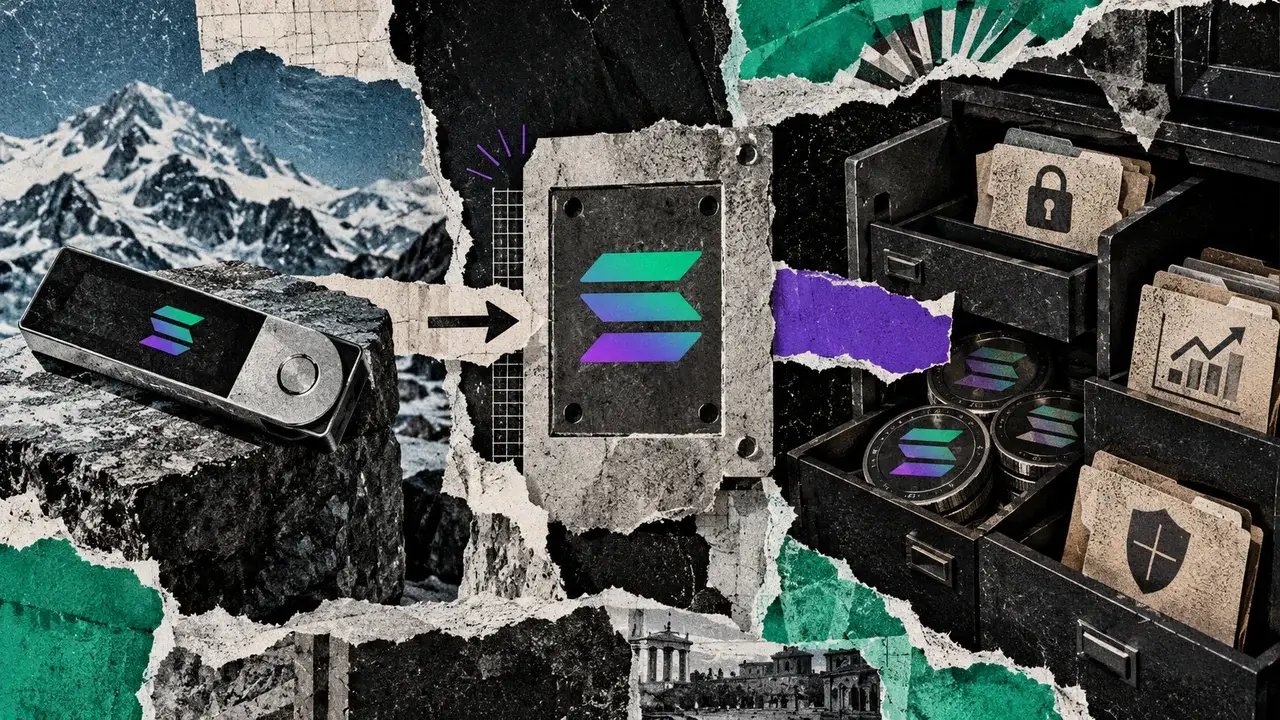
If you have ever managed a treasury or a large bag of assets on-chain, you know the drill. You keep your keys in cold storage because you are not an idiot. But every time you need to move funds or interact with a program, you have to dig that hardware wallet out of a safe, plug it in, sign, and pray the network does not drop your transaction. If the network hiccups or the gas fee spikes, that signature becomes trash. You have to start the whole ritual over again.
Solana developers are trying to fix this particular flavor of friction. A new proposal for 'Signer Programs' is making the rounds, aiming to separate the act of giving permission from the act of executing the transaction. It sounds like a small technical tweak, but for builders, it represents a fundamental shift in how we think about custody and account authority.
The Problem with Temporary Signatures
In the current Solana environment, a signature is tied to a specific transaction. If that transaction fails to land on-chain for any reason—whether it is a timeout or a slippage error—the signature expires. For a retail user with a browser extension, this is a minor annoyance. For an enterprise or a DAO using multisig and cold storage, this is a massive operational bottleneck.
The current setup forces builders to choose between security and velocity. You either keep keys 'warm' in a less secure environment to ensure you can re-sign quickly, or you accept that your operational speed will be dictated by how fast your team can physically access a cold room. The proposed change introduces a layer between the keys and the funds that could change that math.
Enter the Signer Program
The core of this proposal is to allow offline approvals to remain valid even if the initial transaction fails. Instead of a one-time signature that burns out, a user could sign a message that authorizes a specific action within a 'Signer Program.' This program acts as a buffer. Once that permission is logged on-chain, the transaction can be retried or executed by a third party without needing the original cold wallet to sign again.
This is effectively 'delegated authority' done the right way. It means you can approve a spend limit or a specific smart contract interaction once, and then let your automated systems or hot wallets handle the actual execution. The cold wallet stays in the safe. The work still gets done.
Why Builders Should Care
For those of us building tools, this opens up a new design space for UX. The biggest hurdle to mass adoption is the fact that managing keys is terrifying and clunky. If we can move toward a model where users 'approve' intentions rather than 'sign' raw transactions, the interface becomes much friendlier.
- Reduced Latency: You no longer have to wait for a physical device for every retry.
- Automated Treasury Management: DAOs can set parameters offline and let bots execute within those bounds.
- Improved Reliability: Transactions that fail due to network congestion can be rebroadcast without user intervention.
The Skeptical Angle: Security Trade-offs
As a founder, I am conditioned to look for the catch. If a signature remains valid after a failed transaction, that signature is now a live asset. It creates a window of time where an unintended action could be executed if the parameters are not strictly defined. If you authorize a program to spend 100 SOL and the transaction fails, that authorization is still sitting there. If the program is compromised or the logic is flawed, that 100 SOL is still at risk.
The proposal acknowledges this by requiring operators to reassess how they handle account authorities. We cannot just port over existing workflows. We have to build better monitoring tools to see what permissions are 'pending' on-chain. If we don't, we are just trading one type of risk for another.
The goal isn't just to make things faster; it is to make them more resilient. But resilience usually comes at the cost of complexity.
Custody Controls and the New Middle Layer
This proposal will force a conversation about custody. Right now, 'custody' usually means whoever holds the private key. With Signer Programs, 'custody' starts to look like a set of permissions managed by a smart contract. We are moving toward a world where the private key is the root of trust, but the daily operations happen in a programmable layer above it.
For developers, this means you need to start thinking about 'intent-based' architecture. Instead of asking a user to sign a swap, you ask them to sign an approval for your program to execute a swap within a certain price range. This shifts the burden of execution from the user to the developer. It is more work for us, but a much better experience for them.
The Long Game for Solana
Solana has always been about speed, but 'speed' usually refers to block times. This proposal is about 'operational speed.' It is about how fast a business can move while keeping its assets safe. By bridging the gap between cold storage and active transactions, Solana is positioning itself as a more viable home for institutional capital that cannot afford to have its keys sitting in a hot wallet.
It is not a silver bullet. There will be bugs. There will be developers who misuse these programs and leave their users' funds exposed. But the direction is correct. We have to stop treating every transaction like a life-or-death moment with a hardware wallet.
The Takeaway for Founders
If this proposal moves forward, start auditing your current signing workflows. Look at where your team is losing time to manual approvals and where you are taking unnecessary risks with hot wallets. The future of on-chain operations is delegated, programmable authority. You can either build for it now or spend the next two years trying to catch up when your competitors are moving ten times faster than you because they are not stuck plugging in USB sticks every five minutes.
Keep your keys cold, but keep your transactions moving. That is the balance we are finally starting to find.
Read the original at CryptoSlate →