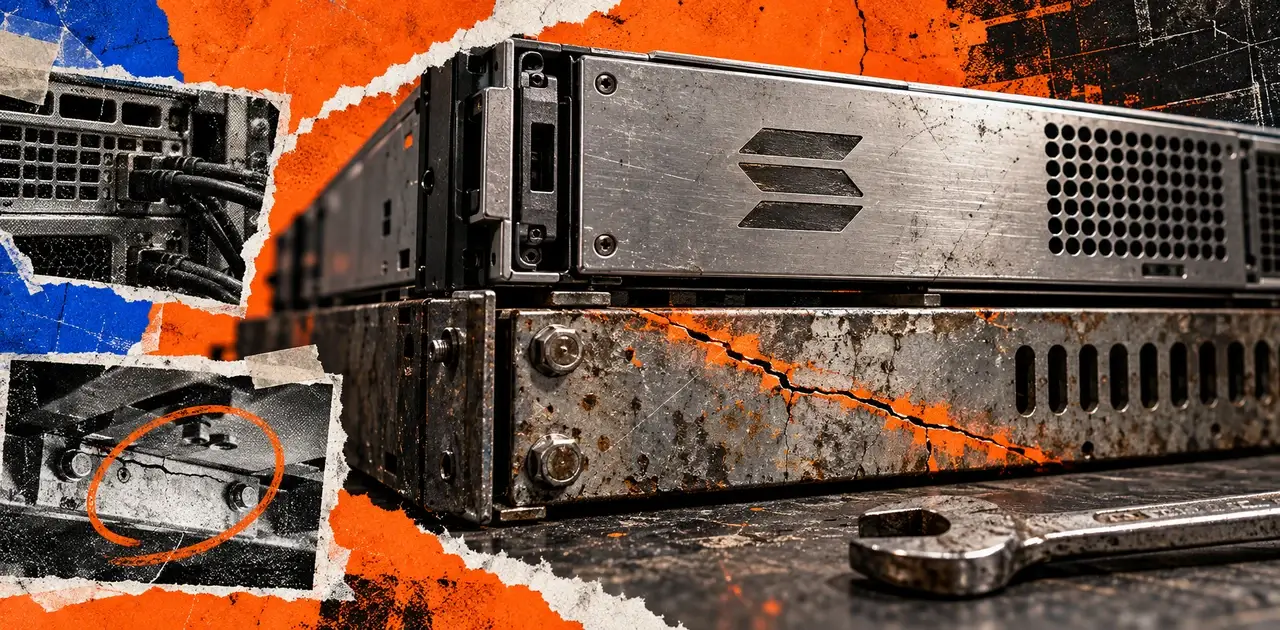
Running a blockchain validator is usually sold as a passive income dream, but the reality is more like being a high-stakes systems administrator. Recently, the Solana ecosystem got a loud wake-up call that had nothing to do with token prices or transaction speeds. A critical vulnerability in the Linux kernel surfaced, putting the hardware that keeps the network alive directly in the crosshairs.
This is not a Solana bug, to be clear. It is an infrastructure bug. However, because Solana relies so heavily on high-performance Ubuntu environments to hit its ambitious throughput targets, a flaw in the underlying operating system becomes a systemic risk for the entire chain. As of early November, the primary patch for Ubuntu 24.04 was still in the works, leaving validators in a precarious spot where they had to take manual security measures to protect their nodes.
The Fragility of Hardware Dependence
For founders and builders, this is a reminder that the decentralization we talk about in marketing decks is often built on very centralized software foundations. Most of the crypto world runs on Linux. When a kernel-level flaw appears, it creates a bottleneck where the security of billions of dollars in locked value depends on a handful of open-source maintainers pushing an update to a repository.
The specific issue here involves how the kernel handles certain memory operations. In a high-speed environment like Solana, where every millisecond of uptime is scrutinized and slashed if missed, validators cannot afford to just turn off their machines and wait. They are caught between the risk of being exploited and the risk of losing their standing in the consensus group. It is a stressful position that most retail investors never see.
Why This Matters for Builders
If you are building an application on top of a chain, you need to understand that your uptime is only as good as the least-patched server in the validator set. We often treat the blockchain as an abstract layer of truth, but it is actually just a collection of noisy, heat-generating computers in data centers. When those computers have a common vulnerability, the theoretical decentralization of the network provides less protection than you might think.
From a founder's perspective, this highlights the need for better infrastructure diversity. If 90% of your validators are running the same version of the same OS, a single exploit can effectively halt the network. This is known as a correlated failure risk. We have seen this with client diversity in Ethereum, but we talk less about OS diversity or kernel-level resilience.
The Manual Patching Headache
The urgency communicated to Solana operators was high. Because the official Ubuntu 24.04 repair was not immediately available through standard update channels, operators were told to perform manual host-security tasks. For a solo staker or a small team, this is an administrative nightmare. It requires deep technical knowledge and the ability to execute changes without accidentally knocking the node offline.
This is where the "builder-first" mindset meets the reality of DevOps. You can have the best smart contract in the world, but if the substrate it sits on is porous, the whole stack is compromised. The fact that the Solana community had to mobilize so quickly shows a high level of coordination, but it also exposes the manual labor required to keep these "automated" systems running.
The security of a blockchain is not just in its code, but in the maintenance habits of the people running the hardware.
We should be looking at how to automate these responses. The current model relies on Discord pings and emergency Twitter threads to tell validators to patch their systems. That is a human-led solution for a machine-led problem. As we integrate more AI into the development and monitoring of these networks, automated patching and vulnerability mitigation at the OS level will need to become standard, not an emergency manual task.
The Skeptical Takeaway
Let's be honest: most people in crypto do not care about Linux kernel vulnerabilities until their wallet balance stops updating. But as builders, we have to care. We are seeing a trend where the complexity of the tech stack is outstripping the ability of the average participant to secure it. If running a node requires being an expert in Linux security, then the barrier to entry for true decentralization remains incredibly high.
Solana has faced criticism in the past for its outages, but those were usually related to the protocol's own logic. This situation is different. It is an external threat that requires internal discipline. The takeaway for anyone building in this space is to vet your infrastructure providers and understand the risks of OS homogeneity. If everyone is using the same door, one broken lock lets everyone in.
- Infrastructure diversity is not optional; it is a security requirement.
- Manual security tasks are a point of failure for decentralized networks.
- The gap between software-level security and hardware-level security is where the next major exploits will happen.
Ultimately, the Solana network's ability to navigate this without a major incident is a testament to the vigilance of its validator community. But relying on vigilance is a poor long-term strategy compared to building more resilient, diverse, and automated infrastructure layers. We need to stop treating the OS as a commodity and start treating it as a critical component of the consensus mechanism itself.
Read the original at CryptoSlate →