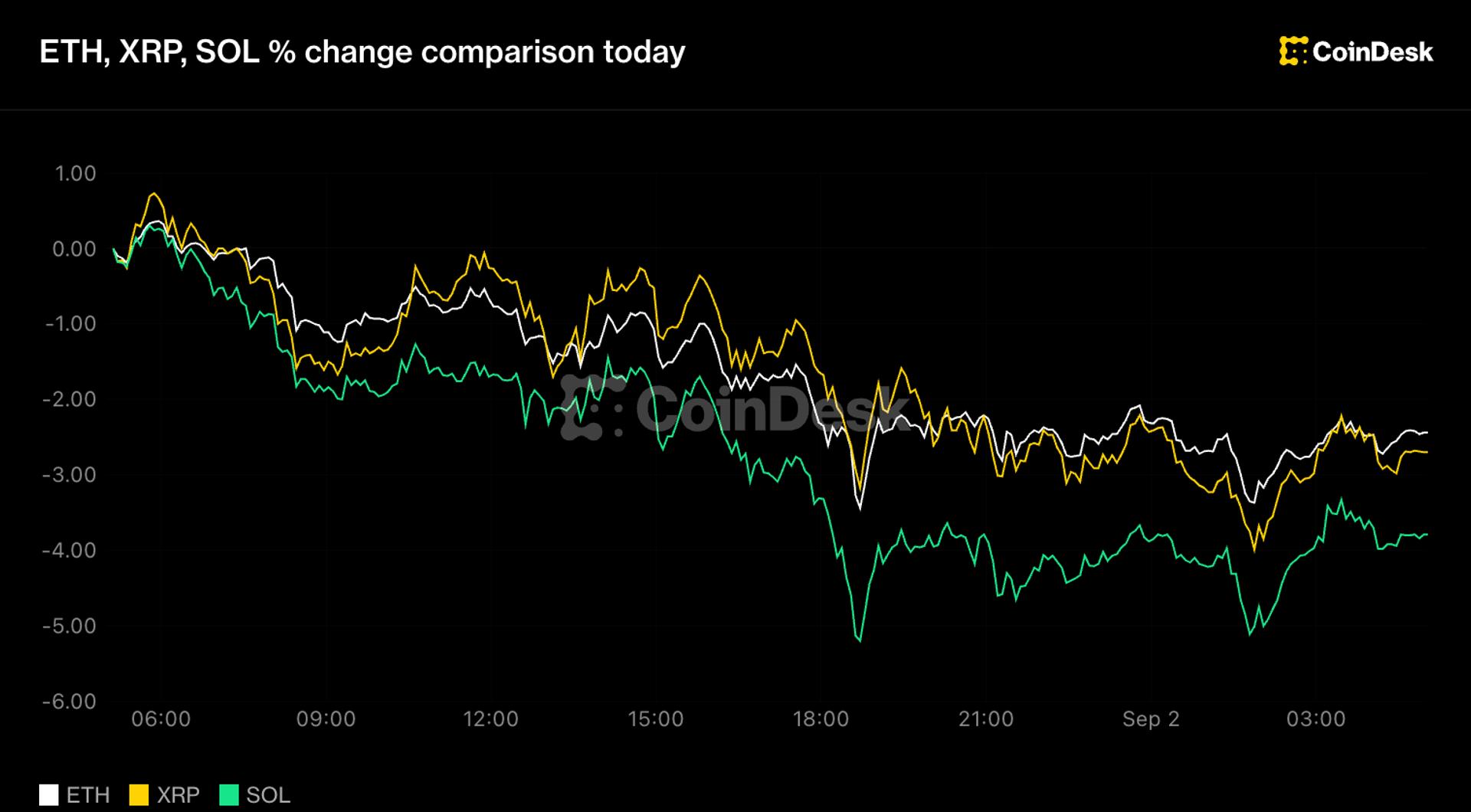
Geopolitics just reminded everyone that crypto is still, first and foremost, a risk asset. As tensions between Iran and Israel escalated into direct strikes, the markets reacted exactly how you would expect in a moment of panic: people grabbed their liquidity and headed for the exits. Bitcoin felt the pinch, but it was the high-beta majors like Solana, Ether, and XRP that really took the brunt of the damage.
The Leverage Trap
For those of us building in this space, these price swings are rarely about the underlying tech. The tech didn't change overnight. Solana is still fast, Ether is still the smart contract king, and XRP is still pushing for banking integration. What changed was the appetite for risk. When the first reports of missile strikes hit the wires, the algorithms and the levered traders hit the sell button simultaneously.
The data shows that while Bitcoin dropped a significant amount, tokens like Solana fell roughly three times harder. That is the cost of being a high-beta asset. Beta is basically a measure of volatility relative to the broader market. When things are green, Solana often outpaces Bitcoin. When the fear index spikes, those same gains are surrendered just as quickly. It is a harsh reminder that in times of global uncertainty, the market still treats most altcoins like speculative tech stocks on steroids.
Why Altcoins Bleed Faster
We need to look at why the majors like ETH and SOL are sliding further than BTC. It comes down to perceived safety. Despite the talk of Bitcoin being a hedge against chaos, it currently trades in lockstep with the Nasdaq and other tech indices. However, within the crypto ecosystem itself, Bitcoin is still the flight-to-safety trade. When a founder or a fund manager sees a regional war breaking out, they don't buy more Solana. They consolidate into stables or they move back into Bitcoin to preserve capital.
This selloff was a broad de-risking event. It wasn't just crypto; global equities took a haircut too. But crypto is the only market that stays open 24/7, which means it often serves as a real-time sentiment gauge. Because liquidity is thinner in altcoins than it is in BTC, the price impact of a sell order is magnified. That is why we are seeing these double-digit percentage drops while Bitcoin stays in the single digits. It is a liquidity problem as much as it is a fear problem.
The Builder's Perspective
If you are heads-down building a decentralized application or an AI agent on these chains, these red candles are a distraction, but they are also a signal. They tell you which ecosystems have the stickiest capital. If a chain sees its token price crater but its developer activity remains constant, that is a sign of health. If the builders leave as soon as the price drops, you are building on a house of cards.
I have seen these cycles repeat since the early days. The names change—once it was LTC and Peercoin, now it is SOL and ETH—but the behavior remains identical. Geopolitical shocks create a vacuum where only the most conviction-heavy investors stay. For founders, this is the time to ignore the chart and focus on the burn rate. If your runway is tied up in the native token of the chain you are building on, today was a very stressful day. This is why I always advocate for keeping at least 18 months of operating expenses in stablecoins or fiat.
Macro Reality vs. Crypto Dreams
We often talk about crypto being decoupled from the traditional financial system. Moments like this prove we are nowhere near that reality yet. We are still deeply tethered to the global macro environment. Energy prices, interest rates, and middle-eastern stability all dictate the flow of capital into our niche. Until crypto has a utility that makes it essential during a crisis—rather than just a speculative vehicle—we will continue to be at the mercy of the 24-hour news cycle.
The selloff in XRP and Solana also highlights the vulnerability of tokens that are seen as "growth" assets. Investors treat these like early-stage VC bets. When the world feels like it's going to hell, people don't want to wait five years for a growth story to play out. They want to know they can pay their bills and protect their principal today. That is the fundamental disconnect between the vision of a decentralized future and the reality of a globalized, fragile economy.
What Happens Next
History tells us that these geopolitical shocks usually lead to a period of sideways grinding once the initial panic subsides. The market needs to digest the new reality. For the majors, the path to recovery depends on whether this escalation continues or if things cool off. If you are looking for a silver lining, it is that these events flush out the weakest hands and the most over-leveraged players. It cleans the slate for the next leg up, though that leg might be further away than people hoped last week.
The market can stay irrational longer than you can stay solvent, but geopolitical reality is the ultimate sobering force. Build for the long term, but manage your risk for the short term.
The Takeaway for Builders
- Diversify your treasury: If your startup's survival depends on Solana staying above a certain price, you aren't running a business; you're gambling.
- Ignore the noise: A 10% drop in ETH doesn't mean the EVM is broken. It means a trader in London got a margin call.
- Watch the correlations: Understanding that SOL and XRP will drop 3x faster than BTC during a crisis is essential for risk management.
- Build utility: The only way to decouple from these macro swings is to create products that people actually need to use, regardless of the token price.
Ultimately, these red days are a test of conviction. If your project only makes sense when SOL is at $200, you need to rethink your business model. The best tech is built in the trenches, usually while the rest of the world is staring at charts in a panic. Get back to work.
Read the original at CoinDesk →